Azores Itinerary for 7 Days: A Week on São Miguel
The Azores look like they were dropped into the Atlantic by mistake. Nine volcanic islands sit roughly 900 miles off the coast of Portugal, and the largest, São Miguel, has crater lakes, steaming hot springs, tea fields, and cliffs covered in hydrangeas, all on an island you can drive from one end to the other in about an hour and a half. A week here is a great length of trip. It's long enough to settle in and short enough that you're not running out of things to do by day five.
This Azores itinerary starts in Ponta Delgada, heads west to the twin lakes of Sete Cidades, loops east to Vila Franca do Campo and the thermal valley of Furnas, then finishes along the north coast before circling back to the airport. You'll get big landscapes, a lot of time in warm water, some of the best seafood and beef in Europe, and a meal that's cooked underground. Whale watching is built in too, with a backup slot in case the ocean doesn't cooperate.
I'm a travel agent, and I plan bespoke international trips for a living. This itinerary is built the way I build real client trips: I start with logistics, then priorities, then pace, and only after that do I start filling in the days. Nothing here is a rushed checklist. Every day has one or two anchor experiences, realistic drive times, and room to linger over lunch. And because no two travelers want the same week, treat it as a strong starting point. I adjust it constantly for clients, whether that means more hiking, more spa time, or a slower morning pace.
Azores Itinerary for 7 Days: How the Week Is Laid Out
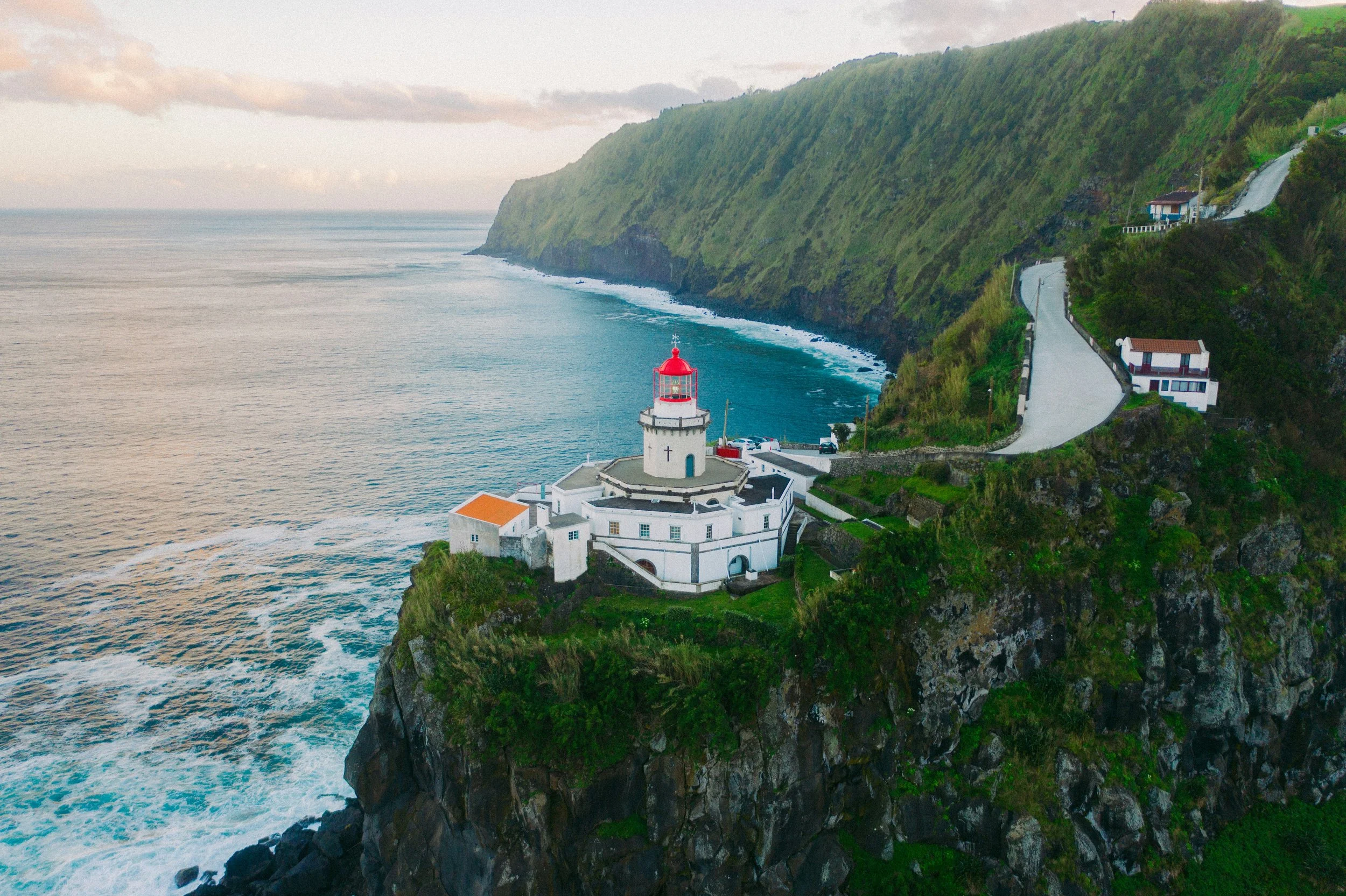
This itinerary focuses mainly on São Miguel, the main island, and that's deliberate. Seven days is the right amount of time to see this island properly. Trying to add a second island means a flight, a transfer, and a half day of your trip spent in transit. Most people who try to hop islands in a single week come home having seen a little of everything and felt rushed doing it.
The route moves in a loose loop. You'll spend the first two nights in Ponta Delgada, the island's capital and the home of João Paulo II Airport, then move to Furnas in the east for two nights. Night five is on the north coast, and the last night is back in Ponta Delgada so your departure morning is easy. That's three bases for the week, which keeps you from living out of a suitcase while also keeping every drive manageable. Nothing in this plan involves more than about an hour behind the wheel at a stretch.
These spots work together because São Miguel is essentially three different worlds. The west is lakes and dramatic crater rims. The east is geothermal: hot springs, fumaroles, and a gorgeous botanical garden. The north is farmland, tea, and a rugged coastline. Ponta Delgada ties them all together as the place to eat well and catch a boat.
Is 7 Days Enough in the Azores?
For São Miguel, yes. For the entire archipelago, absolutely not, and I'd rather tell you that now than have you figure it out on day four.
Here's what a week realistically gets you on this island: both sides of Sete Cidades, a half day on the water looking for whales and dolphins, the historic center of Ponta Delgada, a full day in Furnas with a soak and a proper volcanic lunch, the northeast coast, and at least a couple of unhurried meals. You can fit in a hike or two as well. That's a full, satisfying trip.
Island logistics are what limit you. Inter-island flights are short, usually under an hour, but they're limited in number and they get delayed or canceled when clouds sit low over the runways. Ferries between islands mostly run in summer and on reduced schedules. A hop to Pico, Terceira, or Faial eats most of a day by the time you account for airport time, and if the weather turns, you can lose a second day on top of that. In a seven-day trip, that's a big chunk of your time.
So I don't recommend it. This plan puts the effort into doing São Miguel well. If you're set on seeing a second island, I'd suggest stretching the trip to ten days or longer, and I'm happy to build that version for you. Pico, with its mountain and its vineyards on black lava stone, is the one clients most often ask about.
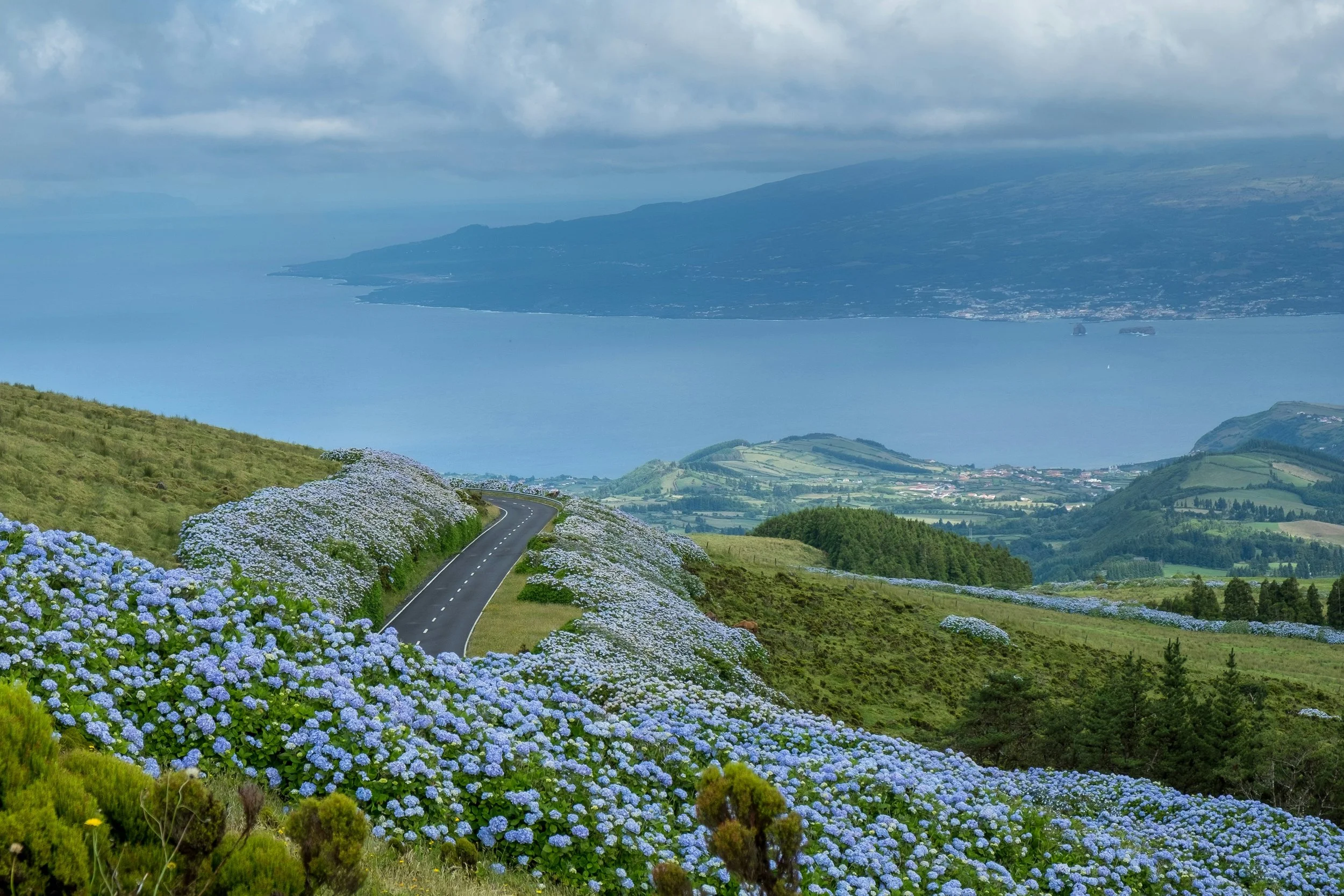
A quick note on weather. The Azores are famous for having four seasons in a single afternoon, and it's not an exaggeration. Mornings are often clearer than afternoons at the crater lakes, so I schedule viewpoints early and put the indoor or in-water activities later. Late spring through early fall is the most reliable window for whale watching and boat trips, and the hydrangeas that line the roads tend to peak in the summer months.
Your 7-Day Azores Itinerary
A rental car is the way to do this trip. The roads are well maintained and the island is small, but the best viewpoints and trailheads aren't on any bus line. If you're not comfortable driving a manual, reserve an automatic well in advance, since those are the minority in the rental fleet. Here's how the week unfolds.
Day 1: Arrival in Ponta Delgada
Most flights land at João Paulo II Airport, which sits about ten minutes from the center of Ponta Delgada. That's a huge advantage on arrival day. You can be at your hotel within half an hour of landing, even with a rental car pickup. Nonstop flights run from a few North American cities, mostly seasonally, and everyone else connects through Lisbon or Porto, so check the schedule early because it affects which day you arrive.
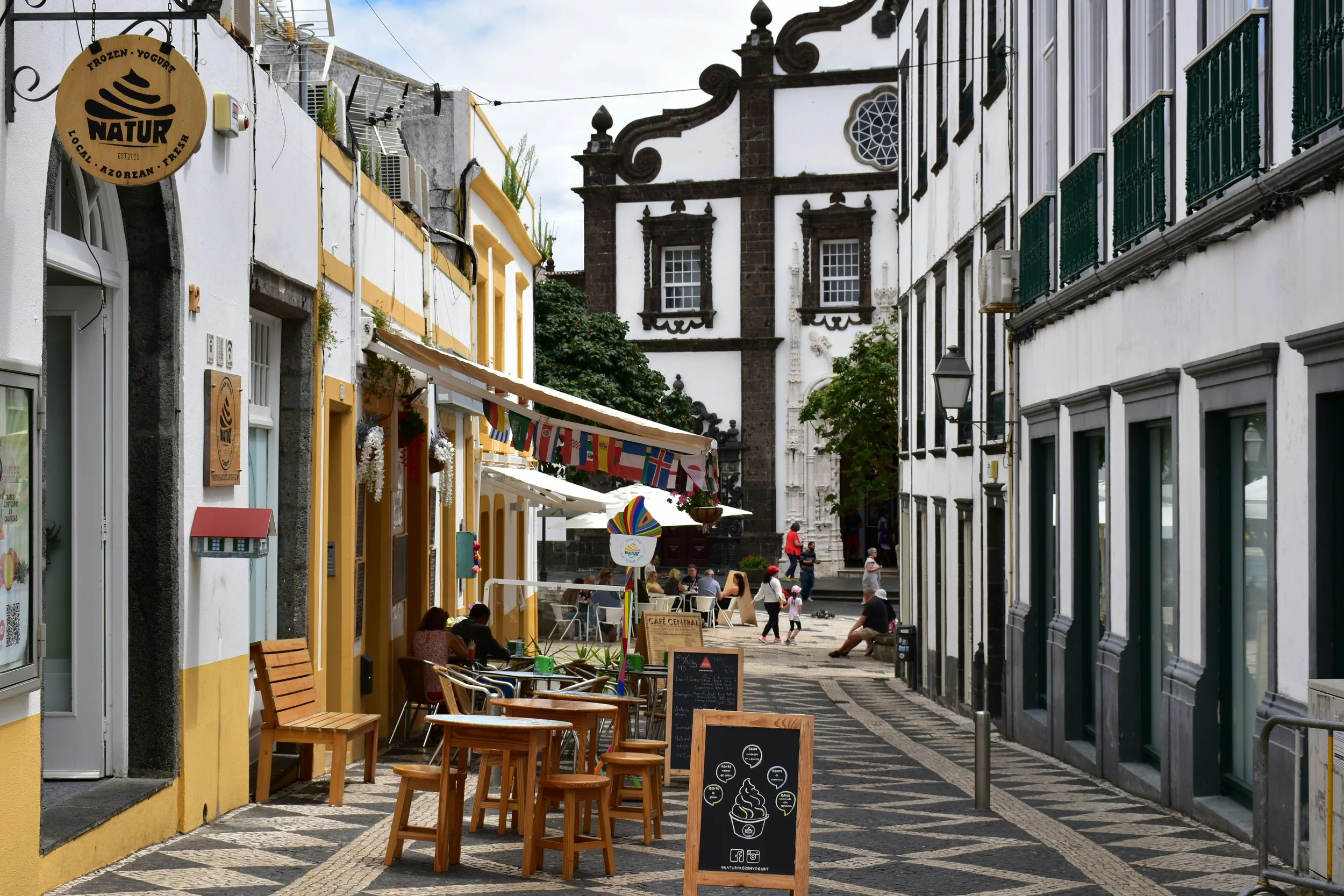
Don't plan much for today. If you land in the morning, drop your bags and walk the old town. The black-and-white basalt and limestone pavement is unmistakable, and the Portas da Cidade, three arched gates facing the harbor, make a good starting point. From there, wander past the São Sebastião church, through the Jardim António Borges, and along the waterfront promenade toward the marina. The Forte de São Brás at the harbor's edge is worth a quick look if you have the energy.
For dinner, this is your chance to eat Atlantic seafood at its simplest. Grilled local fish, limpets (lapas) cooked in garlic and butter, and Azorean beef are all worth ordering. The cows graze outdoors year-round on volcanic pasture, and the steaks show it. Go to bed early. Tomorrow is a morning start.
Where you sleep tonight: Ponta Delgada.
Day 2: Sete Cidades and the Western Crater
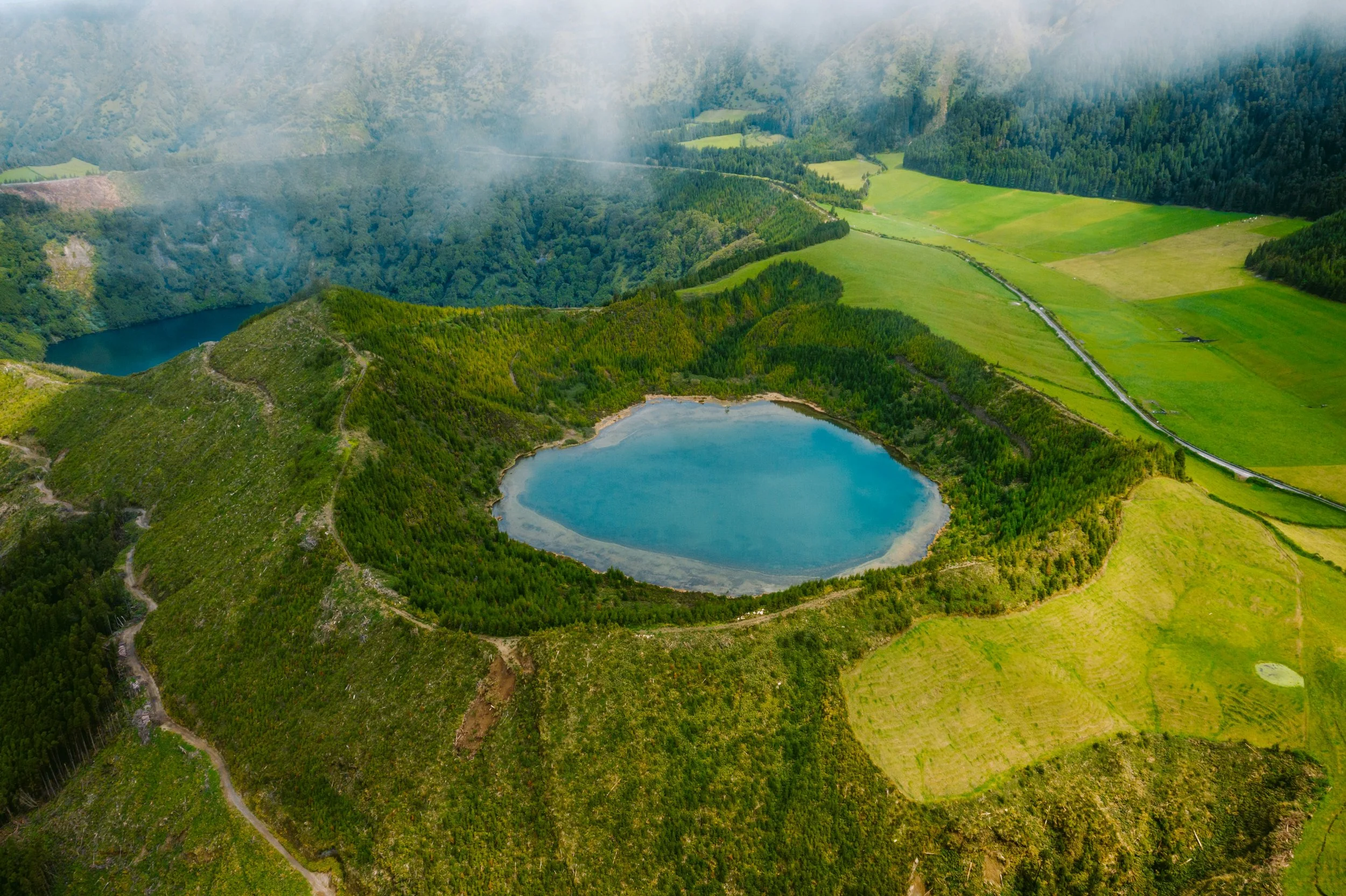
Leave Ponta Delgada early. The drive up to the rim of the Sete Cidades caldera takes about 30 minutes, and getting there before the clouds roll in makes a real difference. The first stop is Vista do Rei, the viewpoint everyone sees on postcards. From here you look down on two lakes sitting side by side, one blue and one green. Local legend says they're the tears of a princess and a shepherd, which is a nice story, though the real explanation involves algae and how light reflects off each lake's depth.
Walk a bit of the rim from here. The Boca do Inferno viewpoint is a short drive away and gives you a different angle on the same scene. Then drop down into the village of Sete Cidades itself, a small settlement with a neo-Gothic church wedged between the two lakes. You can walk the path along the shoreline, rent a kayak if the water's calm, or simply sit with a coffee.
After lunch, head to the coast at Mosteiros, about 20 minutes from the village. The black sea stacks just offshore are a striking contrast to the green crater. A little further along at Ponta da Ferraria, a natural hot spring meets the ocean in a rock pool. It's tide and swell dependent, so ask your hotel about conditions before you go, and bring a towel.
Return to Ponta Delgada in the late afternoon. Have a slow dinner, maybe in the old town again, and try to keep an eye out for the local pineapple, which is grown in greenhouses on the island and shows up on dessert menus.
Where you sleep tonight: Ponta Delgada.
Day 3: Whale Watching and Vila Franca do Campo
Whale watching departs from the Ponta Delgada marina, and I like to put it first thing on Day 3. Trips run about three hours, and the Azores are one of the best places in the Atlantic to see these animals. Resident sperm whales and several dolphin species are around for much of the year, and spring brings blue whales. Operators rely on spotters stationed on the hillsides who radio in sightings, which makes the boats efficient. The season runs roughly April through October.
These tours depend entirely on sea conditions, and operators cancel when it's rough. That's why this itinerary has a backup slot on Day 6. If your first attempt gets scrubbed, you don't lose the experience. Book with an operator that's upfront about cancellation and rescheduling policies, and ask about smaller boats if you'd rather avoid a crowded deck.
After you're back on land and fed, drive east to Vila Franca do Campo, about 25 to 30 minutes away. This town was the island's capital until a powerful earthquake and landslide destroyed it in 1522. Today it's a relaxed seaside town known for its small sweet pastries, queijadas, which you should buy at least a few of. Just offshore is the Ilhéu de Vila Franca, a volcanic islet whose crater holds a lagoon of calm, clear water. A boat shuttles visitors across during the warmer months, with a daily visitor cap and a reservation requirement, so confirm the dates and book ahead if your trip falls in season.
From Vila Franca do Campo it's another 30 minutes or so to Furnas. Time your arrival for late afternoon, check in, and have an easy dinner.
Where you sleep tonight: Furnas.
Day 4: Furnas, Terra Nostra, and the Cozido
Today is the one most clients remember best. Furnas sits inside a huge volcanic valley, and the whole place smells faintly of sulfur and wet earth, in a good way. Start the morning at the Furnas fumaroles near the village, where steam and boiling mud pour out of the ground. You can walk around freely, and you'll see the ground stained in yellows and oranges.
Lunch is the cozido das furnas, a stew of beef, pork, chicken, sausage, cabbage, and root vegetables that's cooked in pots buried in the volcanic soil for around six hours. The heat comes directly from the earth. You can often see the pots being pulled from the ground near the fumaroles around midday. Most restaurants in town serve it, and most need a reservation the day before, so ask your hotel to book it when you check in on Day 3. It's rich and savory, and it's a meal you eat slowly.
In the afternoon, head to the Terra Nostra Park. The botanical garden dates to the 18th century and has towering tree ferns, camellias, and old shaded paths. The big draw is the thermal pool at its center, filled with a rust-colored, iron-rich water that sits in the high 30s Celsius. Wear a swimsuit you don't mind staining, because the iron will leave a mark. Terra Nostra gets busy midday, so after lunch is a good time to go, and the late afternoon is quieter still.
If you've still got energy, walk or drive up to the Pico do Ferro viewpoint for a look down at the valley, or stroll part of the path around Lagoa das Furnas. In the evening, the small hot spring pools at Poça da Dona Beija stay open late and are a lovely way to end the night.
Where you sleep tonight: Furnas.
Day 5: The Northeast Coast and Tea Country
Today's the longest drive of the week, but it's the most scenic. From Furnas, head toward Povoação and then up the northeast coast. Expect about an hour to reach the Nordeste area, and plan to stop often because every few miles there's another viewpoint. Ponta do Sossego and Santa Iria are two of the best, with terraced gardens and cliffs plunging into the sea.
Continue west along the north coast to the Gorreana tea plantation, the oldest in Europe. It's still a working estate, and you can walk through the factory, taste the teas, and wander the rows of bushes that run down toward the ocean. It's one of those places you don't expect to find on a volcanic island in the Atlantic.
Finish in the area around Ribeira Grande, the island's second-largest town. It has a more local feel than Ponta Delgada, with a handsome town center and surf beaches nearby. Eat a long, slow dinner here and ask what the kitchen pulled from the water that morning.
Where you sleep tonight: the north coast, near Ribeira Grande.
Day 6: Lagoa do Fogo and a Flexible Afternoon
Get up early, because Lagoa do Fogo, the Lake of Fire, is another place where cloud cover shows up fast. The crater lake sits in the middle of the island and is surrounded by protected wilderness. The main viewpoint is about 25 minutes from Ribeira Grande by road. If it's clear, it's one of the most photographed views on São Miguel. If it's covered in cloud, wait a bit, since it often breaks.
On the way back down, stop at Caldeira Velha, a small hot spring set in lush forest with a waterfall feeding a warm pool. Access is limited and reservations are a good idea. Then continue to Ponta Delgada, about 35 minutes away.
The afternoon is open on purpose. If you didn't get out on the water on Day 3, this is your second chance for whale watching, since afternoon departures are common. If you've already done it, visit one of the pineapple greenhouses on the edge of town, shop for ceramics and local food products, or book a spa treatment. Have your farewell dinner somewhere you've been wanting to try, and make a reservation in advance.
Where you sleep tonight: Ponta Delgada.
Day 7: Departure
The airport is about ten minutes from central Ponta Delgada, so your last morning can be relaxed. Plan to be at João Paulo II Airport two to three hours before an international flight, and leave time to return the rental car. If you have a few hours before you need to leave, a final coffee by the marina and a quick stop for pastries, local tea, or a bottle of passion fruit liqueur from a market makes for good last-minute gifts.
Where to Stay in the Azores
I use three bases for this route. Each one cuts down on driving and puts you close to what you're doing the next morning.
Ponta Delgada
Ponta Delgada covers Days 1, 2, and 6. It's the obvious choice for arrival and departure, because the airport is minutes away and the best restaurants and the marina are here. It's also the easiest base for Sete Cidades, which is about 30 minutes away, and for whale watching. Look for a boutique hotel or a resort-style property in or near the old town, so you can walk to dinner and leave the car parked.
Furnas
Furnas covers Days 3 and 4. Sleeping in the valley matters because it lets you do the cozido das furnas, the fumaroles, and Terra Nostra without a long round trip from the capital. It's a quiet place at night, and the area has some of the island's more atmospheric hotels, including grand old properties with their own thermal pools. This is also the best spot on the trip to prioritize a spa or soaking tub in your room.
North Coast near Ribeira Grande
The north coast covers Day 5. After a long scenic drive from the east, you don't want to keep going all the way back to Ponta Delgada. A base near Ribeira Grande breaks up the trip and sets you up for an early morning at Lagoa do Fogo on Day 6, with a short drive into the capital afterward. Look for a smaller boutique property or a quiet resort stay with ocean views.
Let Me Plan Your Azores Trip
Everything above is exactly the kind of planning I do for clients. I handle the logistics, the rental car, the hotels, restaurant reservations, activities, etc. I also build in the buffer days and backup plans that make a weather-dependent destination work. If you'd like to pair the Azores with the mainland, I plan that too, and I've put together some ideas in my post on a honeymoon in Portugal. Many of those same principles apply to anyone combining the islands with Lisbon or Porto.
You're welcome to reach out even if you're only in the early thinking stage. Send me a note through the inquire page on this site with your rough dates and who's traveling, and I’d be happy to chat through some options!