Say you're standing in Marienplatz a few minutes before 11 a.m. The Glockenspiel is about to start, a crowd has gathered, and everyone is looking up at the New Town Hall tower. You've got a pretzel in your hand, and the Frauenkirche towers are a minute's walk away. When the bells start and the figures begin to move, you'll get why so many people end up liking Munich more than they expected.
It's an easy city to like. The old town is small enough to walk, the food is filling, and there's a beer garden close to wherever you end up. You can tour a royal palace in the morning and be sitting with a beer by mid-afternoon without feeling rushed. On a clear day you can even see the Alps.
Three days in Munich is the sweet spot for a first visit. The old town is compact and walkable, so Day 1 takes almost no logistics. Three days also leaves room for the palaces and gardens plus one bigger outing, and nobody has to sprint through any of it.
Here's what this Munich travel itinerary covers: how many days to plan, how to get around, a day-by-day plan, where to stay, the best time to go, ideas for couples, and where to head once you leave. Treat all of it as a starting point instead of a script. I plan so many European trips for clients, and the details that matter most are the ones most itineraries skip, like which neighborhood to book, when to reserve palace tickets, and how to pace the days so they actually feel like a vacation. If an idea here doesn't fit you, swap it out!
One thing Munich specifically has taught me is that the city rewards a slower pace. It is in Bavaria after all. Travelers who try cram everything into the first two days tend to hit Day 3 tired and a little cranky. The ones who leave an hour or two open each afternoon, usually for a long beer garden lunch or a walk by the river, come home talking about those hours first.
Insider tip about incorporating Munich into longer European itineraries at the end… so stick around.
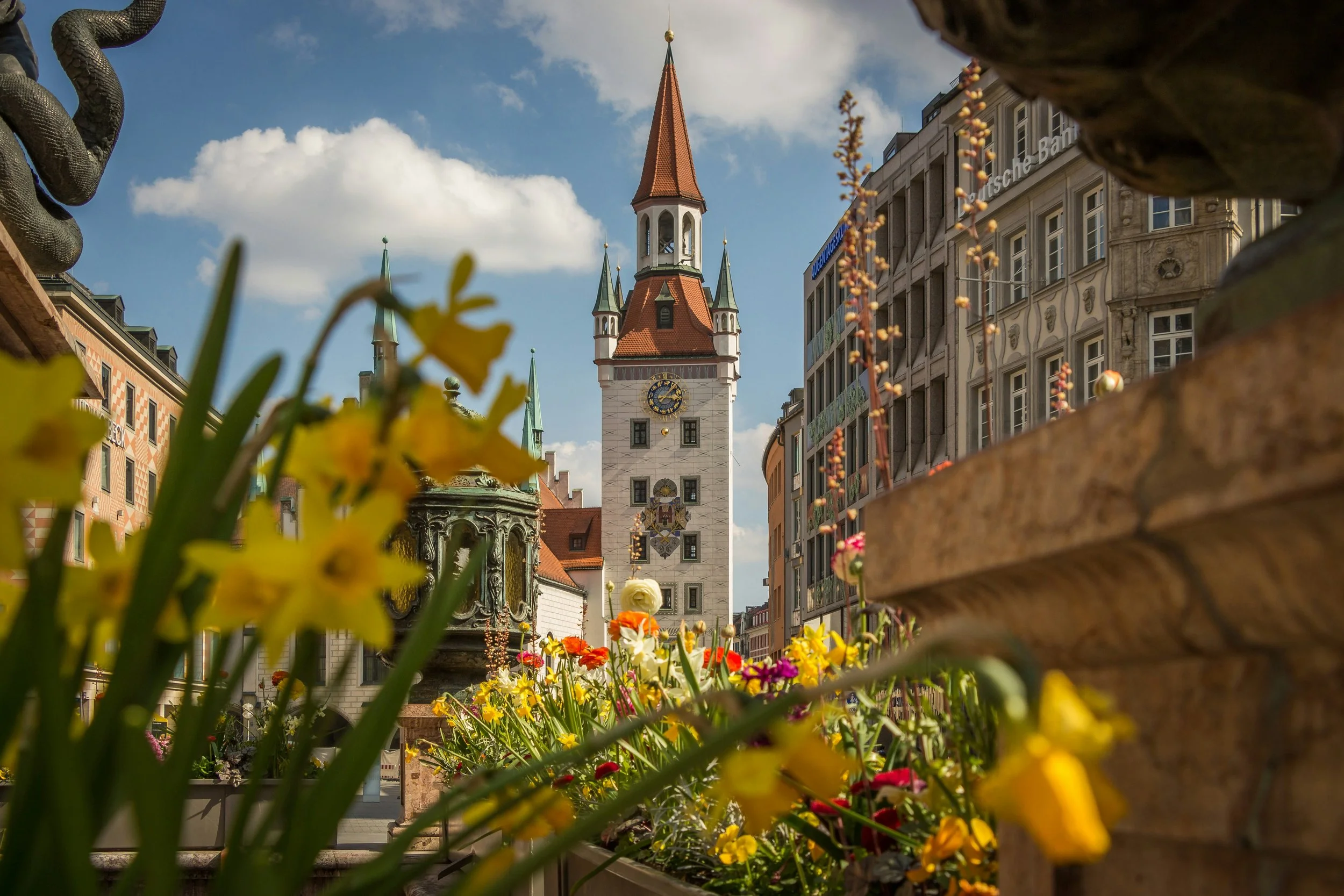
3 Day Munich Itinerary
Here's the quick version of what to see in Munich in 3 days. Day 1 is the old town around Marienplatz. Day 2 covers the royal Munich Residenz, the Hofgarten, and the English Garden. Day 3 is one big pick: Nymphenburg Palace, the Dachau Concentration Camp Memorial Site, Olympiapark and BMW Welt, or a day trip to Neuschwanstein Castle.
This plan works best with three full days on the ground, which usually means three or four nights depending on when your flight lands. Flights from the US often arrive in the morning, and you'll be foggy. I treat that arrival day as a bonus afternoon (a walk, an early dinner, bed) and start the real Day 1 the next morning. It's the same plan I'd hand any friend who's booked 3 days in Munich Germany for the first time.
How Many Days in Munich?
Two days covers the old town highlights and not much else. Three days adds the palaces, the gardens, and one bigger outing. Four or more days makes room for day trips into the Bavarian Alps, or a visit timed for Oktoberfest, which deserves its own pacing. When clients ask me how many days to spend in Munich, three is my answer for a first trip, and a 3-day trip to Munich fits most schedules.
If you only have two days, combine Day 1 and Day 2 and skip the Day 3 outing. Do the old town in the morning: Marienplatz, Viktualienmarkt, and the Frauenkirche. Spend the afternoon at the Residenz and the Hofgarten, then finish with a beer garden in the English Garden. Save Nymphenburg and the Alps for the next trip.
To do an extended Munich trip, think 4-5 nights. That gives three full days plus a buffer for jet lag, and it keeps the Day 3 outing from feeling like a sprint. Anyone adding Salzburg or a night in the mountains can use the 5th night option.
Getting Around Munich
The old town is a walker's city, and nearly everything on Day 1 sits within ten minutes of Marienplatz on foot. For the rest of the city, the U-Bahn, S-Bahn, trams, and buses all run on one shared ticket system, and they're clean, frequent, and easy to figure out.
From Munich Airport, the S-Bahn is the simplest way into town. Lines S1 and S8 both leave from the airport station, with trains about every ten minutes between them, and the ride takes roughly 40 minutes. The S8 is quicker to Marienplatz at around 38 minutes, while the S1 runs through the Hauptbahnhof in about 45. Check current routes and travel times with MVV before you go, since schedules shift.
Visitors have a few ticket options. A single ticket works if you'll only ride a couple of times, and Day 1 is almost entirely on foot. A day ticket makes more sense for Days 2 and 3, when you're hopping between neighborhoods or heading out to a palace or the Olympic grounds. Partner and group day tickets cover several people at once, which helps couples and families. The Deutschlandticket is a monthly subscription that works on local and regional transit across Germany. For a short stay it's usually overkill, but it can pay off on a longer trip with several regional day trips. Verify current prices and zones on the MVV site before buying, because the airport sits in an outer zone and grabbing the wrong ticket is a common mistake.
For clients, I set up a private airport transfer for arrival day, because nobody wants to puzzle over a ticket machine with luggage after an overnight flight. After that, I point them to the MVV app and a day ticket for Days 2 and 3.
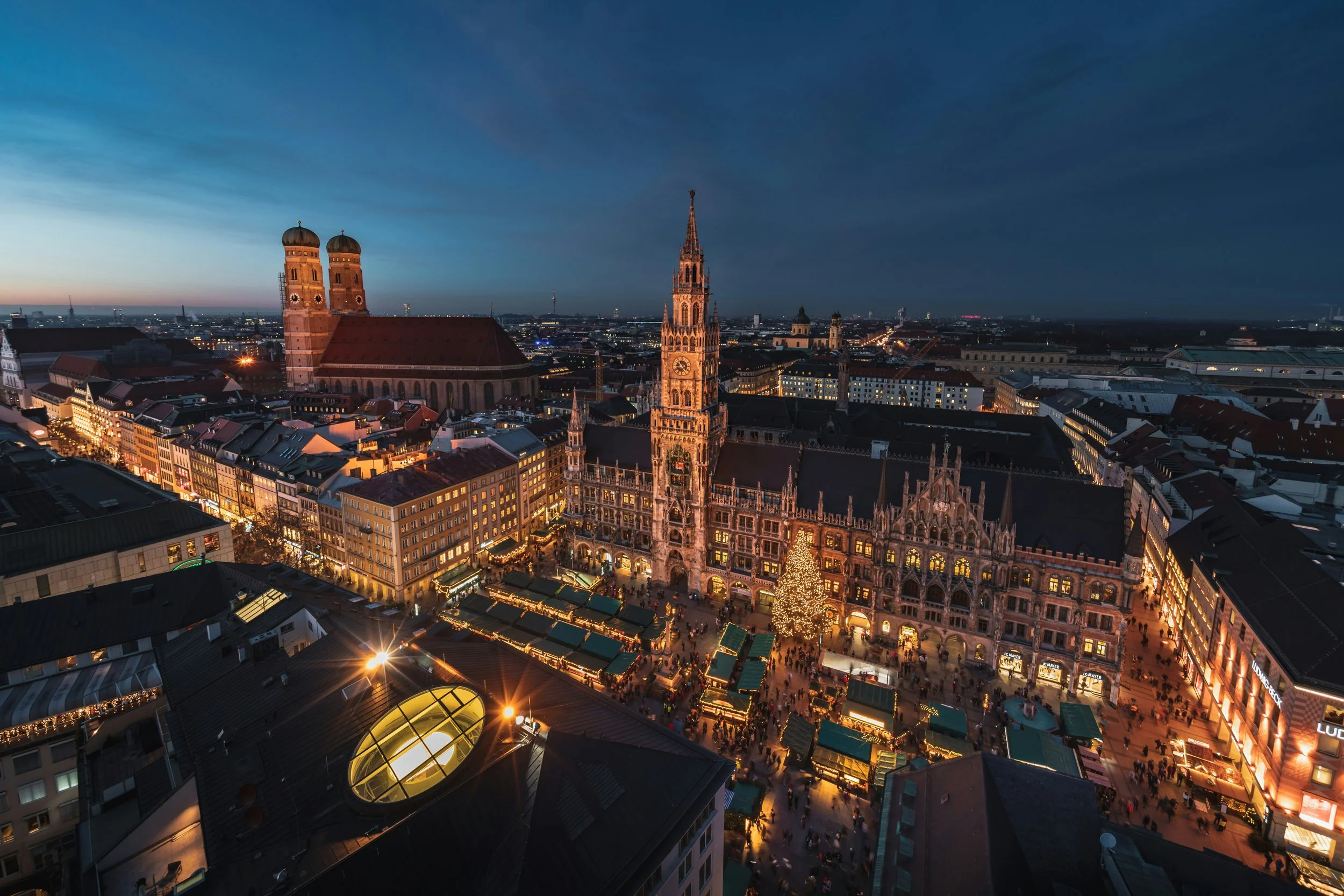
Day 1 in Munich: Marienplatz and the Old Town
Day 1 is all old town, and you can do all of it on foot, including several of the top sights in Munich. Start at Marienplatz, work outward, and finish at a beer hall.
Marienplatz and the Glockenspiel at the New Town Hall
Marienplatz is the main square, and the neo-Gothic New Town Hall fills the north side. The Marienplatz Glockenspiel performs daily at 11 a.m. and 12 p.m., plus 5 p.m. from March through October, per muenchen.de. A show runs about 12 to 15 minutes. Plan on half an hour here with the wait, and show up ten minutes early if you want a clear sightline. I'd take the 11 a.m. show on Day 1 because it gets the trip going right away.
The New Town Hall Tower
Right after the show, take the elevator up the town hall tower for a view over the square and the rooftops beyond. Allow 30 to 45 minutes, depending on the line. The time of day matters less than the sky. On a clear day you may even spot the Alps in the distance, which is the whole reason to pay for the ride.
St. Peter's Church Tower (Alter Peter)
Alter Peter is the oldest church in the old town, and its tower gives the best view of the city because the New Town Hall is right there in your frame. You climb by stairs, a few hundred of them, so wear shoes you can walk in. Go in the early afternoon after lunch, and give it about 45 minutes. Doing both this and the town hall tower is a lot of climbing for one morning. I usually tell clients to pick one.
Viktualienmarkt
A short walk from Alter Peter, Viktualienmarkt is the open-air food market where Munich locals still shop. Stalls sell cheese, sausages, fruit, flowers, and fresh bread, and there's a beer garden right in the middle. Plan about 90 minutes including lunch, and aim for around noon. One catch: the market is closed on Sundays, so if Day 1 lands on a Sunday, have lunch somewhere near Marienplatz instead.
The Frauenkirche
This is Munich's cathedral, and the twin onion-domed towers are the city's skyline signature. The church went up in the late 1400s. Inside it's surprisingly plain next to Munich's baroque churches, and just past the entrance there's a dark mark in the floor called the Devil's Footprint, which comes with a local legend. Give it about 30 minutes. Mid-afternoon works well, since it's a calm break from the pedestrian streets.
The Asamkirche
The Asamkirche is a tiny baroque church squeezed between ordinary townhouses on Sendlinger Strasse, and the inside is extremely ornate. Nearly every surface is decorated. It's the Asam brothers' private church from the 1700s, built next to their home. You'll need only 15 to 20 minutes, and it's an easy walk from Marienplatz. Go late afternoon, keep your voice low, and remember it's still a working church.
Dinner at a Traditional Beer Hall
Now for the beer hall. The Hofbräuhaus is the famous one, dating back to 1589, and it's what you'd expect: long tables, a brass band, and a room that gets loud fast. It's touristy and I still send people once for the experience. Many locals prefer an Augustiner hall, which is generally a little calmer and a little more local. Plan two hours around 6 p.m., and reserve ahead if you're going on a weekend.
The beer hall I send clients to most is the Augustiner Stammhaus on Neuhauser Strasse. Order the roast pork with a dumpling and a Helles, the standard pale lager here, and don't skip the giant pretzel while you wait.
Day 2 in Munich: Palaces, Gardens, and Beer Gardens
Day 2 is the royal and green day. You'll see a palace in the morning, walk through gardens by lunch, and end the day in the park with a beer. It's the easiest day of the three to get right if you start early.
The Munich Residenz
The Munich Residenz was the royal palace of the Bavarian rulers and ranks among the largest city palaces in Germany. Plan two to three hours, and add the Treasury if you love crown jewels, since it holds the royal crowns and a lot of jewels. Be there when it opens, because tour groups arrive by mid-morning and the rooms feel very different when they're empty. Opening hours and ticket options change by season, so check the official Residenz site first. For my clients' trips, I reserve palace tickets ahead of time during the busy months.
Odeonsplatz and the Theatine Church
From the Residenz it's a ten-minute walk to Odeonsplatz, where the Theatine Church's yellow baroque facade and twin towers make one of the most photographed corners of Munich. Step inside for the bright white stucco interior, which looks nothing like the gold-heavy churches from Day 1. Allow 20 to 30 minutes. Know that it's a working church and has services, so check the times posted at the door.
The Hofgarten
The Hofgarten is the Residenz's formal court garden, with clipped hedges, symmetrical paths, and a small pavilion in the center. It's free and you can wander through in about 30 minutes. Late morning is nice, and so is a bench with a pastry from a bakery you pass on the way. It also happens to be the starting point for the walk toward the English Garden, which takes around 25 minutes at an easy pace.
The English Garden
English Garden Munich is one of the largest city parks in the world, bigger than New York's Central Park, and trying to see all of it is a mistake. Pick one stretch and wander. Plan two to three hours with a coffee or lunch break, and go in the afternoon when the meadows fill up with locals. One thing to know before you go: some meadows are clothing-optional, which is normal in Munich and nobody blinks.
The Eisbach River Surfers
At the southern edge of the park, a standing wave on the Eisbach lets surfers ride right in the middle of the city while a crowd watches from the bridge. It's one of Munich's quirkiest sights. The wave disappeared after a riverbed cleanup in October 2025 and was officially reopened to surfers in May 2026. Because the riverbed is cleaned each fall, check the wave's current status before building a stop around it. Give it 20 to 30 minutes, and know that the city added new safety rules when it reopened.
The Monopteros
The Monopteros is a small Greek-style temple on a hill in the middle of the park, built in the 1830s. The climb is gentle, and you can see over the treetops to the old town towers. Budget about 20 minutes. Late afternoon is when it pays off, when the light is softer and people sit on the steps with a drink.
The Chinese Tower Beer Garden
Around a wooden pagoda deeper in the park sits one of Munich's best-known beer gardens, with room for thousands. It's mostly self-service, and you pay a deposit on your stein that you get back when you return it. Traditional Bavarian beer gardens let you bring your own food, though not your own drinks, so check the signs on which tables are which. Settle in for an hour and a half to two hours, and plan to arrive hungry.
An Evening Across the Isar in Haidhausen
If you still have energy, take a short tram or U-Bahn ride east across the Isar River to Haidhausen. It's a quiet neighborhood that feels like a small town, with tree-lined squares, wine bars, and small restaurants that fill up with locals. Two hours is plenty. The pace here is quieter than the old town, which makes it a good way to end a day on your feet.
Day 3 in Munich: Choose Your Own Adventure
Day 3 is flexible, and it's where the question of what to do in Munich for 3 days gets its most personal answer, so pick what fits you. Palace and garden people should choose Nymphenburg. Travelers who want to understand the history should choose Dachau. Design and car fans do best at Olympiapark and BMW Welt, science-curious families at the Deutsches Museum, and art lovers in Maxvorstadt. Anyone who wants to see a famous castle takes the Neuschwanstein day trip.
Nymphenburg Palace and Its Gardens
Nymphenburg Palace was the summer residence of the Bavarian rulers, a large baroque palace with a big park, canals, and smaller garden buildings. Inside, the Gallery of Beauties is a highlight, and the carriage museum on the grounds is a fun surprise. Plan three to four hours with the gardens. Tram 17 runs from the city center and takes about 25 to 30 minutes. It suits palace lovers, slow walkers, and anyone who wants a gentler day after two busy ones.
The Dachau Concentration Camp Memorial Site
Dachau was the first Nazi concentration camp, opened in 1933, and today it's a memorial and a place of remembrance. Plan at least half a day, and approach the visit with that in mind. Take the S2 to Dachau station and then bus 726 to the memorial, which together take roughly 45 minutes to an hour from the center. Admission is free. The memorial is open daily from 9 a.m. to 5 p.m. and closed on December 24, and audio guides and guided tours cost extra. The site says some content may not be appropriate for children under 13 and recommends that children come only with their parents. Verify hours and visitor guidance on the memorial's official website before you go. It suits travelers who want a deeper understanding of the history, and I'd keep the rest of that day light.
Olympiapark and BMW Welt
Olympiapark is the site of the 1972 Summer Games, with the tent-roof stadium canopy and the Olympic Tower rising over a big green park. BMW Welt, the brand's showroom and delivery hall, sits across the road, with the BMW Museum right beside it. The U3 gets you from Marienplatz to Olympiazentrum in about 20 minutes. Plan four to five hours. It suits design and architecture fans, car enthusiasts, and families with kids who need space to run.
The Deutsches Museum
The Deutsches Museum is one of the largest science and technology museums anywhere, set on an island in the Isar. It's roughly a 15-minute walk from Marienplatz. The place is enormous, so choose a couple of halls and let the rest go. Plan three to four hours. It suits curious travelers and families, and it's the best rainy-day backup on this list.
The Art Museums in Maxvorstadt
Maxvorstadt is Munich's museum district, home to the Pinakotheken, which cover old masters, 19th-century works, and modern art and design. Pick one or two instead of all of them, and check which are currently open before you plan around a specific one. Allow two to four hours. The U2 to Königsplatz or tram 27 gets you there in about 15 to 20 minutes from the old town. It suits art lovers, and it's another solid choice for a gray day.
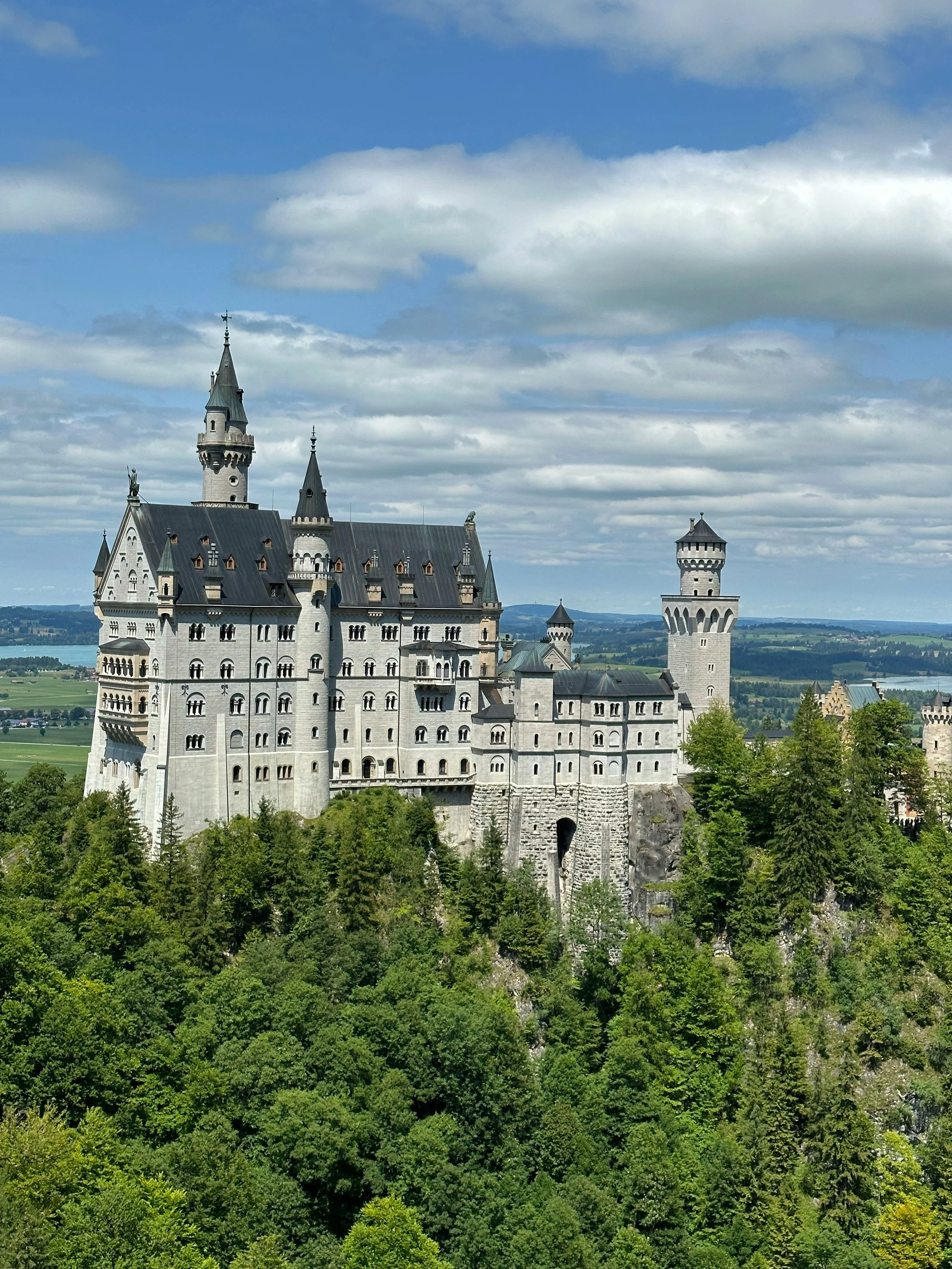
A Day Trip to Neuschwanstein Castle
Neuschwanstein is the castle King Ludwig II built, and it's the one you've probably seen in photos of Bavaria. Getting there takes about two hours each way by train to Füssen and then a bus, so this is a full day of ten to twelve hours. Timed tickets sell out, so book them well ahead, especially from late spring through early fall. Be honest with yourself about the day: the interior tour is short, and most of the time goes to travel and the walk up. It suits first-timers who want the classic photo, and a private driver makes the day far easier. It’s one of my favorites, even though Mary’s Bridge can be a bit daunting.
Where To Stay in Munich
Munich is a hotel city, and the neighborhood you choose shapes your trip more than the specific building does. Here's how I think about the options.
Altstadt
The old town is best for first-time visitors. It's pedestrian streets, church towers, and beer halls, and you're already in it, so Day 1 starts at your front door. The tradeoff is more foot traffic and a higher price tag. If you want to walk everywhere and be back in your room in five minutes for a rest, this is the one.
Maxvorstadt
Maxvorstadt has a museum-and-student feel, thanks to the nearby university. Think bookshops, bakeries, and a tree-lined calm that the old town doesn't have. It's a 10 to 15 minute walk to the Residenz and Marienplatz, or a short U-Bahn ride. It suits culture lovers and repeat visitors who've already done the big sights.
Schwabing
Schwabing was once Munich's artist quarter, and it still has the cafes and older buildings to show for it. It sits right beside the English Garden, so a morning park walk becomes your routine. Reaching the old town takes about 15 minutes by U-Bahn. It suits couples and anyone who wants a lived-in neighborhood over a tourist one.
Haidhausen
Haidhausen is the local, relaxed choice across the Isar. You get leafy squares, wine bars, and restaurants that locals actually eat in, and the old town is a short S-Bahn or tram ride away, or about 25 minutes on foot. It's best for travelers who like to settle in somewhere that feels like a neighborhood.
Near the Hauptbahnhof
The area around the main train station is best for day trips, since you can roll out of bed and onto a train to Salzburg or Füssen. Marienplatz is a 12 to 15 minute walk. The streets right around the station are not the prettiest in Munich, so the exact block matters, and I choose carefully here. It suits trips built around rail travel.
Timing matters just as much as location. Hotels fill up and prices climb during Oktoberfest and the Christmas market season, and the best rooms go first. For Oktoberfest, I start looking nine to twelve months out. For the Christmas markets, several months ahead is a good rule.
For clients, I tend to book grand historic hotels in the old town for first visits and special occasions, since the location and service are hard to beat. Boutique design hotels in Maxvorstadt or Schwabing suit travelers who'd rather feel like locals. A polished business-style hotel near the Hauptbahnhof works when the trip is built around train days.
Best Time To Visit Munich
Munich is a year-round city, but each season changes the trip a lot. Here's what to expect.
Spring
Spring is when the beer gardens open, usually from about April, and the first warm afternoon fills them up. Weather is cool and changeable, so pack layers and an umbrella. Crowds are moderate. Events worth planning around include the Frühlingsfest, a smaller spring cousin of Oktoberfest, though you should confirm its dates for your year.
Summer
Summer is the busiest season. Days are warm, evenings stay light for hours, and beer gardens run at full volume. It's also peak time for hotels and for the Neuschwanstein crowds, so book early. Expect the occasional afternoon thunderstorm. It's also the best season for Alps day trips and the Tollwood summer festival.
Oktoberfest Season
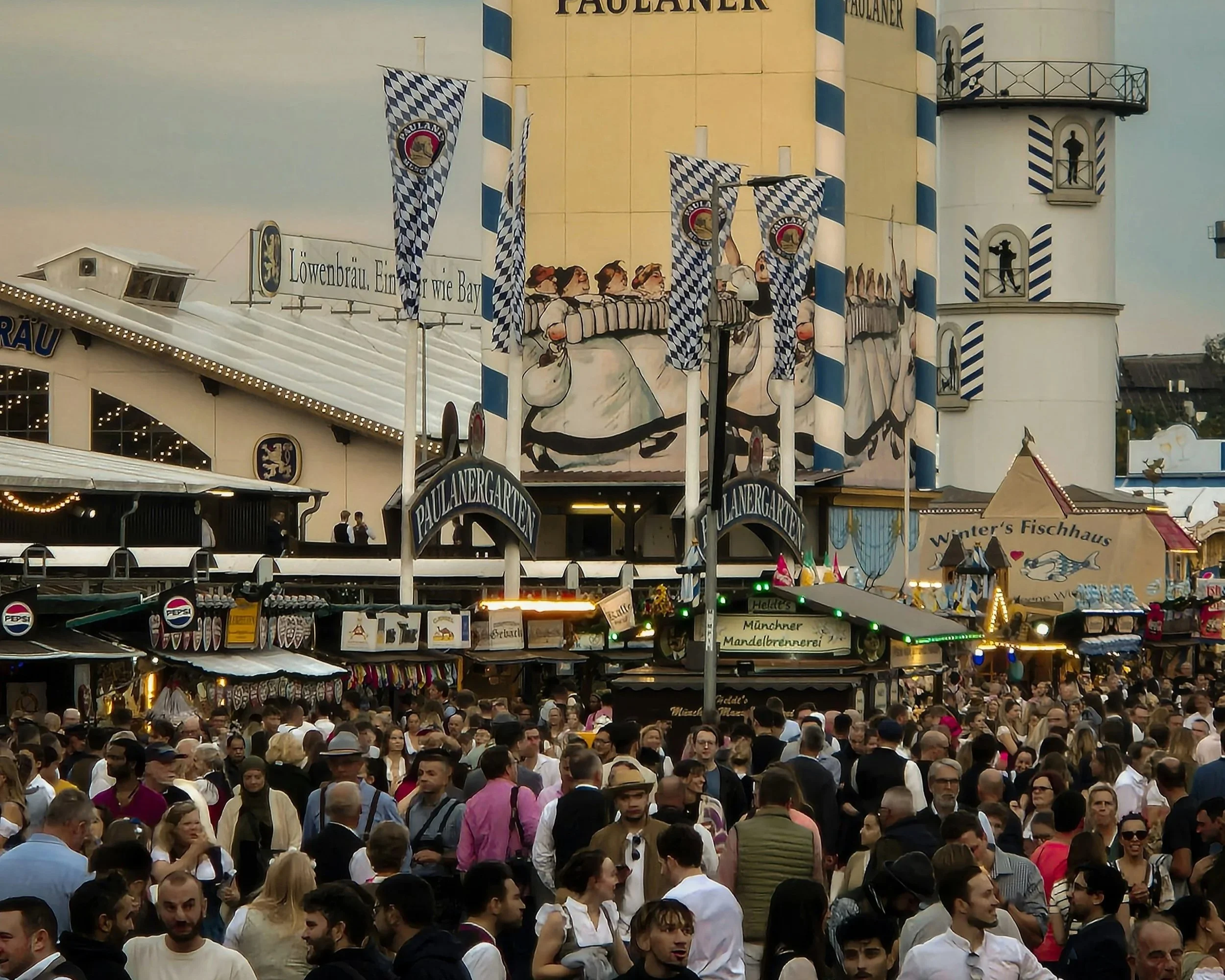
Oktoberfest runs from mid-September to early October, so verify the dates for your year. The weather is crisp, hotels sell out, and the city is packed and lively. The big tents are packed, and tables get reserved months in advance, so plan that part early. Go on a weekday during the day if you want a calmer version, and keep your sightseeing days well away from the opening weekend.
November
November is quieter, grayer, and cooler, sometimes damp or foggy. It's a good month for museums and beer halls, and there are plenty of things to do in Munich in November if you're willing to lean indoors. Early in the month, remember that November 1 is a public holiday in Bavaria, so most shops close. The Christmas markets open later in the month, which gives the month a better ending.
Christmas Market Season
Don’t get me started on my love for Christmas Markets. The Marienplatz Christkindlmarkt runs November 20 to December 24, 2026, per muenchen.de, and has more than 130 stalls. Note that it is closed on Sunday, November 22. The rest of the Munich Christmas markets spread across the city, from a medieval-themed market to ones near the Residenz and in other districts, so you can market-hop all day. Weather is cold, and it gets dark by about half past four. Bring gloves, and know that mugs of Glühwein come with a deposit you get back.
A December visit can turn into a cozy winter trip, with lights in the squares, hot drinks, and museums to duck into when it's cold. If that sounds like your kind of travel, our guide to romantic winter vacations has more ideas.
If you ask me which month to pick for a first visit, I'd say the either the first half of September or for early December for Christmas Markets. In September, the beer gardens are still open, the days stay long, the summer crowds thin out, and it lands before Oktoberfest takes over the hotel market.
Munich for Couples
Munich works beautifully for a romantic getaway or an anniversary trip. It's polished but relaxed, and in one evening you can go from the opera to a casual beer hall. A few ideas to build in:
Catch sunset at the Monopteros with something to sip, since locals do just that. Spend a night at the opera at the National Theatre, the home of the Bavarian State Opera, and book early because performances sell out. Take a stroll along the Isar, where the riverbank paths feel much quieter than the old town. End another night with a quiet dinner in Haidhausen, where the restaurants are intimate and the crowd is mostly locals.
Munich also fits neatly into a bigger European honeymoon. Pair a few nights here with Salzburg and a mountain stop, then keep going by train. Our list of honeymoon destinations in Europe shows how it could slot into a longer route.
Where To Go After Munich
When your Munich Germany itinerary wraps up, Munich is an easy jumping-off point by train. Salzburg is about two hours away. Vienna takes roughly four hours. Prague is a longer ride, in the range of five to six hours. Verify train times with Deutsche Bahn before you book, since construction work in 2026 has shifted some schedules between Germany and Austria.
If you want a route that keeps rolling, our Prague, Vienna, and Budapest itinerary picks up where this one leaves off.
And if you'd rather skip the guesswork on neighborhoods, ticket timing, and train connections, I can build the trip around your dates and interests. Reach out to plan your Munich trip, and we'll turn these three days into something that fits you.
P.S. - Here is that insider tip, which I have utilized on several occasions. A lot of flights from the U.S. to more eastern European destination fly into a European hub first before connecting. Munich is one such hub. If you have the time/flexibility, you can stop for a night and visit Freising, a small town on the outskirts of Munich (and much closer to the airport) for a short glimpse into more authentic and local Bavarian life. You can even visit the self-described world’s oldest brewery, Weihenstephan, which, according to it’s history, has been producing beer for nearly 1000 years.