Safari Honeymoon
Now more than ever, honeymooning couples want their first trip as a married couple to break the norm of the “traditional” honeymoon. An option that I find myself providing more and more frequently are safaris. Safaris used to feel like a niche thing -- something for serious wildlife people, not newlyweds. But spend enough time planning travel and you start to see the pattern: couples who do a safari honeymoon come back different. Not in a vague, hard-to-articulate way. In a very specific way. They talk about it constantly. They show you the photos unprompted. They start planning to go back before the trip is even over.
It makes sense when you think about what a safari actually is. You are in a place that operates on its own schedule, completely indifferent to yours. A lion does not perform on cue. A leopard does not hold still because you need a better angle. Every game drive is its own thing, and that unpredictability, shared with your partner, guided by someone who genuinely knows the bush, creates a kind of experience that a week at a resort just cannot replicate.
Add to that the fact that the lodges at the top end of the market are genuinely exceptional. Private plunge pools. Outdoor showers open to the sky. Dinners set up in the bush with lanterns and a sommelier. The luxury side of safari has been refined over decades by operators who understand exactly what high-end travelers want, and they are very good at delivering it.
This post covers everything: what a safari honeymoon actually involves, why it works so well for couples, where to go and when, how to put the trip together, what to budget, and how to pack. If you are early in the planning process and trying to figure out whether this is the right trip for you, keep reading.
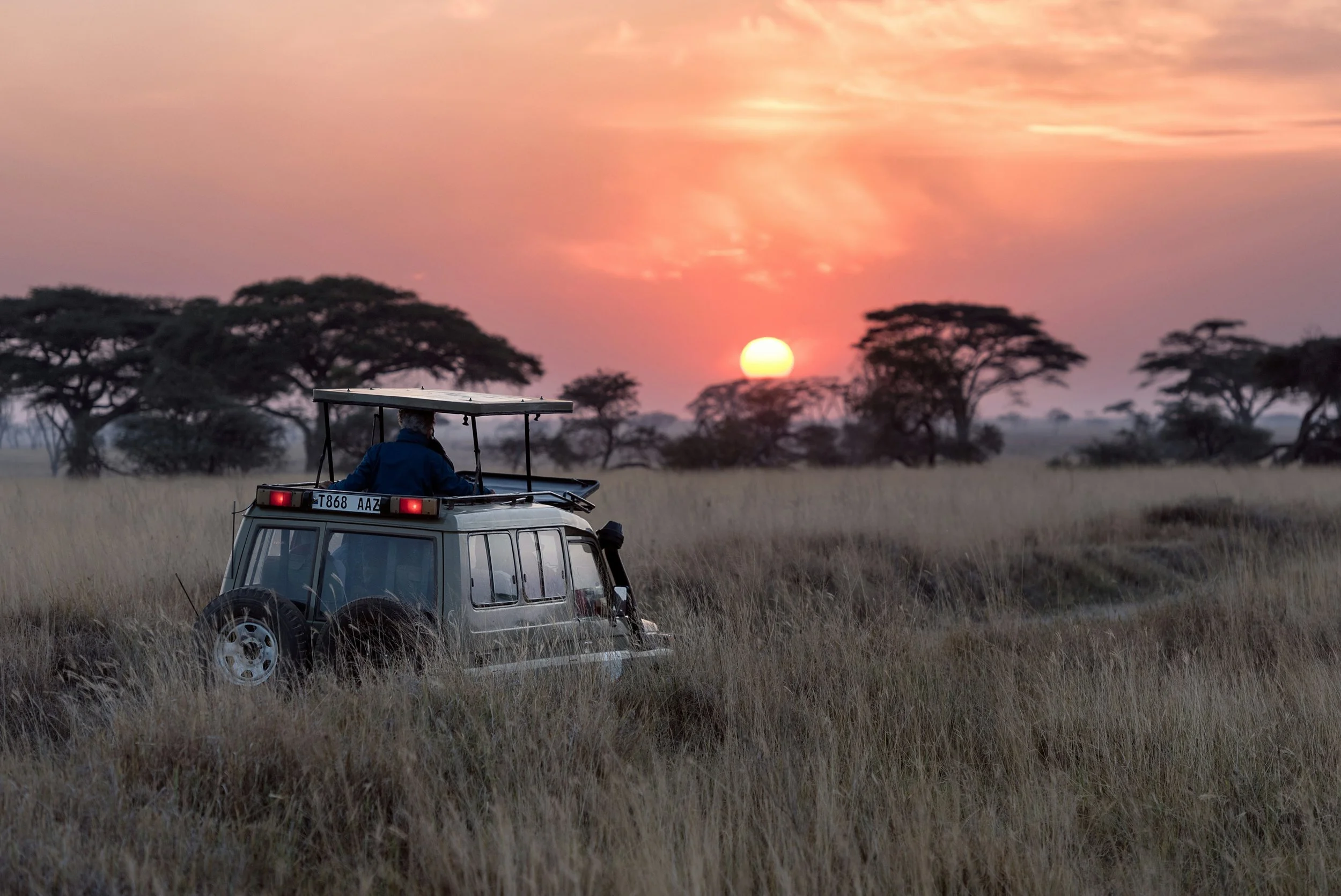
What Is a Safari Honeymoon,
and What to Expect
A safari honeymoon is a trip built around wildlife viewing in the wild -- almost always in Africa, and almost always in destinations where the landscape itself is as much of a draw as the animals. You stay in a safari lodge or tented camp, usually for several nights at a time, and your days are structured around morning and evening game drives with a professional guide. Meals, drinks, and activities are typically all-inclusive, so the focus stays on the experience rather than the logistics.
The word safari is Swahili for journey, and that framing is actually pretty apt. A well-built safari honeymoon moves through different landscapes and ecosystems -- you might spend a few nights in the open savanna of the Masai Mara, then fly to a water-based camp in the Okavango Delta, then extend the trip to a beach on the Indian Ocean coast. Each leg feels distinct. The variety is part of what makes it work so well as a longer trip.
At the luxury end of the market -- which is where most honeymoon couples are operating -- the properties are small by design. Eight suites, twelve villas, sometimes fewer. That scale creates an atmosphere that a larger resort cannot: the staff knows your names before you arrive, knows what you ordered for breakfast yesterday, knows you are celebrating something. It is attentive without being over-the-top, which is a difficult thing to get right and the best operators have figured it out.
The mix of wildlife encounters and genuine comfort is what pulls couples in. An african safari honeymoon is not roughing it. It is one of the more considered and refined travel experiences available, and it happens to take place somewhere that most people will never go.
Why Choose a Safari Honeymoon?
I get asked this question a lot, usually from couples who are weighing a safari against a beach destination or a European trip. Here is the honest version of my answer.
No Two Days Look the Same
This sounds like a line, but it is literally true on safari in a way that it is not in most travel contexts. The bush changes constantly; with the season, with the weather, with animal movements that even experienced guides cannot fully predict. Couples who spend a week in the Serengeti will tell you that every single game drive felt different from the one before it. Morning three might deliver a cheetah hunt. Morning five might be quiet until the last twenty minutes, when you stumble onto a breeding herd of elephants at a waterhole. You cannot script it.
That unpredictability is actually one of the things that makes safari so good for a honeymoon. You are not lying on the same beach reading a book. You are genuinely in it together, responding to things as they happen. It creates shared moments that are difficult to replicate anywhere else.
The Lodges Are Designed for Exactly This
High-end safari lodges are not large. That is a deliberate choice. A property with eight suites and a staff of forty can do things that a 200-room resort cannot. The attention to detail, the personalization, the ability to set up a private dinner in the bush on two hours notice. Luxury lodges in destinations like the Okavango Delta and the private reserves of South Africa have been refining this model for a long time, and the product is genuinely impressive.
Most honeymoon couples get some version of an upgrade or added experience without asking for it. A private game drive, a surprise setup at their suite when they return from an afternoon drive, a bottle of something good waiting on arrival. The operators want your trip to go well, and because the properties are small, they actually have the bandwidth to make that happen.
A Private Game Drive Is a Different Thing Entirely
On a shared game drive, you are in a vehicle with four to eight other guests. The guide is managing everyone. Different interests, different camera equipment, different attention spans. It works fine, but it is a group experience. On a private game drive, it is just the two of you and your guide. The pace is yours. If you want to stay with a leopard sighting for an extra forty minutes, you stay. If you want to stop and have coffee somewhere with a good view and just sit, you sit.
For a honeymoon, I almost always recommend building a private game drive into the itinerary. At some lodges it is included in the rate; at others it is a supplement. Either way, it is worth it.
All-Inclusive Means You Actually Relax
One of the things I hear from couples after a safari is how much they appreciated not thinking about money for a week. Most luxury safari lodges bundle everything, accommodation, all meals, alcohol, twice-daily game drives, and activities like bush walks and night drives, into the nightly rate. You pay upfront and then you are done. No tab running at the bar. No checking the menu prices before you order. It removes a low-level stress that most people do not even realize they are carrying until it is gone.
For a honeymoon specifically, that matters. You want to be present. The all-inclusive model helps with that.
Safari Pairs Exceptionally Well With a Beach Extension
Some of the best itineraries I build for honeymoon couples are not safari-only trips. A safari and beach combination. Five or six nights in the bush followed by five or six nights on the coast; gives you two very different experiences that complement each other well. The safari leg is active and immersive. The beach leg is slow. After a week of early morning wake-up calls and full days in the field, a few days of doing absolutely nothing by the ocean feels earned.
South Africa makes this easy: fly into Johannesburg, head to the bush, then fly down to Cape Town for the tail end of the trip. East Africa works well with a Zanzibar or Seychelles extension. These are not complicated itineraries to build, and the combination tends to make for a very complete honeymoon.
Best Safari Honeymoon Destinations
There is no single right answer here -- the best destination depends on timing, budget, what you most want to see, and whether you are open to combining multiple locations. These are the places I recommend most often for honeymoon couples, and what you should actually expect from each one.
Maasai Mara, Kenya -- Best for the Great Migration and High Wildlife Density
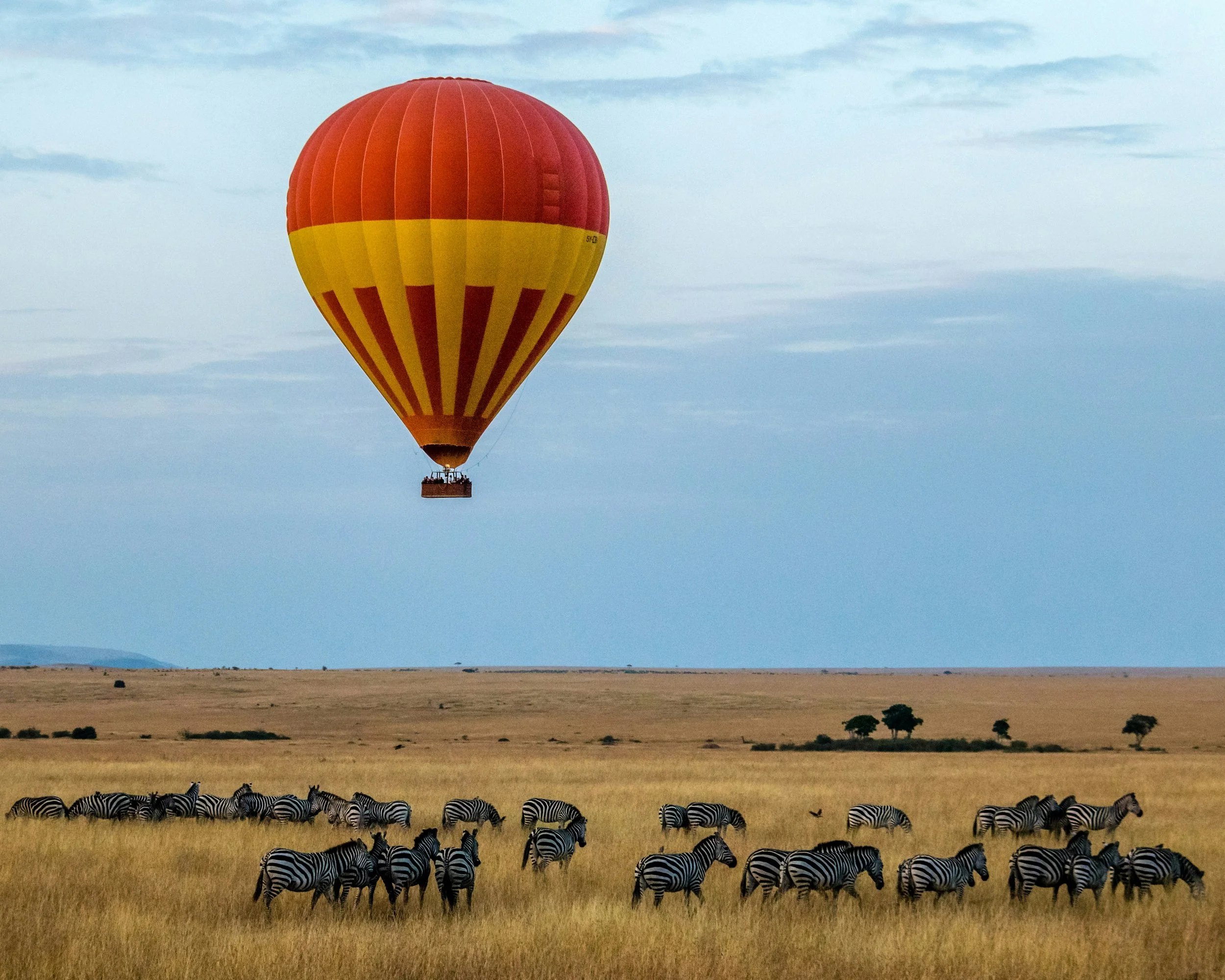
The Masai Mara is the destination most people are picturing when they think about an African safari honeymoon. Rolling golden savanna, a dense predator population, and between July and October, the Great Migration. More than a million wildebeest and zebra moving north from Tanzania in search of grazing, crossing the Mara River in chaotic, crocodile-filled surges that are about as dramatic as wildlife gets.
The river crossings are not guaranteed on any given day. The herds move when they move, and they sometimes wait at the bank for hours or days before committing. But being there for it and watching thousands of animals pour into a river while crocodiles launch from the water is one of those experiences that you do not forget. If the timing aligns with your trip, it is worth building your honeymoon around.
Outside of migration season, the Mara is still excellent. The resident lion prides are large and well-documented. Cheetah sightings are common. The landscape photographs beautifully in almost any light. Staying in a private conservancy bordering the main reserve gets you away from the vehicle congestion that can build up at popular sightings during peak season. The traversing is exclusive, the camps are smaller, and the whole thing feels more personal. Wildlife viewing from a hot air balloon safari? What’s not to love?
Best time: July through October for the migration. January through March for quieter conditions with strong predator activity and significantly fewer vehicles.
Serengeti, Tanzania -- Ideal for Classic Safari Landscapes and Luxury Lodges
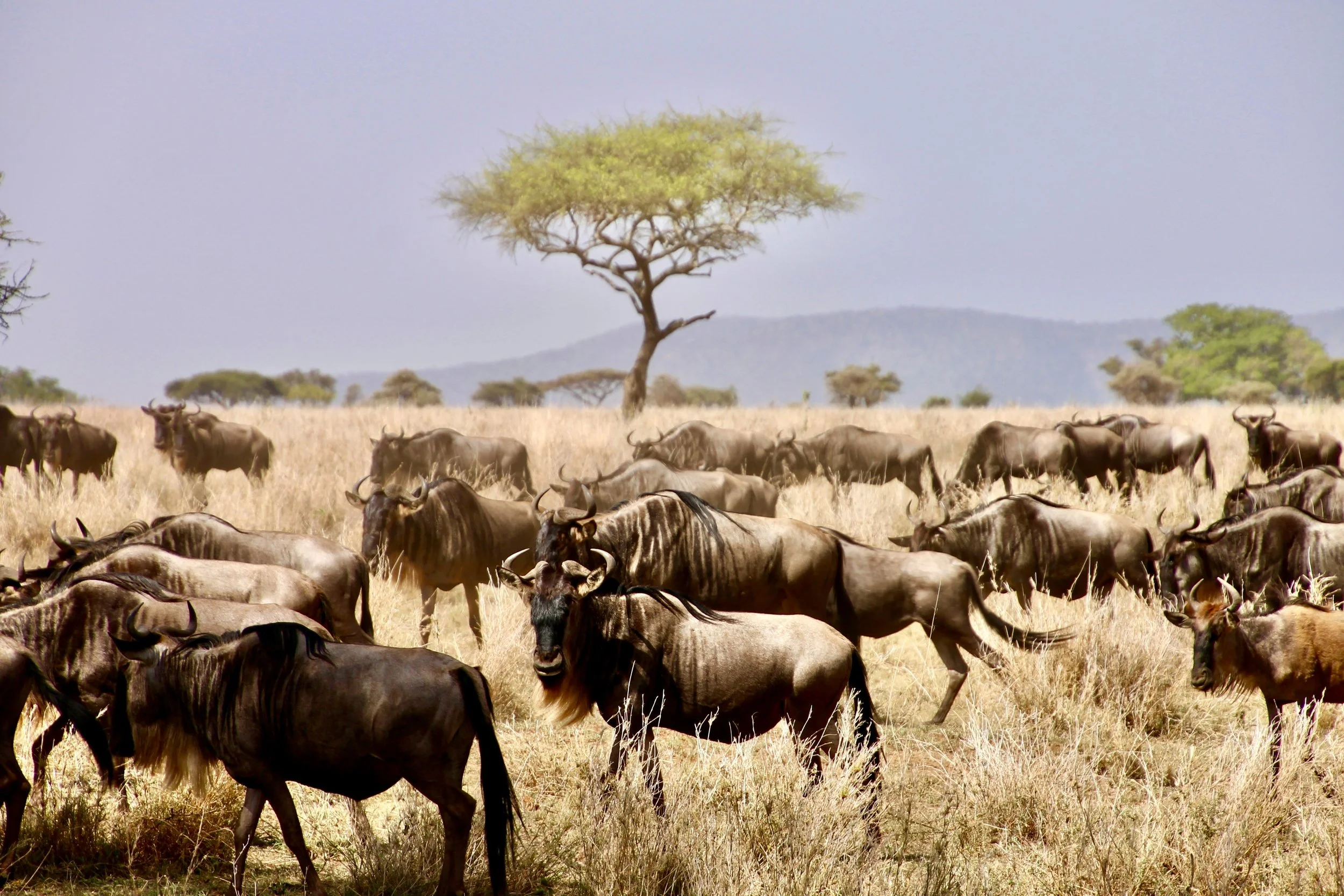
The Serengeti and the Masai Mara are part of the same ecosystem. The Mara River is the border between them and the migration moves between the two depending on the season. The Serengeti is where the herds spend most of the year, and it is a much larger territory: roughly 15,000 square kilometers of savanna, woodland, and rocky kopjes that lions use as elevated vantage points.
One of the most underrated times to be in the Serengeti is during calving season, January through March, when tens of thousands of wildebeest calves are born in the southern plains over a span of a few weeks. The sheer volume of newborns draws every predator in the ecosystem: cheetahs, lions, hyenas, wild dogs, and the resulting game viewing is extraordinary. It is also significantly less crowded than the migration months.
Tanzania allows you to build a more varied itinerary than most safari destinations. The Serengeti combined with Ngorongoro Crater, a collapsed volcanic caldera that supports one of the densest wildlife populations anywhere, gives you two very different environments in the same trip. Adding Zanzibar as a beach extension at the end is a straightforward flight from Arusha and one of the more satisfying honeymoon combinations I put together.
Best time: January through March for calving and lower crowds. June through October for the northern river crossings and peak game drive conditions.
Kruger National Park, South Africa -- Best for First-Time Safari Couples
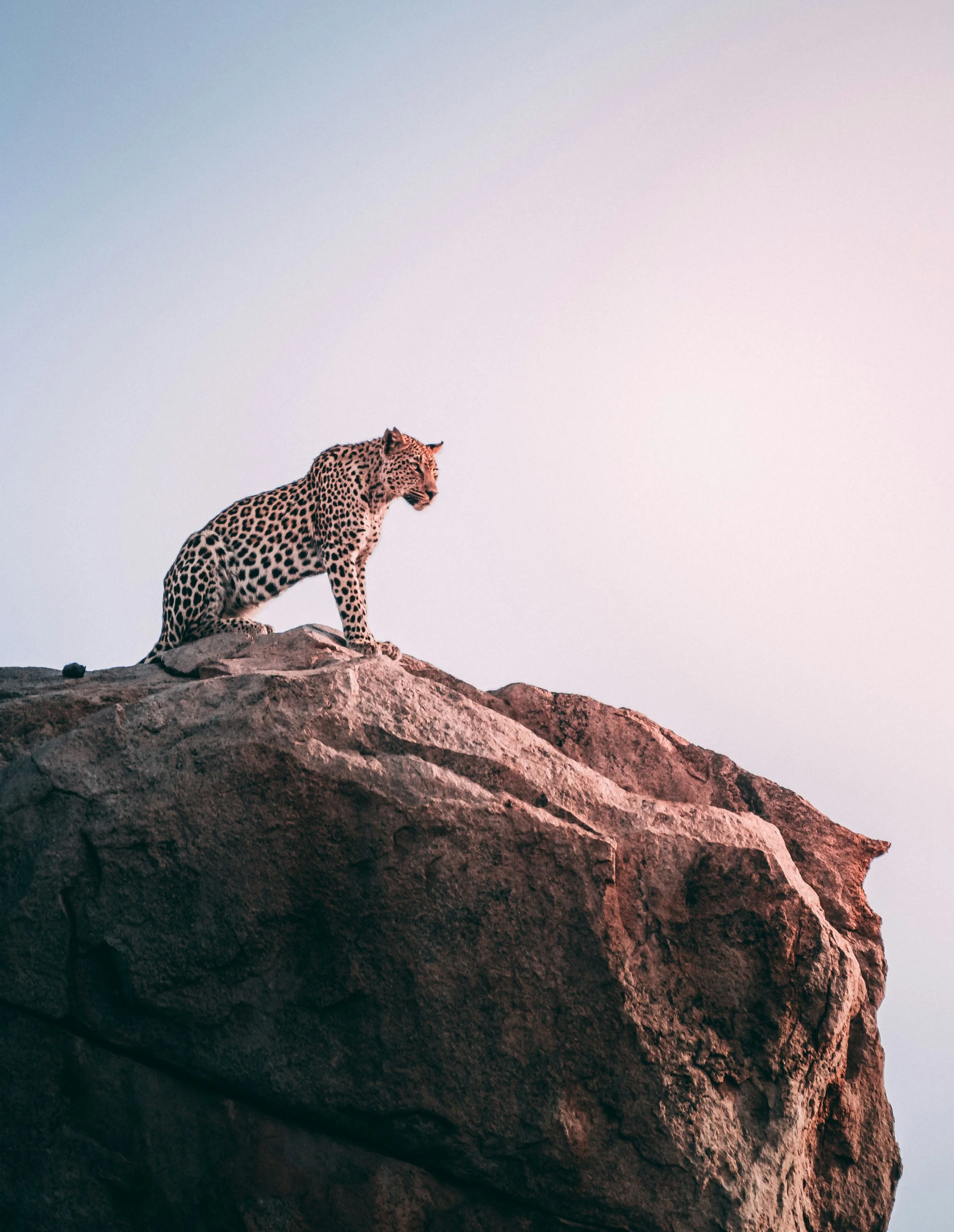
South Africa tends to be the destination I suggest when couples are doing their first African safari honeymoon and want something that feels approachable without compromising on quality. Johannesburg is a major international hub, domestic connections to the bush are quick and reliable, and the infrastructure throughout the country is genuinely world class in a way that makes logistics easier than in some other safari destinations.
Kruger National Park itself is vast, close to two million hectares, and the private reserves that share its western boundary are where the best honeymoon experiences happen. These areas have unfenced borders with the national park, so animals move freely, but the game drives operate under private traversing rules: no other vehicles at a sighting, off-road driving permitted, night drives and bush walks available. Leopard sightings in particular are exceptional here. The animals are so habituated to vehicles that they will walk directly past you without any reaction.
The proximity to Cape Town is a major factor for a lot of couples. A week in the bush followed by a few days in Cape Town, arguably one of the best city destinations in the world, and then the Cape Winelands makes for a trip with a lot of range. You get the wildlife, you get excellent food and wine, you get mountain scenery and coastline. South Africa is hard to beat as a complete honeymoon destination.
Best time: May through September. The dry season brings cooler temperatures, thinner vegetation, and animals clustering around water sources -- all of which make for better game viewing.
Okavango Delta, Botswana -- For Couples Who Want Seclusion Above Everything Else
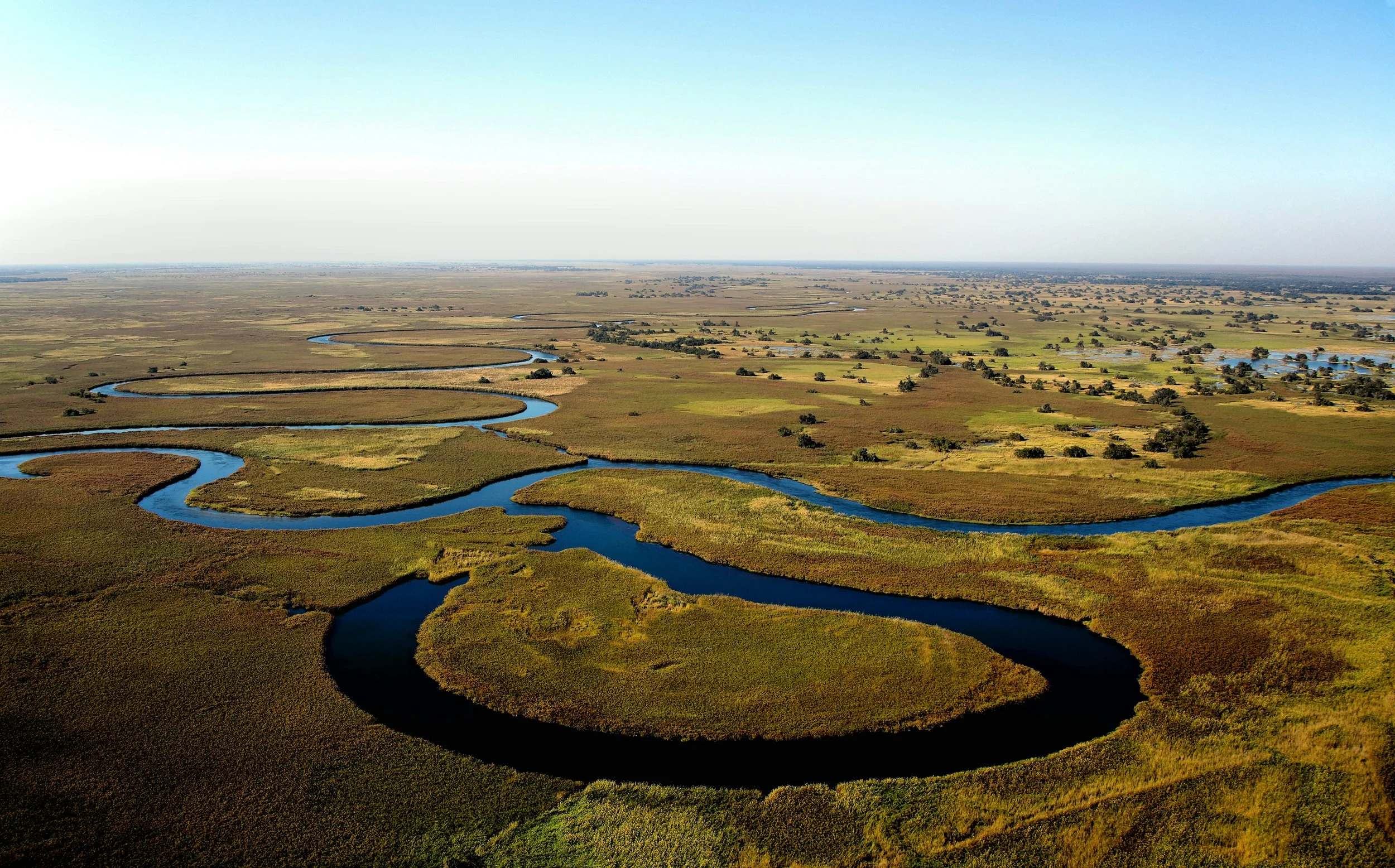
The Okavango Delta is the destination I recommend when couples tell me that crowds are a dealbreaker and budget is secondary. Botswana has deliberately structured its tourism around keeping visitor numbers low and prices high -- the result is a safari experience where you can spend an entire day in the bush without seeing another vehicle. In July and August, when Kenya and Tanzania are at peak traffic, the Delta feels almost empty by comparison.
What makes the Okavango unusual as a safari destination is the landscape itself. It is an inland delta. The Okavango River flows out of Angola, spreads across the Kalahari, and creates an enormous seasonal floodplain of channels, lagoons, palm islands, and open plains that floods in the dry season when rainfall in the highlands pushes water south. The result is that you get game drives in the traditional sense alongside water-based activities that are unlike anything else in Africa.
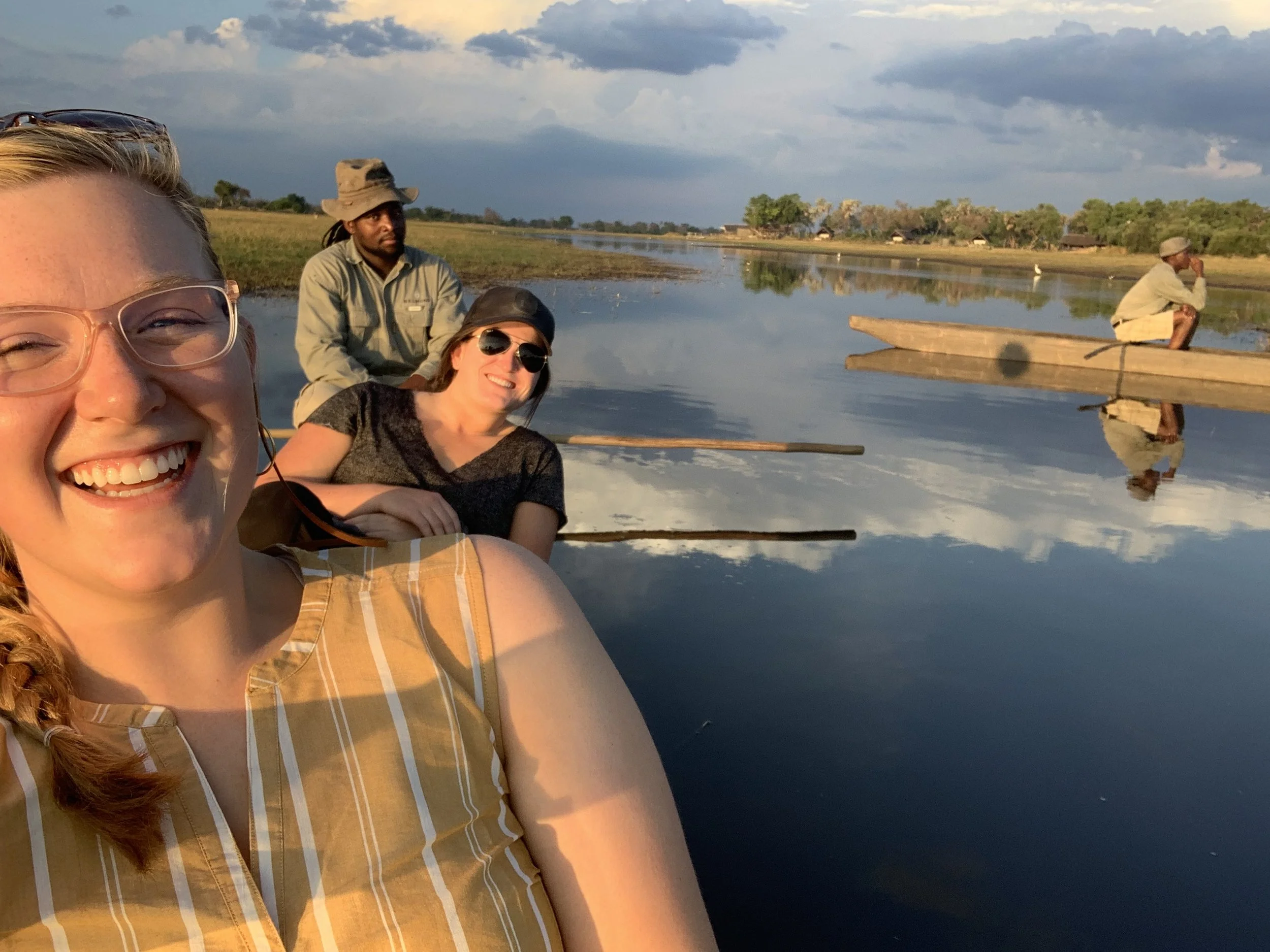
A mokoro excursion, a traditional flat-bottomed dugout canoe poled silently through narrow channels by a local guide, gives you a completely different perspective on the wildlife. You are low to the water, moving quietly, close to things in a way that a vehicle does not allow. Hippos surface nearby. Jacanas walk across lily pads. Fish eagles call overhead. It is unhurried in a way that suits a honeymoon well.
Best time: June through October, when the flood is at its peak and wildlife concentrates on the higher ground of islands and floodplain edges.
Victoria Falls, Zambia/Zimbabwe -- The Natural Add-On
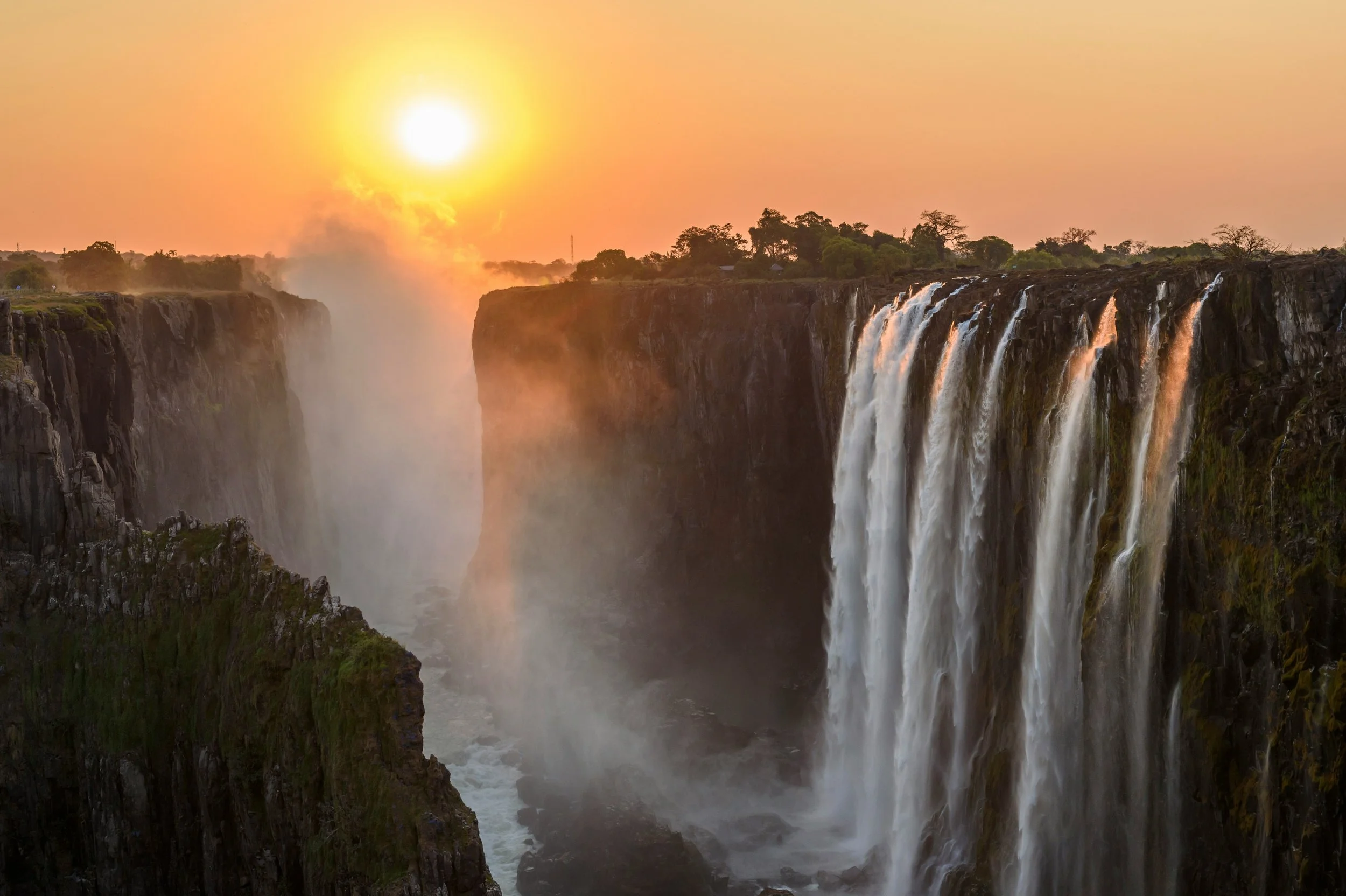
Victoria Falls is not a safari destination in the strict sense, but it is a genuinely spectacular place and it fits naturally into a southern Africa honeymoon itinerary as a two or three-night stop. The falls themselves are enormous. A kilometer-wide curtain of water dropping into a narrow gorge, and depending on the season, the spray rises high enough to drench you from a hundred meters away.
The surrounding area has options for couples at different activity levels. Helicopter flights over the falls are a straightforward choice and give you a perspective that walking viewpoints cannot. Sunset cruises on the Zambezi are relaxed and often very good for wildlife. Elephants drink from the river, hippos surface, and the light in the late afternoon is excellent. For couples who want more, white-water rafting in the gorge below the falls is some of the most technically challenging commercially run rafting in the world.
Logistics are easy. Both the Zambian and Zimbabwean sides of the falls have good luxury accommodation options, and a KAZA Univisa covers entry to both countries. Most couples slot Victoria Falls at the start or end of a larger itinerary rather than as the centerpiece. Best time: February through May for maximum water volume; August through November for clearer views and better rafting conditions.
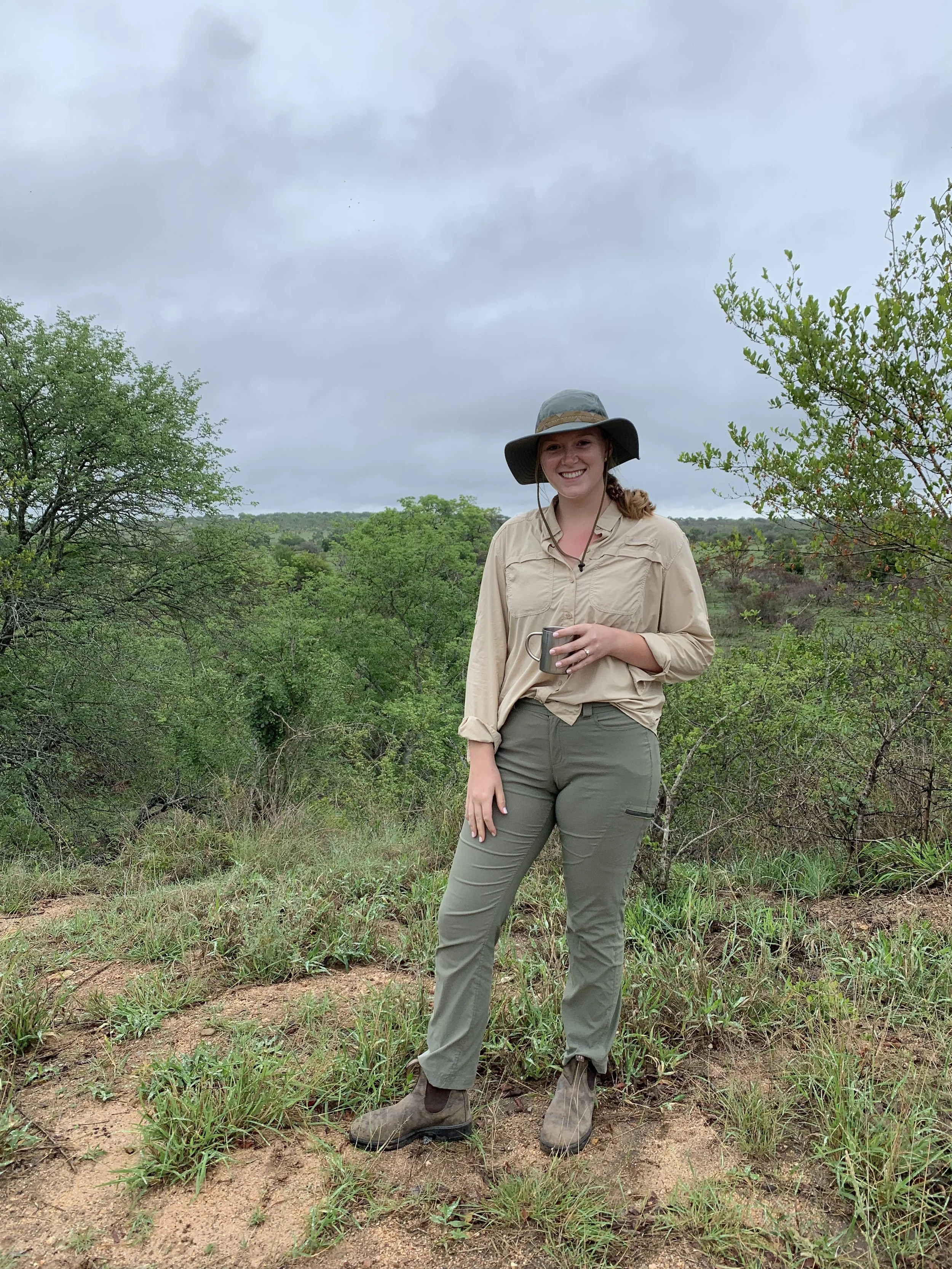
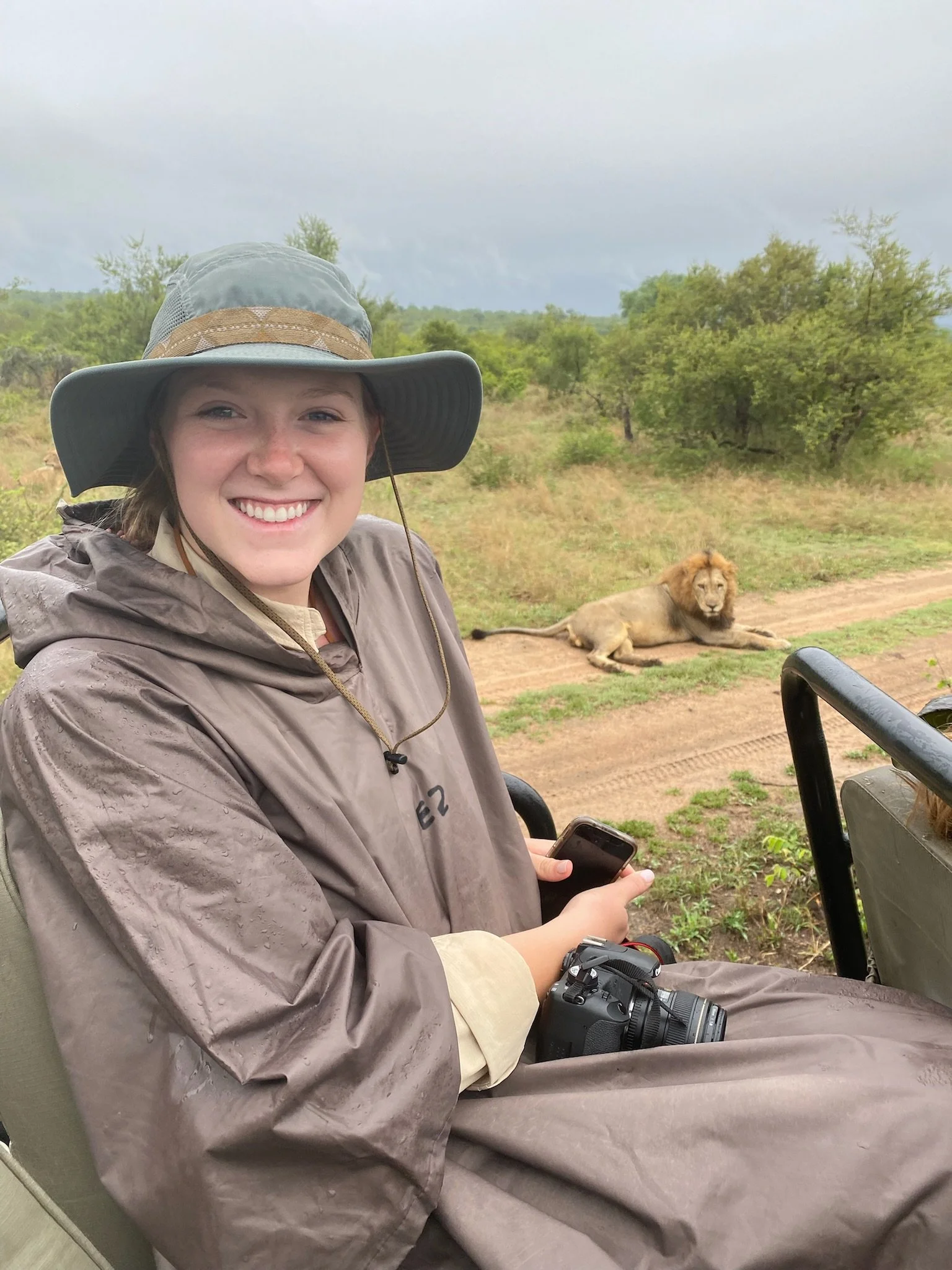
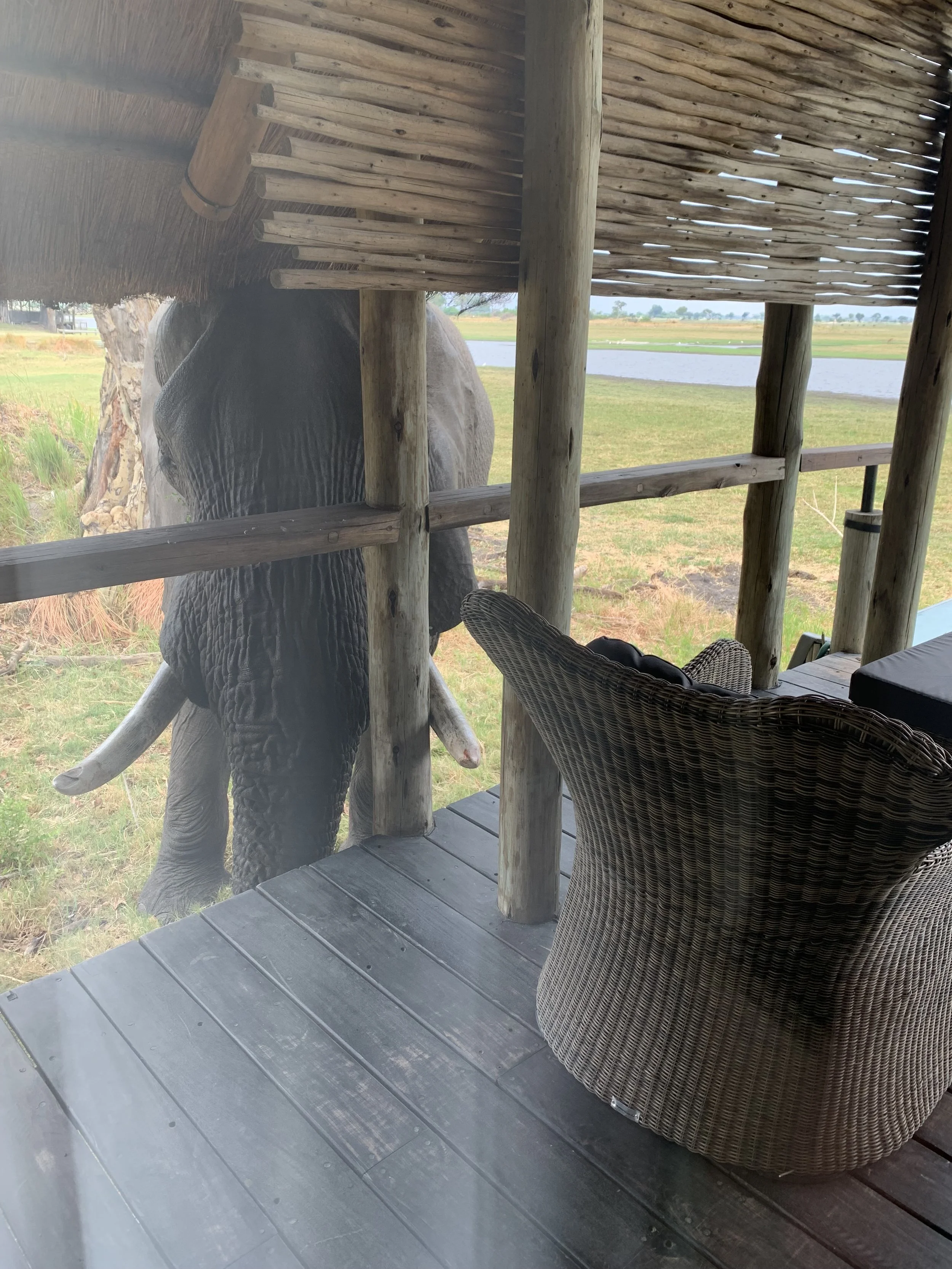
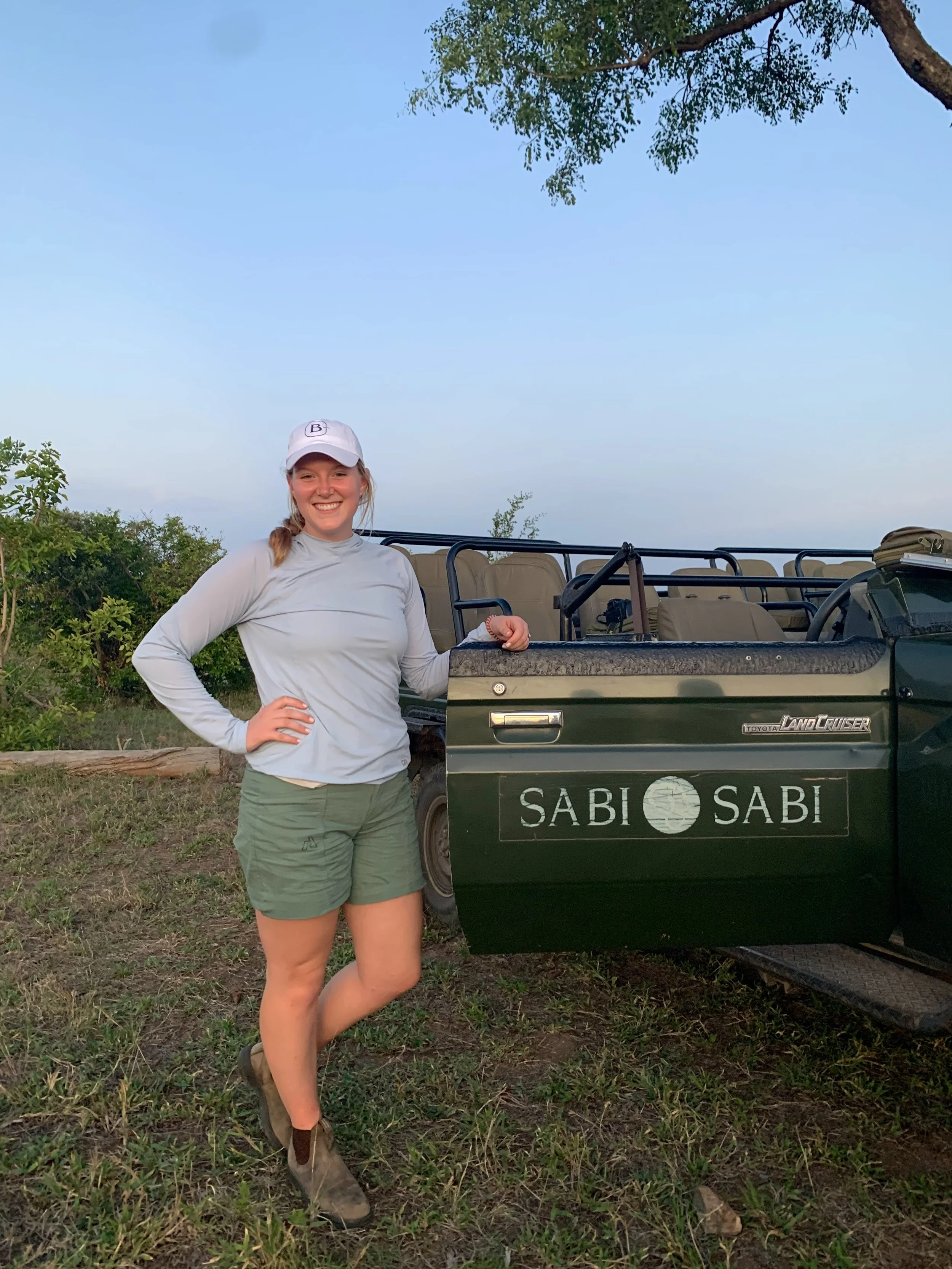
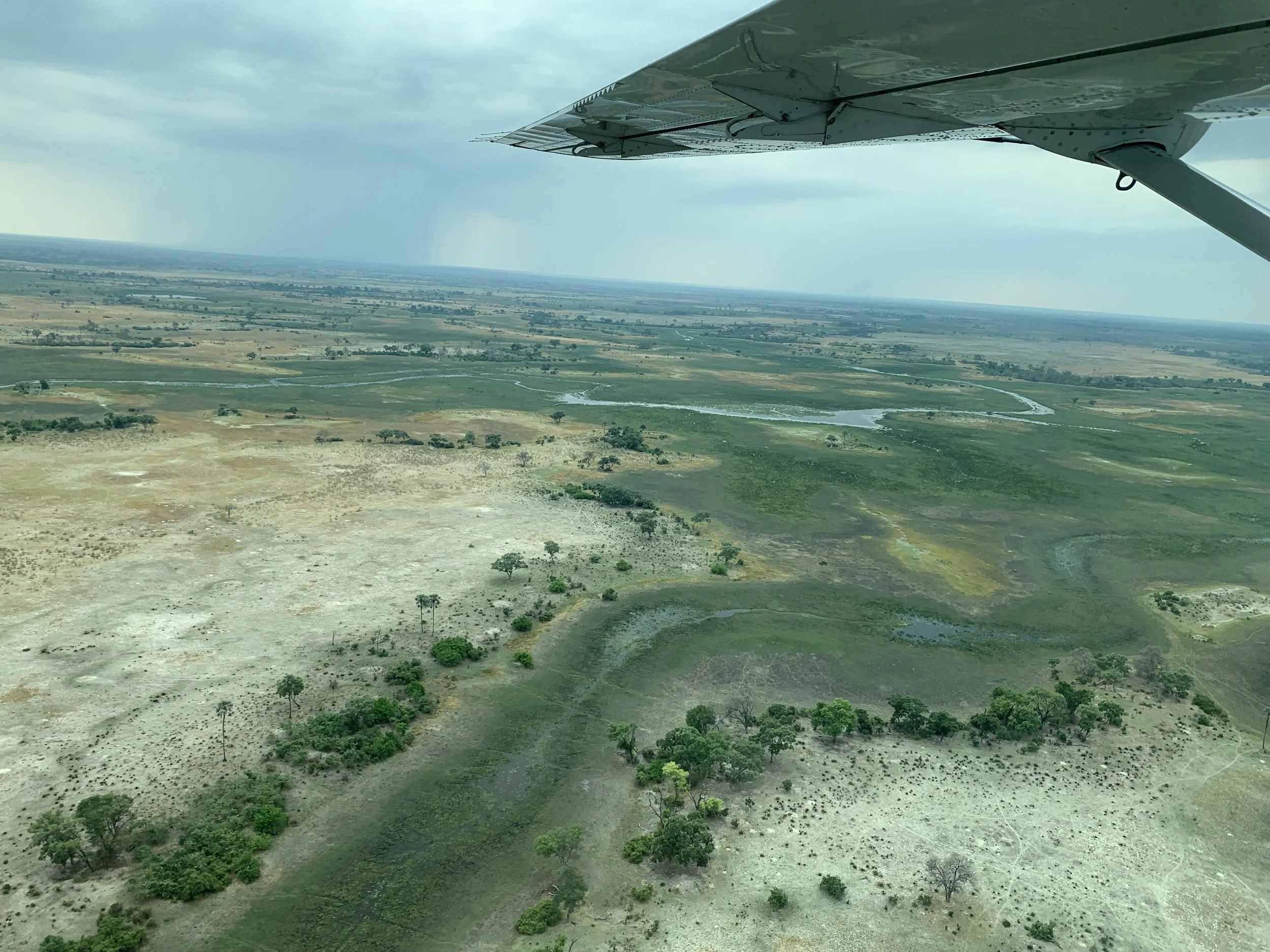
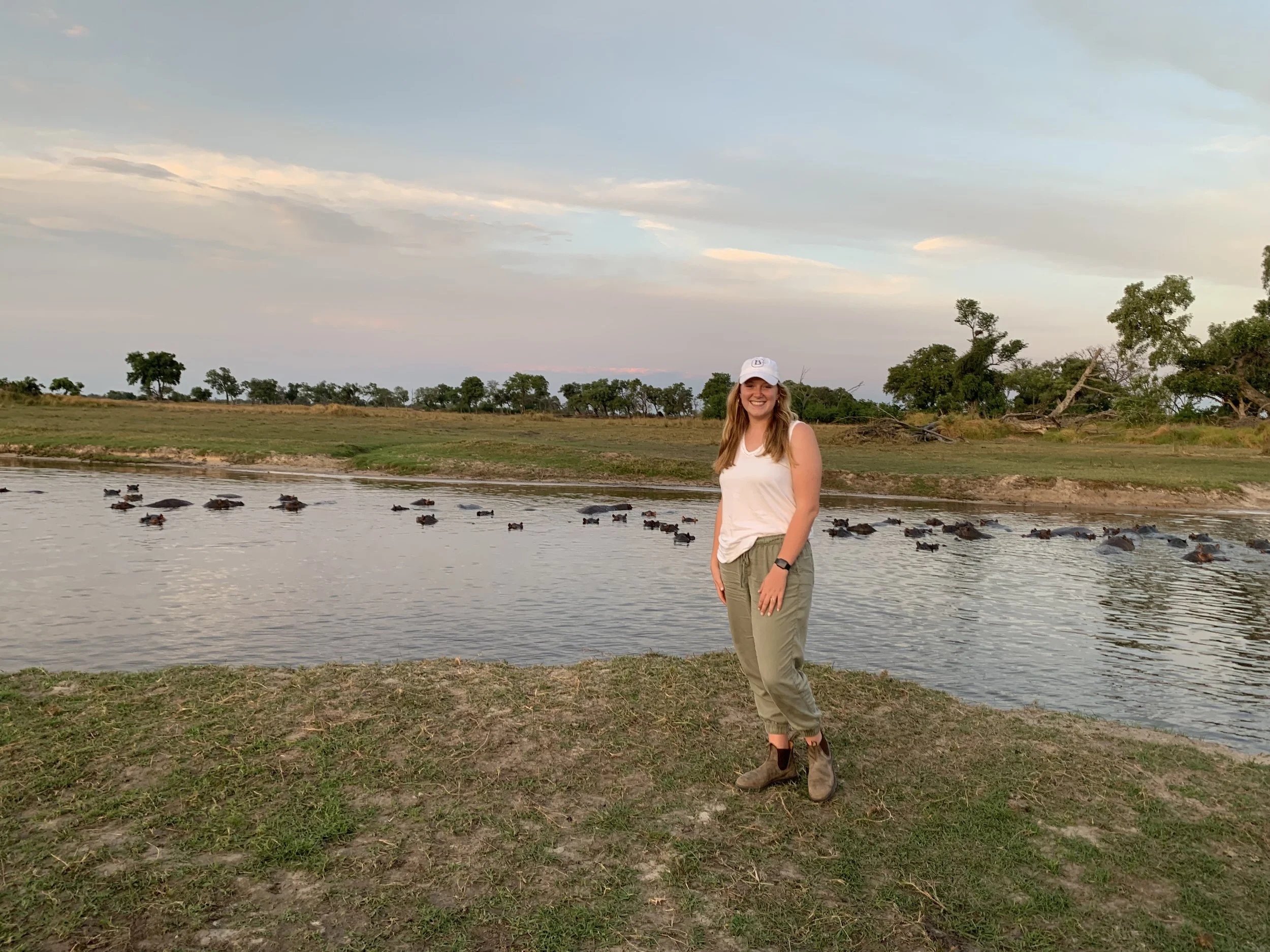
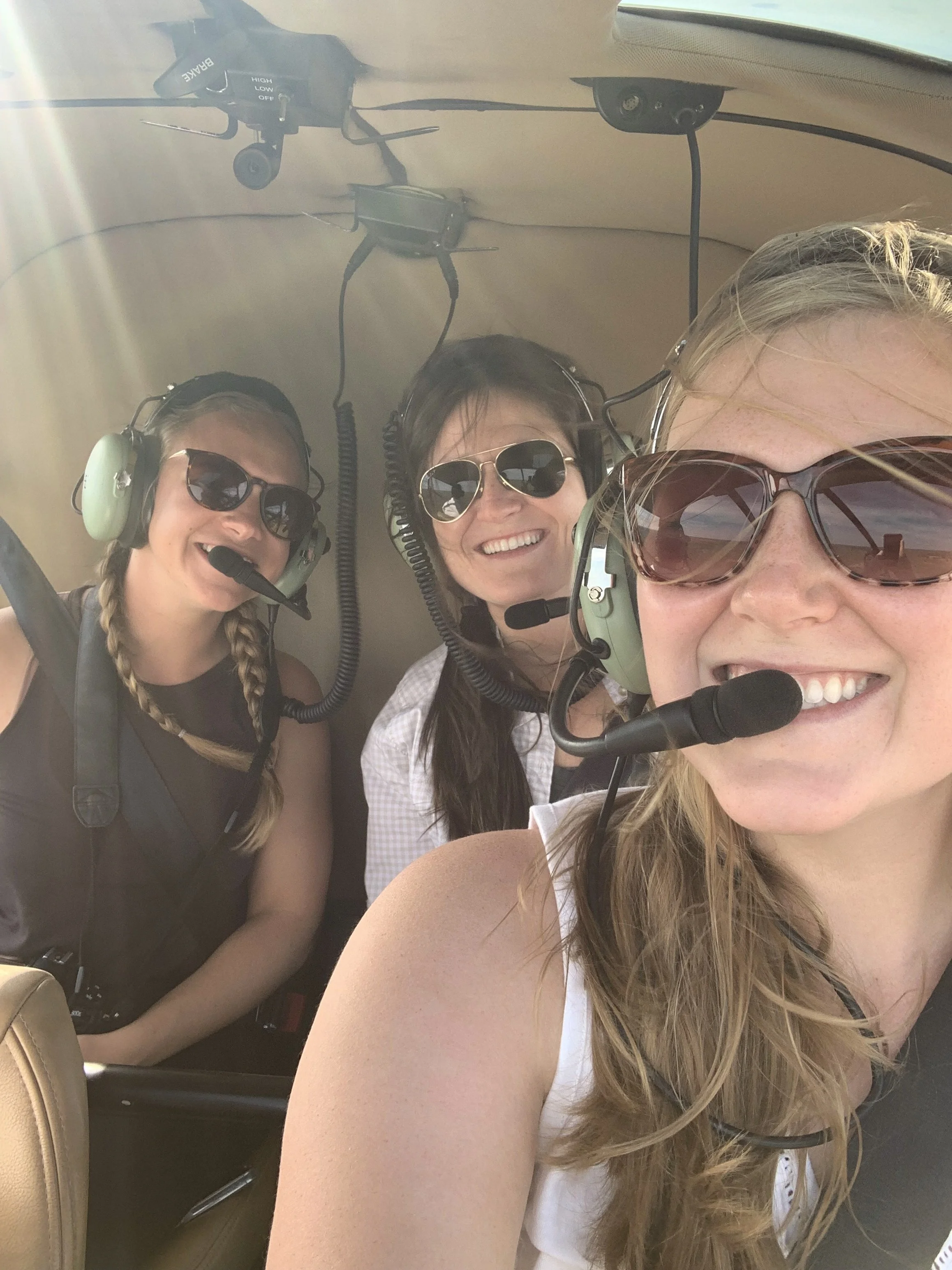
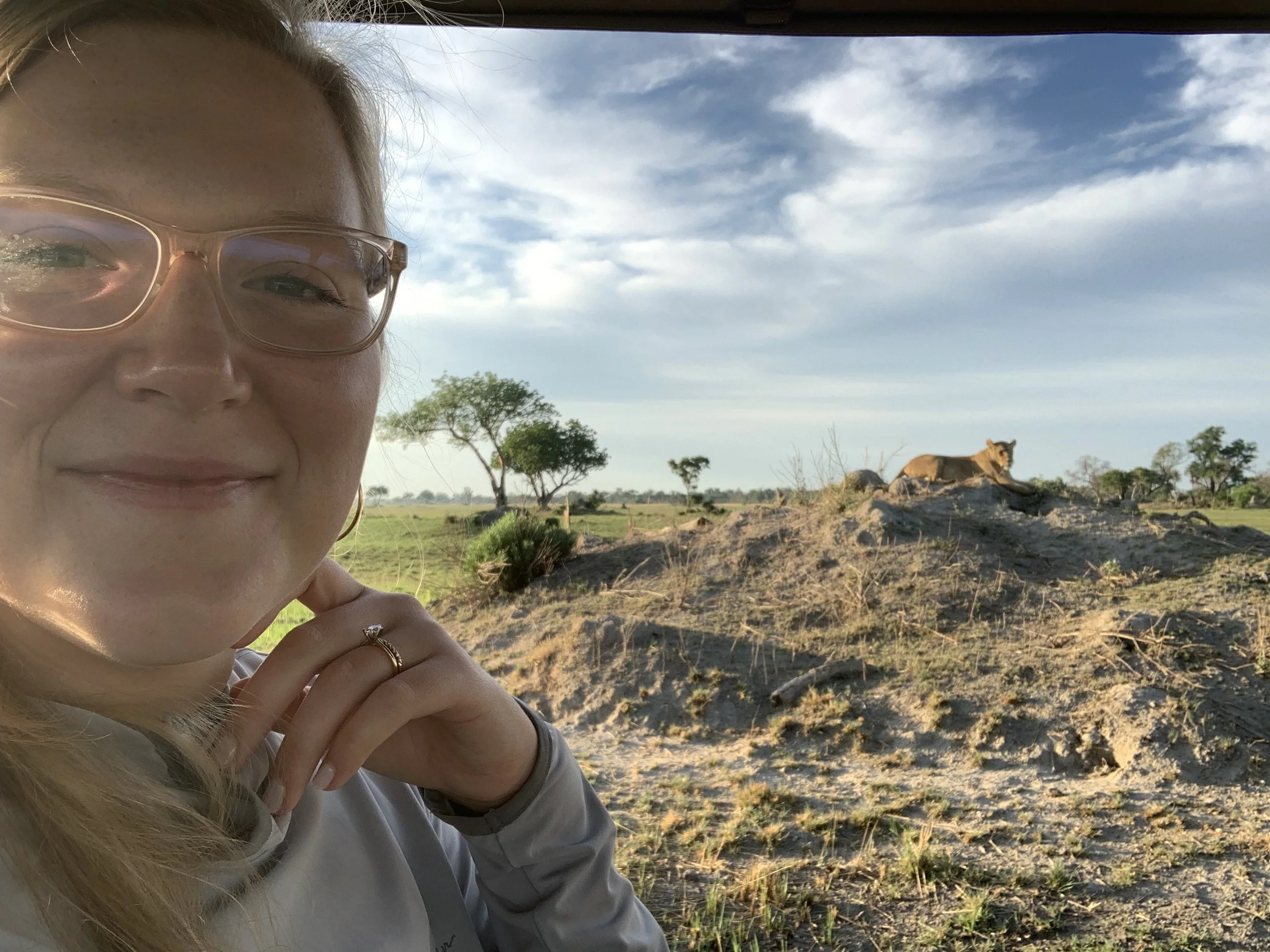
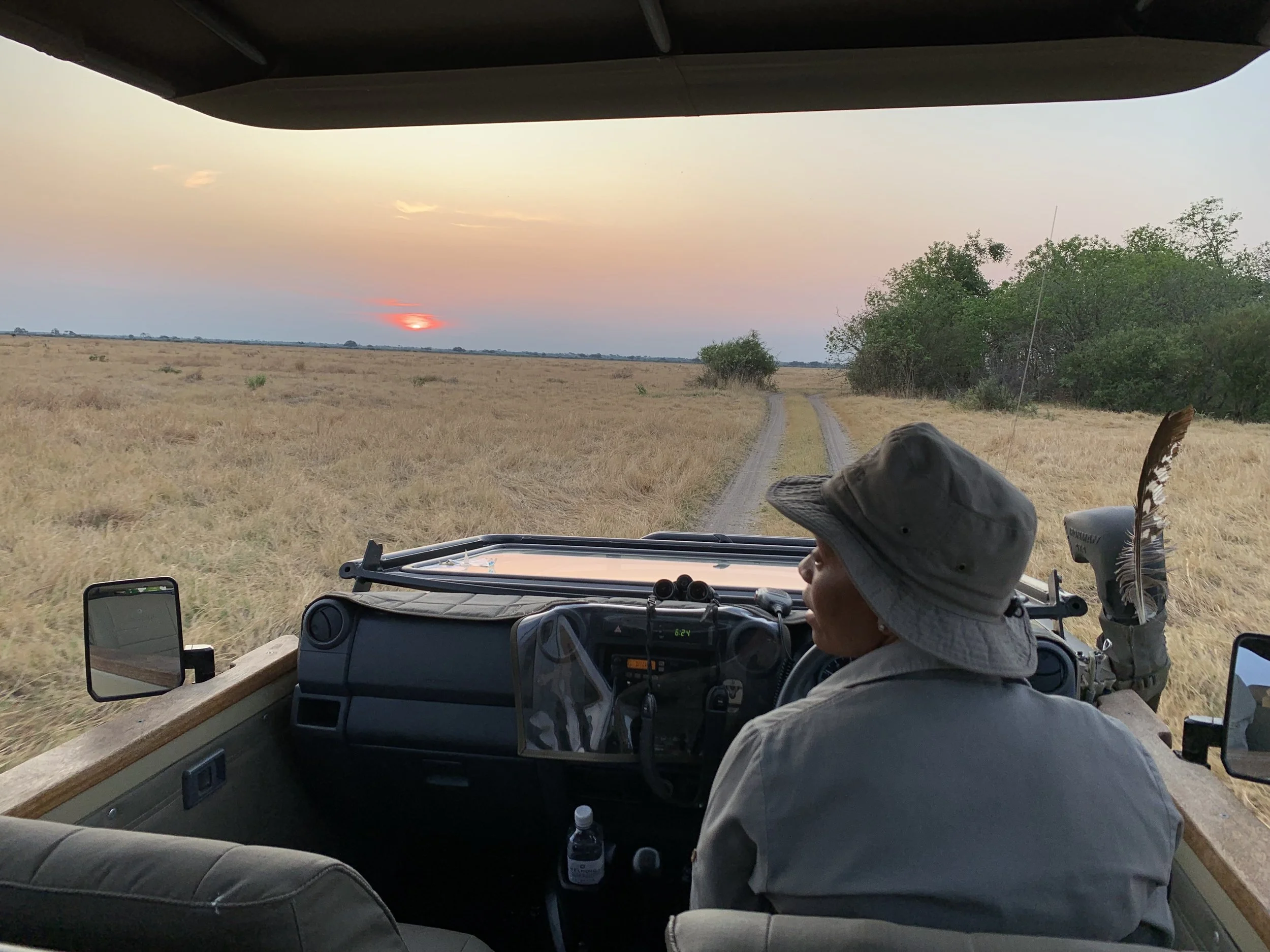
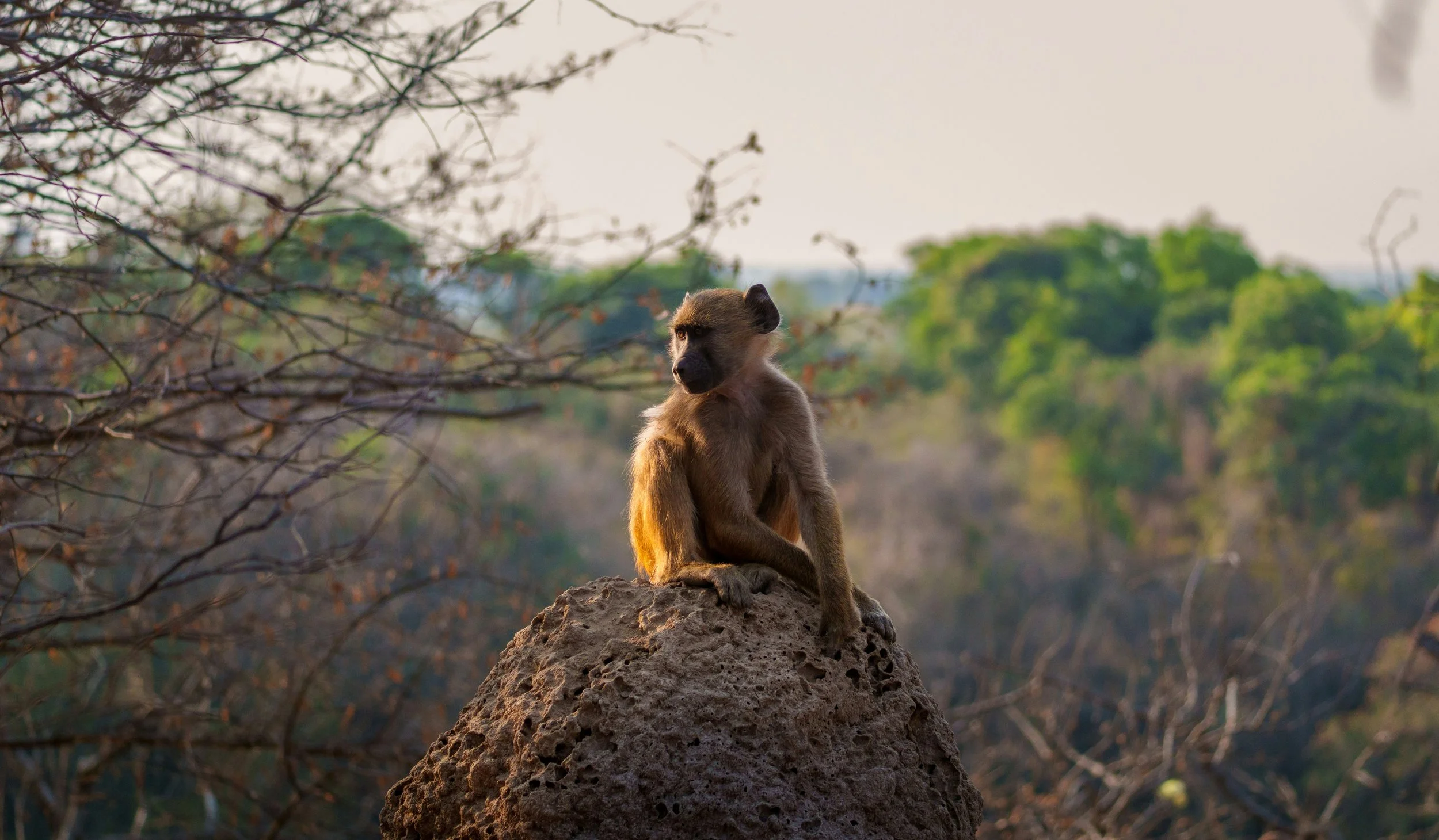
Here are some pictures from my personal camera roll during a South Africa and Botswana trip!
When Is The Best Time For A Safari Honeymoon
The short version - the dry season, roughly May through October across most of southern and East Africa, is when game viewing is most reliable. But the real answer is more specific than that, because the best timing depends heavily on where you are going and what you want to see.
In the dry season, water sources shrink and animals concentrate around what remains -- rivers, waterholes, permanent springs. That concentration means more animals in predictable locations, which means better game viewing. Vegetation is thinner too, so you can actually see into the bush rather than straining to spot movement through dense green cover. Mornings are cold enough to require a jacket, afternoons warm up quickly, and the light is good for most of the day.
The wet season -November through April in most areas, gets dismissed too quickly. Yes, afternoon rains are common and some roads in remote areas become impassable. But the landscape is dramatically different: green, lush, and full of migratory birds that are absent the rest of the year. Newborn animals are everywhere, which draws predators. Lodge rates drop significantly. And because fewer tourists travel in this window, you often have game drives almost to yourself. If your priority is budget and you can be flexible about daily rain, the green season is worth considering.
For specific destinations: the Masai Mara peaks July through October for the migration, and January through March for quieter predator activity. The Serengeti is excellent for calving January through March and for river crossings June through October. South Africa and Kruger are best May through September. Botswana peaks June through October. Victoria Falls is most dramatic at full flood February through May.
One thing I always tell couples: avoid the very peak of peak season if you can. Late June and September in East Africa, for example, are excellent for wildlife and noticeably less congested than July and August. You often get better lodge rates too.
How To Plan A Safari Honeymoon
Safari planning has a lot of moving parts. More than most trips. You are dealing with small camps that sell out early, domestic flight connections with tight windows, multiple countries in some cases, visa requirements, health considerations, and the question of how to structure the itinerary so you are in the right place at the right time. Here is how I approach it.
Start With Timing and Wildlife Priorities, Then Choose the Destination
Most couples come to me knowing roughly when they can travel. I work backwards from that. If you are set on a July trip, East Africa is a strong option because the migration is happening and conditions are excellent. If you are traveling in February, the southern Serengeti during calving season becomes very compelling, and South Africa is also good. The destination should follow from the timing, not the other way around.
The exception is when a couple has a specific destination in mind that they feel strongly about. That happens too, and in that case we build the timing around what that destination offers at its best. Either approach works you just want to make sure the two things align.
Private Reserve or National Park
This comes up in almost every planning conversation and it is worth understanding the actual difference. National parks are public land, which means any licensed operator can run game drives in them. During peak season, a popular sighting can draw ten or fifteen vehicles. Guides must stay on designated tracks. Night drives and bush walks are generally not permitted.
Private game reserves operate under different rules. Traversing rights are exclusive to the lodges within that reserve. You will not encounter vehicles from outside the property. Guides can go off-road to follow animals. Night drives, bush walks, and tracker-guided experiences are standard. The trade-off is that private reserves cost more, and the concessions are smaller than national parks.
For a honeymoon, I lean toward private reserves, especially for at least a portion of the itinerary. The intimacy is better. A well-established structure is to start in a private reserve for the depth of experience and then move into an adjacent national park if you want the scale and the landscape.
Use a Travel Advisor Who Actually Knows These Destinations
I realize I am not exactly a neutral party here, but the case for using a specialist is real. Safari itineraries have a lot of details that matter and are not obvious from the outside: which camps in a given area have the best guides, which properties work well for honeymooners versus families, which routing minimizes travel time between legs, how to structure transfers so you are not spending half a day in a small plane when you could be on a game drive.
Honeymoon safari packages put together by advisors with genuine on-the-ground knowledge also tend to include things you would not get booking direct. A room category upgrade, a complimentary private drive, small surprises from the camp that they save for clients coming through trusted relationships. Those details add up.
And when something goes wrong; a connection delay, a camp availability issue, a health situation, having someone you can actually call who knows the operators and can solve the problem quickly is worth something real.
Seven to Ten Days Is the Right Length
A safari honeymoon needs room to breathe. The rhythm of it; up before dawn, back to camp mid-morning, lunch, afternoon tea and a rest through the hottest part of the afternoon, out again late afternoon, back after dark, dinner. It takes a day or two to settle into. By the time you have found that rhythm and stopped looking at your phone and started actually being in the place, you want more time, not less.
Seven to ten nights on safari is the range I recommend for a safari-only trip. If you are adding a beach extension, five to six nights on safari followed by four or five at the beach tends to work well. Less than four nights on safari and you are basically just getting started when it is time to pack.
Build buffer days around long-haul travel. Flying from North America or Europe to Africa involves significant jet lag, and a game drive at 5:30am on your first morning is going to feel very different from one on day three when your body has adjusted.
Add a Beach or City Extension if the Trip Allows
The safari and beach combination is the structure I end up building most often for honeymoon couples. South Africa makes it easy: bush in the northeast, then Cape Town in the southwest. Two very different experiences, one country, logical routing.
In East Africa, Zanzibar is the natural follow-on from Tanzania. It is a short flight from Arusha, the beaches are excellent, the food and culture in Stone Town are genuinely interesting, and it feels like a genuine destination rather than just a beach appendage. Mozambique and the Seychelles work well for couples who want something more remote.
Book Early- The Good Camps Fill Up Fast
Twelve months out is not too early for peak season dates at the most in-demand properties. Some camps in the Okavango Delta, the Masai Mara conservancies, and the top private reserves in South Africa are legitimately sold out a year in advance for July and August. Six months is the realistic minimum for most luxury safari destinations during high season.
The couples who have the most flexibility in building their ideal itinerary are the ones who start planning early. The ones who come to me four months out for a July safari are often working with whatever is left, which is a different conversation.
How Much Does A Safari Honeymoon Cost
Safari sits at the more expensive end of the honeymoon spectrum. That is just the reality, and it is worth understanding why before getting into tiers. The cost reflects small properties with high staff ratios, remote locations with expensive logistics, the all-inclusive model, and in some destinations like Botswana, deliberate government pricing designed to limit visitor volume. You are paying for a very specific kind of experience, and at the top end of the market, the value is there.
Mid-range honeymoon safaris typically mean well-regarded lodges within national parks rather than private reserves, shared game drives, and travel in the shoulder or low season. The wildlife experiences are real and the accommodation is comfortable, but the service is less personalized and the vehicle situation is less controlled. This is a legitimate option for couples who want to experience Africa without allocating the budget that the luxury tier requires.
Luxury safari honeymoon packages are where most of my clients land. At this level you are in a private reserve or a high-end national park property, the drives are private, the suites are genuinely impressive, and the all-inclusive structure means food and drinks are included. International airfare is the biggest variable cost and is not typically part of what the lodges quote. Plan accordingly.
Ultra-luxury is the category that includes the most celebrated camps in Africa. Properties with four or five suites, their own private conservancies, and the kind of service that you only find at properties with an extremely high staff-to-guest ratio. The Okavango Delta, the Linyanti in northern Botswana, and certain exclusive concessions in East Africa are where these camps operate. The experience is exceptional and the price reflects that.
Regardless of tier, get clarity upfront on what is and is not included. Most luxury lodges are genuinely all-inclusive for the on-property experience. Premium wines, certain specialty activities, conservation fees, and park levies are sometimes billed separately. A good advisor will walk you through the full cost picture before you commit.
How To Pack For A Safari Honeymoon
Packing for a safari has real constraints that most people underestimate, particularly the weight limits on small bush planes. Many inter-camp transfers in destinations like Botswana and Tanzania happen on light aircraft where luggage is limited to 15 or 20 kilograms in a soft bag. Hard-sided suitcases often cannot fit in the cargo hold. Bring what you need, pack it efficiently, and check the weight restrictions for your specific route before you leave home. Laundry is available at many bush locations, and many times, you are mixing and matching outfits.
Neutral Colors -- This Is Not Negotiable
Khaki, olive, tan, brown, muted grey. That is the color palette for safari. Bright colors, especially white, are visible to animals at much greater distances and will get you a look from your guide that communicates disappointment without words. This applies to both of you, for every day you are in the field. Save the resort whites and brights for the beach extension.
Most couples underestimate how much they will be photographed by each other, by guides who are genuinely good at it, and in the context of the landscape. The neutral palette also happens to look good in those photos in a way that a bright shirt against an African sunset really does not.
Layer Aggressively for Temperature Swings
Southern Africa in the dry season has dramatic temperature variation across a single day. Before sunrise on a game drive in July, you might be sitting in an open vehicle at 40 degrees. By ten in the morning, you are shedding layers. By two in the afternoon it is 85 degrees and dusty. By the evening drive it is cooling again.
A merino wool base layer, a mid-layer fleece, and a wind-resistant outer shell covers most scenarios. Merino is particularly good for safari because it handles the temperature range well, dries quickly, and does not hold odor the way synthetic fabrics do.
Footwear: Practical Over Everything
Lightweight hiking boots or sturdy trail shoes for game drives and bush walks. Sandals for around camp in the evenings. That is essentially it. Do not bring new boots! Please break them in at home for at least a few weeks before the trip. A blister on day two of a bush walk is a problem that is entirely avoidable.
If your itinerary includes Victoria Falls activities or any hiking, make sure your footwear handles uneven terrain comfortably. White-water rafting outfitters will sort you out with river shoes for the water, but you need solid footwear for the walk down into and out of the gorge.
Sun Protection Is Not Optional
High-SPF sunscreen, a wide-brimmed hat, and polarized sunglasses. At elevation, sitting in an open vehicle for two or three hours, the African sun is serious. Apply before the morning drive, reapply if the drive extends past an hour. The hat needs a chin strap if your vehicle moves at any speed. A standard cap will be somewhere in the bush behind you before you notice it is gone.
Polarized lenses are worth it specifically because they cut glare off water and dry grass in a way that makes spotting animals easier. This sounds like a small thing until you are trying to identify what is moving in the reeds across a lagoon.
Camera Gear: Bring More Lens Than You Think You Need
Modern smartphones do a reasonable job in good light at reasonable distances, but safari photography at its best requires reach. A DSLR has the range that covers most situations: close encounters, medium-distance action, and landscape with animals in frame.
Bring more memory cards than you think you need and at least one backup battery per body. Camp power is available at most properties but sometimes limited to specific charging windows. A small USB power bank covers the gap.
Binoculars deserve a mention even if you have a long lens. Watching behavior in detail, reading what a pride of lions is actually doing or tracking a distant cheetah across open ground is something binoculars do better than a camera viewfinder. A compact pair in the 8x42 or 10x42 range packs small and adds a lot to every drive.
Health and Insects: Do This Before You Leave Home
Malaria prophylaxis is a real consideration for most safari destinations. Kenya, Tanzania, Botswana, Zimbabwe, and the greater Kruger area in South Africa all have malaria present to varying degrees. See a travel medicine specialist or your doctor at least six weeks before departure to discuss options. Different prophylactics have different side effect profiles and the right choice varies by destination and individual health history.
DEET-based repellent, applied every evening and before dawn and dusk drives, covers the highest-risk exposure windows. Most luxury lodges supply repellent in rooms but the concentrations vary; bring your own with at least 30% DEET.
A basic travel medical kit; antidiarrheal, antihistamine, rehydration sachets, blister treatment, any prescription medications rounds out the health prep. The important thing is travel insurance with emergency medical evacuation coverage. Remote bush camps have trained staff and solid first aid capability, but a serious medical situation requires evacuation, and that is expensive without coverage.
Ready to Start Planning Your Honeymoon?
A safari honeymoon is the kind of trip that takes some real planning to do right, but when it comes together, it delivers something that very few travel experiences can. You spend a week somewhere genuinely extraordinary, doing something that most people never get to do, with the person you just married. The bush has a way of reducing things to what actually matters, and that turns out to be a pretty good environment for a honeymoon.
For more honeymoons for the adventurous, see our guide here.
If you are considering one of the best exotic honeymoon destinations and want to talk through what an itinerary might look like for your specific situation -- timing, budget, interests -- reach out. This is what I do, and I am happy to help you figure out whether it is the right trip for you.