Most people picture Munich as a long weekend. Marienplatz, a liter of beer, maybe a quick look at a palace, and then on to the next city. That's a perfectly fine way to see it, but it barely scratches the surface. Munich sits in the middle of some of the best terrain in southern Germany, with Alpine lakes, fairy-tale castles, medieval towns, and a food and beer culture that holds its own against anywhere in Europe, all within a day's reach.
This guide covers what to do in the city itself and the best day trips from it. Whether you have a weekend or you're using Munich as a base for a longer European vacation, you'll find a mix of history, culture, scenery, and good meals to build a trip around.
I plan and execute custom itineraries for a living, and Munich is a city (or jumping off point) where small planning decisions change the whole trip. Which day you visit a castle, whether you've booked a timed entry, and where you base yourself decide whether you spend your time enjoying Bavaria or standing in line. I'll share how I think about it when I'm building a trip for a client.
Things To Do Around Munich
Things to do around Munich fall into a few groups, and the best trips mix them. In the city, you have royal residences, huge museums, open-air markets, a massive park, and some of the best beer halls in the world. Outside it, you have mountain towns, lakes, castles, and old cities that are close enough for a day but different enough to feel like a separate trip.
How you combine them depends on who's traveling. A first-time visitor usually wants the Old Town, one big palace, an afternoon in a beer garden, and one headline day trip. Couples looking for a slower European getaway tend to do better with fewer stops: a long lunch at a market, a boat ride on a lake, and evenings spent wandering instead of racing through museums. History fans and families can fill several days with museums and palaces alone.
If you're planning a honeymoon and still comparing options, take a look at our list of honeymoon destinations in Europe. Munich pairs well with a lot of them, and the Alps make a great second half to a trip that starts in a big city.
Why Visit Munich and the Surrounding Area?
Munich is the capital of Bavaria, and it leans into that identity in a way that's fun to be around. Traditional dress shows up at festivals and on regular weekends, brass bands play in beer gardens, and the food is hearty and specific to the region. Think soft pretzels, white sausage (traditionally a morning meal), roast pork with dumplings, and a cheese spread called Obatzda that you'll either love immediately or politely skip.
The history is easy to see too. The Wittelsbach family ruled Bavaria for centuries, and their palaces, churches, and gardens are all over the city. Much of the center was damaged in World War II and rebuilt, so you'll notice a mix of baroque, rococo, and neo-Gothic buildings sitting next to postwar construction.
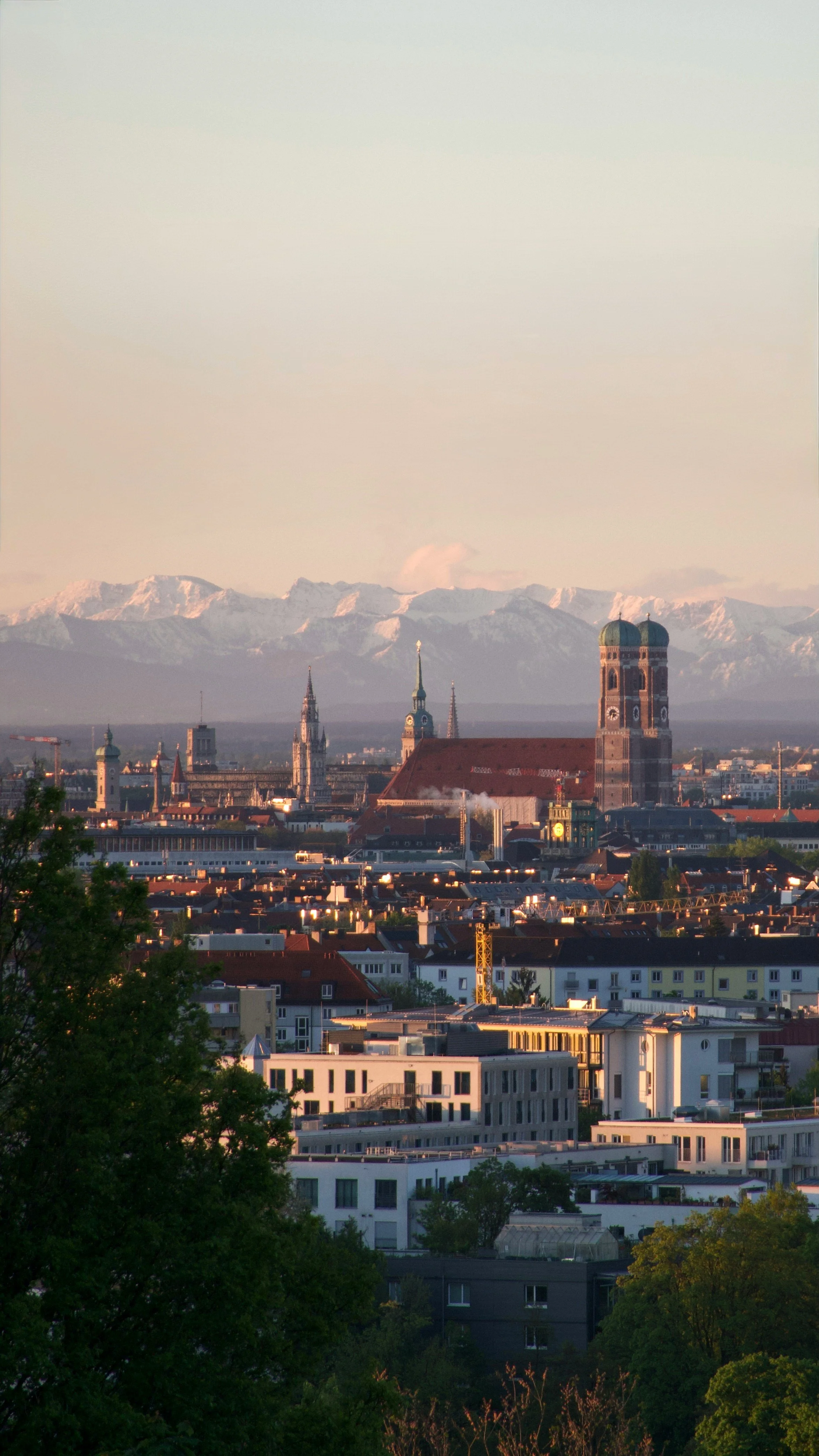
Then there's the location. The Alps are close enough that on a clear day you can see them from parts of the city. Lakes, castles, and historic towns are reachable by train or a private driver, which means you can unpack once and still experience several different sides of Bavaria. That's a big reason I like Munich as a base. You change your scenery every day without changing your hotel.
Best Things To Do in Munich
Marienplatz and the Old Town
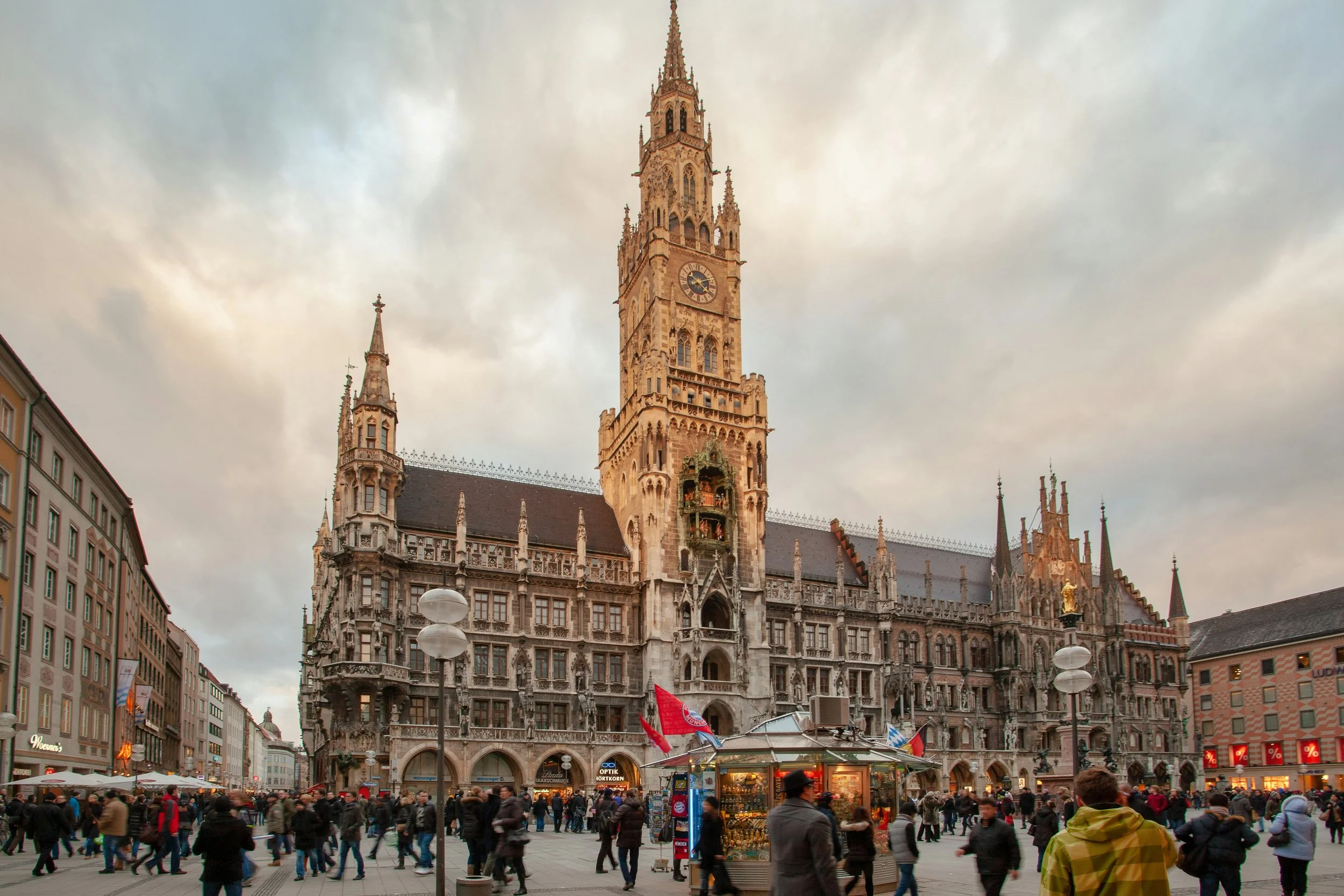
Start at Marienplatz, the central square, because everything else is easy to reach from here. The neo-Gothic New Town Hall dominates one side, and its Glockenspiel puts on a figure show at set times each day, so check the schedule before you go. If you want a view, the town hall tower has a lift. The Frauenkirche, with its twin domed towers, is a short walk away, and so is Peterskirche, where you can climb the tower for another look over the rooftops. Give yourself a couple of hours to wander the surrounding streets, because the pedestrian area is full of shops and cafes.
Viktualienmarkt
A few minutes from Marienplatz, Viktualienmarkt is an open-air food market that's been a fixture in the city for generations. Stalls sell fresh produce, cheese, sausages, flowers, and prepared food, and there's a small beer garden in the middle. It's a good spot for lunch when you don't want to commit to a full sit-down meal. Stall opening hours vary, and the market generally isn't open on Sundays, so plan your visit accordingly.
The Residenz
The Residenz was the royal palace of the Bavarian rulers and is the largest city palace in Germany. Inside, you'll move through a long series of rooms that show how the style changed over several centuries, including a Renaissance hall called the Antiquarium, the Treasury with its royal crowns and jewelry, and the ornate rococo Cuvilliés Theatre. It's big, so I tell clients to pick one wing or one section instead of trying to see all of it in a single visit. Check opening hours before you go, since certain parts can close at different times.
English Garden
The English Garden is one of the largest city parks in the world, and it's actually bigger than New York's Central Park. Locals use it for everything: walking, cycling, picnics, and sitting by the water. There's a small hill topped with a Greek-style temple called the Monopteros that gives you a nice view back toward the city. Near the southern edge, you can watch surfers ride the standing wave on the Eisbach river, and yes, they do it year-round. The Chinese Tower in the middle of the park has one of the most popular beer gardens in the city, so that's an easy place to stop for a break.
Nymphenburg Palace
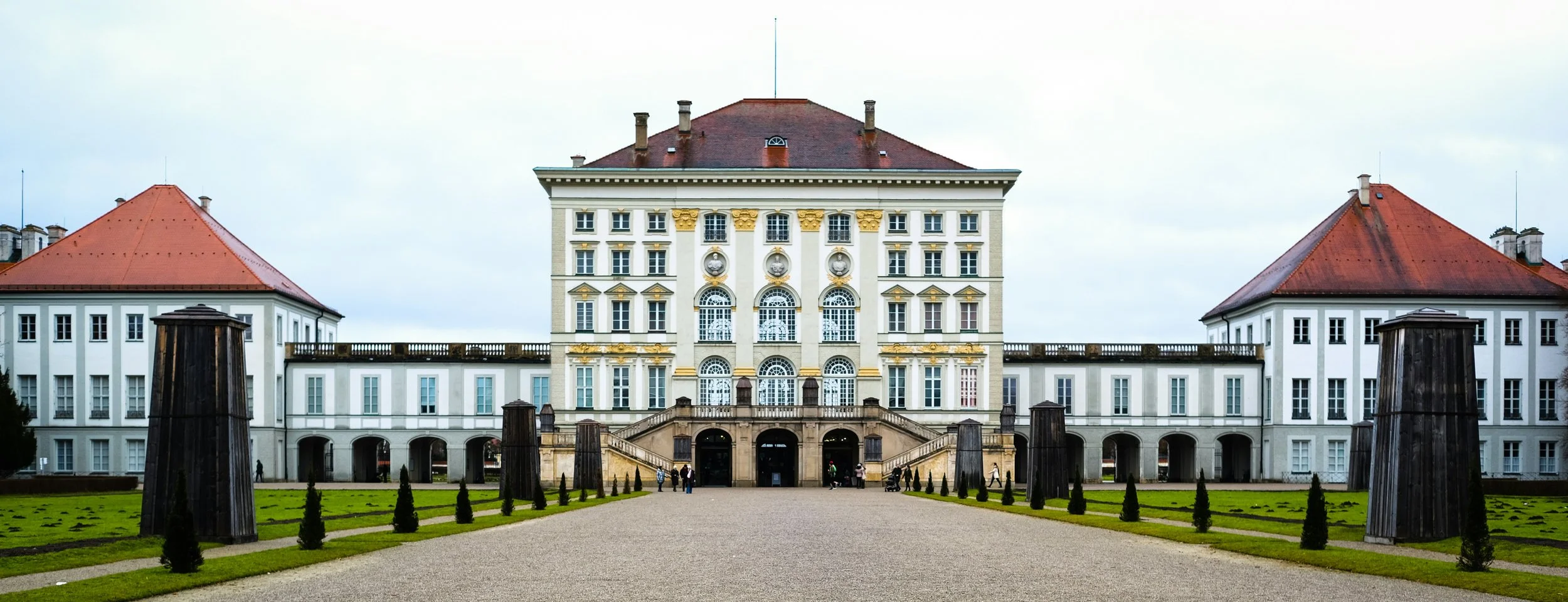
Nymphenburg was the summer residence of the Bavarian rulers, and it's one of my favorite palaces in the region because it pairs well with a slow afternoon. The main building has grand state rooms and a gallery of portraits of beautiful women commissioned by King Ludwig I. Behind it, the park is huge, with canals, lakes, and small pavilions scattered through the trees. There's also a carriage museum in the former stables. It's reachable by tram from the center, so it's an easy half-day without a lot of logistics.
Deutsches Museum
Even if museums aren't usually your thing, this one is worth considering. The Deutsches Museum is one of the largest science and technology museums in the world, and it sits on an island in the Isar river. Exhibits cover aeronautics, musical instruments, energy, and a long list of other topics, and many of them are hands-on, which makes it a solid pick for families or a rainy day. Plan on several hours and don't try to see everything.
A Proper Beer Garden
A visit to a beer garden is the most Bavarian thing you can do in Munich, and it's worth doing at least once. The tradition is to sit under chestnut trees at long communal tables with a liter-sized mug and a plate of something like roast chicken or a giant pretzel. At many traditional ones, you can even bring your own picnic as long as you buy your drinks there. Hirschgarten is one of the largest in the world, and the Chinese Tower in the English Garden is a classic. Go on a warm afternoon, and don't rush it. If you're visiting in late September or early October, Oktoberfest at the Theresienwiese grounds is the big event. Hotels fill up far in advance for those dates, so decide early.
Hofbräuhaus
The Hofbräuhaus dates back to 1589, when it was founded as the royal brewery for the Bavarian court. It's loud, crowded, and full of visitors, and I'm completely fine recommending it anyway. There's live brass music, long wooden tables, and a big hall that feels like what most people imagine when they picture Munich. Go for a lunch or an early evening drink, and sit upstairs if you want a slightly calmer setting.
Olympiapark and BMW Welt
Munich hosted the 1972 Summer Olympics, and the park built for those games is still very much in use. The tent-style roofs are easy to recognize, and the Olympic Tower has an observation deck with views that stretch to the Alps on a clear day. Right across the street is BMW Welt, the brand's showroom and delivery center, with the BMW Museum next door. If anyone in your group likes cars, it's an easy addition to the schedule.
Christmas Market Season
If you're visiting from late November through December, the christmas market scene in Munich is a major reason to go. The biggest one fills Marienplatz and runs until Christmas Eve, and there are several others around the city that each have a different feel, including a market focused on nativity scenes and one set in a medieval style. Expect mulled wine in collectible mugs, roasted almonds, gingerbread, and wooden ornaments. Bundle up and go in the evening when everything is lit. For more ideas on trips with a cold-weather feel, see our guide to romantic winter vacations.
Best Day Trips Around Munich
Munich has excellent rail connections, which is why day trips from the city are so easy to build into an itinerary. Here are the ones I recommend most often.
Neuschwanstein Castle and Hohenschwangau
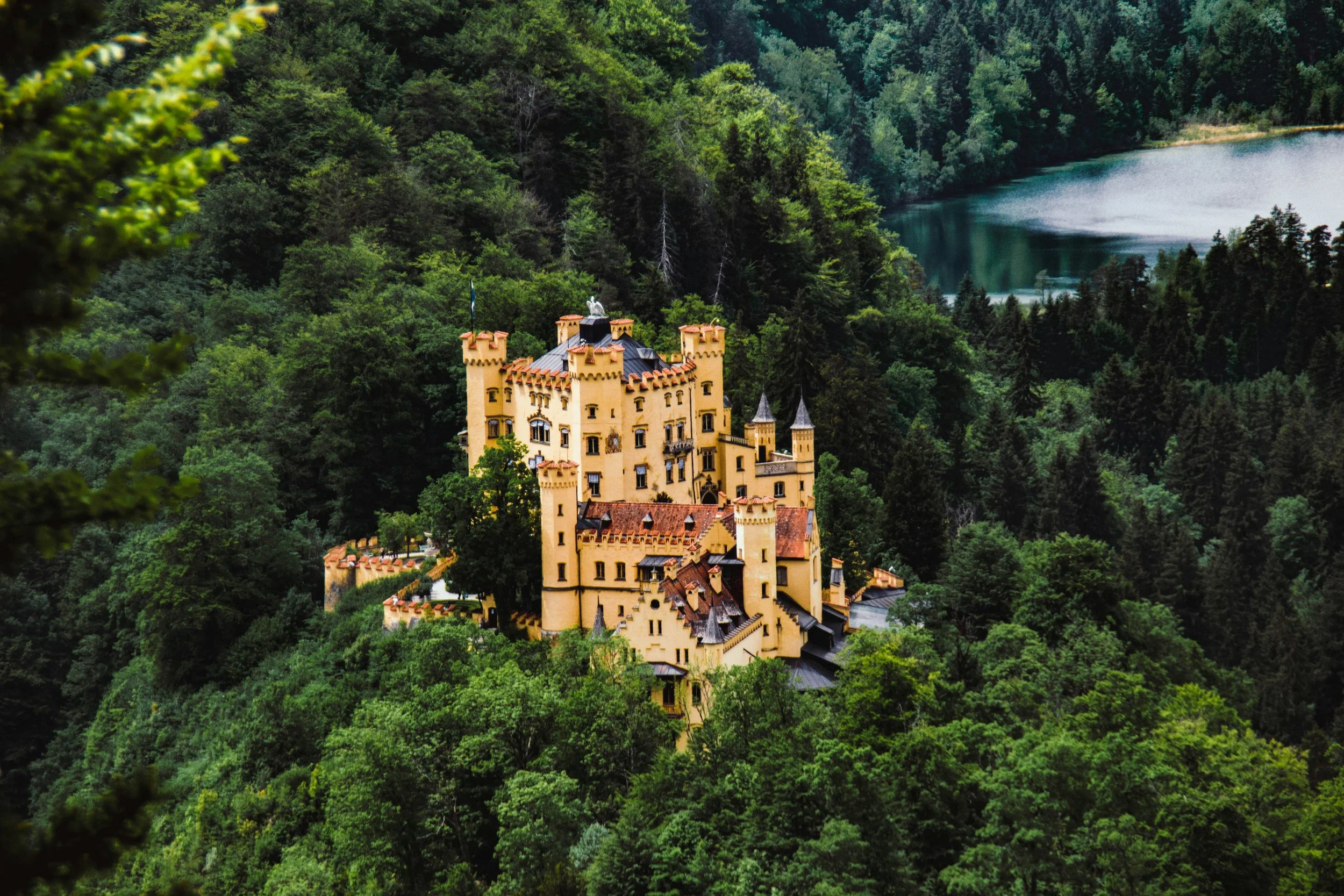
Neuschwanstein Castle is the one most people have in mind when they think of a Bavarian fairy-tale castle. King Ludwig II had it built starting in 1869, and it was never finished. He only lived in it briefly before his death in 1886. The interior can only be seen on a guided tour, so tickets should be booked in advance, and you'll be given a set entry time. The walk up from the village takes a while, so wear good shoes. For the classic photo, head to the Marienbrücke bridge, which looks directly at the castle. Hohenschwangau Castle sits right nearby and was Ludwig's childhood home. Plan on roughly two hours each way, and consider adding Linderhof Palace if you hire a private driver. It was the only one of Ludwig's palaces completed during his lifetime.
Salzburg, Austria
Salzburg is about an hour and a half by train, and it's one of the easiest international day trips you can take from Munich. The Old Town is a UNESCO World Heritage site, with Hohensalzburg Fortress above it, Mozart's birthplace on Getreidegasse, and the Mirabell Gardens on the other side of the river. Fans of The Sound of Music can take a tour of the filming locations. Bring your passport, and give yourself a full day so you aren't rushing a long lunch.
Garmisch-Partenkirchen and the Zugspitze
This is the trip for mountain views. Garmisch-Partenkirchen is a town in the Alps, roughly an hour and a half from Munich by train, and it hosted the 1936 Winter Olympics. From here you can ride up the Zugspitze, Germany's highest mountain, by cable car. Back down in the valley, the Partnachklamm is a gorge with a walking path cut right alongside the rushing water. Mountain weather changes quickly, so check conditions before you commit to the summit.
Chiemsee and Herrenchiemsee Palace
Chiemsee is the largest lake in Bavaria, and locals call it the Bavarian Sea. The main reason to go is Herrenchiemsee, an island with a palace Ludwig II built to resemble Versailles. It has a Hall of Mirrors that's even longer than the one in France. Take the train to Prien am Chiemsee, catch a boat across, and add some time for a walk around the shore. It's an easy day with a nice mix of history and lake scenery.
Nuremberg
Nuremberg is about an hour away by fast train and has a walled old town with a large imperial castle on a hill. Albrecht Dürer's house is open to visitors, and the city is known for small grilled sausages and gingerbread. Much of the old center was rebuilt after World War II. History buffs can also visit the Documentation Center at the former Nazi Party Rally Grounds, which covers that period in detail. If you're traveling in winter, Nuremberg's Christkindlesmarkt is one of the best-known Christmas markets in Germany.
Regensburg
Regensburg doesn't get as much attention as it deserves. The medieval Old Town is a UNESCO World Heritage site and has survived remarkably intact, with narrow lanes, Gothic towers, and a stone bridge across the Danube that dates to the 12th century. The Gothic cathedral is the centerpiece, and it's home to a well-known boys' choir. It takes around an hour and a half by train, and it's a good option for travelers who've done the headline castles and want something quieter.
Lake Starnberg
When you want a lake day without a long train ride, Lake Starnberg is the answer. It's reachable from the city by S-Bahn in well under an hour, and the shoreline towns have promenades, cafes, and boat rentals. It's also the lake where Ludwig II died in 1886, and there's a memorial cross on the shore at Berg. This works well as a half-day add-on, so it pairs nicely with a slower morning in Munich.
Dachau Memorial Site
The Dachau Memorial Site is the grounds of the first Nazi concentration camp, opened in 1933. It's a sobering visit, and not every traveler wants it on their itinerary. For those who do, it's a respectful and well-presented place to learn about that period. It's reachable from Munich by S-Bahn and then a short bus ride, and you should plan on a few hours. I generally suggest scheduling it on a day with nothing heavy or celebratory planned afterward.
How To Plan Your Munich Itinerary
Decide How Many Days You Want
Three or four days is enough for the main sights in the city. If you want to add day trips, tack on a couple of days for every one or two you'd like to do. I'd rather see someone do two day trips well than cram in four and feel exhausted. If you only have a weekend, pick the Old Town, one palace, and a beer garden, and save the rest for next time.
Pick the Right Season
Munich changes a lot by season. Summer is the best time for beer gardens, lake days, and hiking. Late September brings Oktoberfest, which is fun but expensive and crowded. December means the christmas market atmosphere and cold, dark afternoons. Winter also puts the Alps within reach for skiing. Spring and fall are quieter and good for museums and palaces. There's no wrong choice, but it helps to decide what you want out of the trip first.
Stay in a Central Location
Because so many day trips leave from the main train station, staying in the Old Town or near the station makes things much easier. You'll save time on mornings when you have an early departure, and you can walk to most of the major sights. If you'd like a quieter feel, there are residential neighborhoods near the museums and the English Garden that are also well connected.
Learn How Public Transport Works
Munich's public transport is excellent. It includes the U-Bahn, trams, buses, and the S-Bahn, which also connects to the airport and several of the nearby towns I mentioned. If you'll be riding a lot, day tickets and multi-day passes are usually cheaper than single rides, and there are regional passes for trains within Bavaria, though the rules about what's covered change. Always check what's valid on your specific route before you buy.
Book Timed Entries and Check Opening Hours
This is where a lot of trips go sideways. Neuschwanstein Castle, certain parts of the Residenz, and popular museums can require advance tickets or have limited entry times. Opening hours also change by season, and many museums close one day a week. In Germany, most shops are closed on Sundays, so plan your errands and any souvenir shopping for other days.
Avoid Stacking Two Big Day Trips Back to Back
Day trips look easy on a map, but they take energy. A castle day with a few hours of travel each way is a long one, so I like to put a lighter day after it, like a morning at a market followed by a long lunch. Splitting your itinerary this way keeps the whole trip from feeling like a checklist.
Consider a Private Driver for Certain Days
Trains work well for Salzburg, Nuremberg, and Regensburg. For the Neuschwanstein area, Linderhof, and the mountain towns, a private driver or guide can make the day smoother because you're not tied to bus connections. It's also a good way to combine stops that are hard to link on your own.
Pack for Changing Weather
The weather around the Alps can change fast, so layers and a light rain jacket are smart in any season. Comfortable shoes matter, since you'll be on cobblestones and castle paths. If you're traveling in winter, add warm socks and gloves for the markets.
Think About Where Munich Fits in a Longer Trip
Munich works well as a starting point or a stopover. Salzburg, Vienna, and Prague are all reachable by train, and if you're building a longer route, our Prague, Vienna, and Budapest itinerary shows how those cities can connect. A thoughtful route saves you backtracking and extra hotel changes.
Work With a Travel Advisor
A lot of what makes Munich smooth comes down to timing, local knowledge, and knowing which things to book early. That's the part I handle for clients, from mapping out which day trips make sense for your pace to lining up transportation and reservations ahead of time. Booking through an advisor can also unlock added perks at certain properties. If you're thinking about a trip to Bavaria, I'd love to help you shape it. Inquire now!