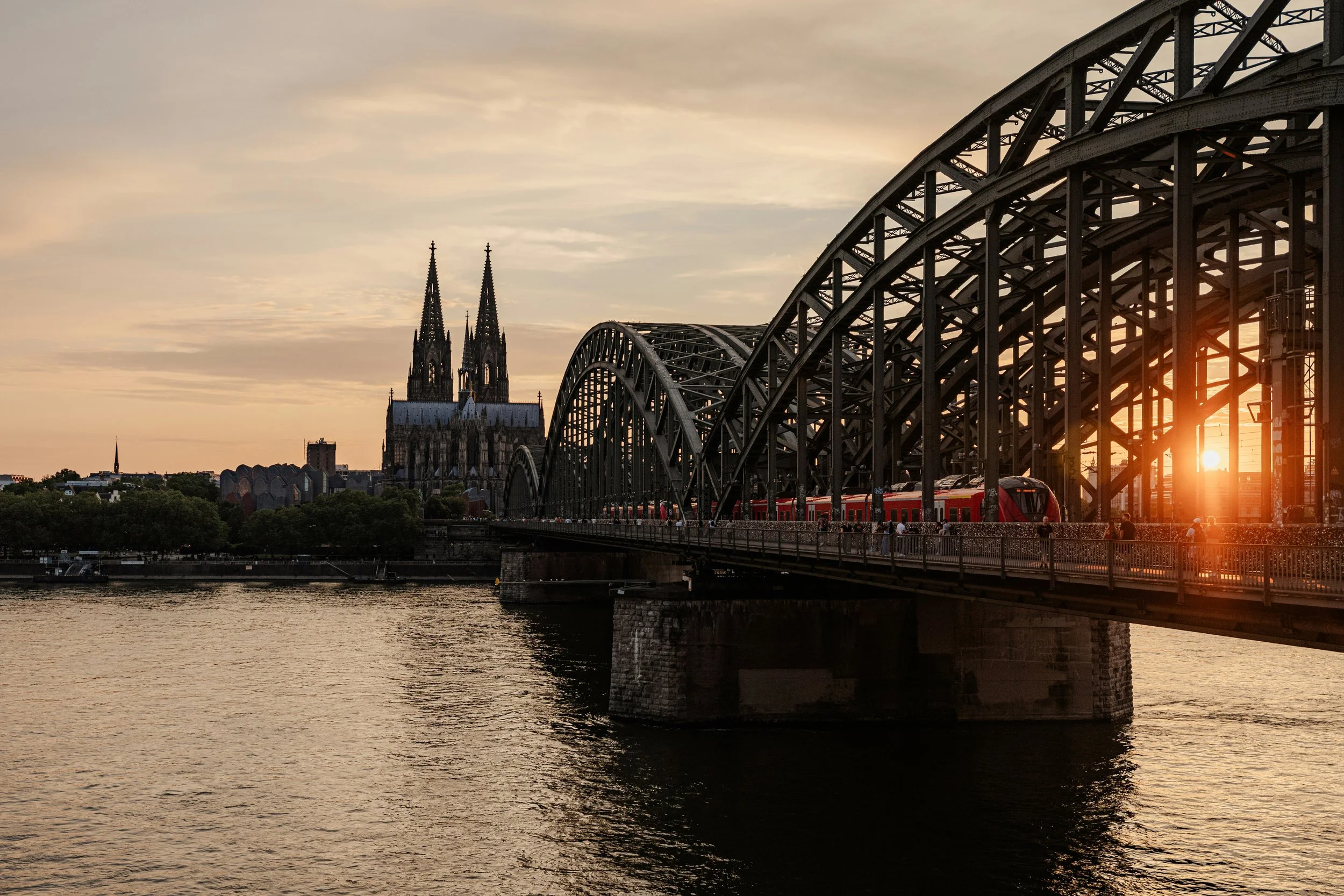
Walk out onto the Hohenzollern Bridge about an hour before sunset and you'll hear it before you see it. Thousands of love locks rattle against the fencing every time a train rolls past, and straight ahead across the Rhine River, the twin spires of Cologne Cathedral catch the last of the light. It's noisy, a little chaotic, and one of the best first impressions in Europe. Standing there is the fastest way to understand why Cologne deserves a spot on your trip.
Cologne, Germany is one of the oldest German cities, founded by the Romans two thousand years ago. That history still shows up in the street plan and in the ruins under your feet, but the city today is a mix of jaw-dropping Gothic architecture, world-class museums, a lively riverside, and neighborhoods that feel relaxed and local. Nobody here is performing for visitors, and that's a big part of the appeal.
It also slots into almost any Europe itinerary. Give it a long weekend on its own, use it as a stop between Amsterdam and Frankfurt, or make it the opening chapter of a longer Germany trip. Fast trains connect it to all of those places, which makes it one of the easiest cities in the country to fold into a route.
The timing for this post is good, too. It's early December, so Cologne's Christmas markets have just opened for the season. If you've been hunting for a winter trip to plan, this is the right moment to be looking at Cologne.
This travel guide covers whether the city is worth the stop, the best things to do, how many days you need, the best time to go, the Christmas markets, how to get around, and where to stay. I plan custom European itineraries for a living, so I'll also get into the details that make a trip run smoothly: which neighborhood to book, how to time the cathedral visit, and how to fit Cologne between other cities by train.
Cologne Travel Guide
Here's the quick snapshot. Cologne (Köln) sits on the Rhine River in western Germany. It's the country's fourth-largest city and home to Cologne Cathedral, a UNESCO World Heritage Site that dominates the skyline from almost every angle.
Getting there is easy. Frankfurt is about an hour away by fast train, and Düsseldorf is under 30 minutes. Direct trains also run to Amsterdam, Brussels, and Paris, so Cologne works as a hub as much as a destination. Timetables shift, so check Deutsche Bahn when you book.
What can you expect once you arrive? Gothic and Romanesque churches, Roman history, long riverside walks, Kölsch beer halls, serious museums, and one of the biggest Carnival celebrations in Europe. Most of it sits in a compact core, so you can see a lot without feeling rushed.
A few Cologne travel tips before we get into the details. Buy your cathedral ticket online ahead of time, since sightseeing inside is now ticketed. Carry a little cash for beer halls and market stalls. And remember that most shops across Germany close on Sundays, so do your shopping on Saturday.
Is Cologne Worth Visiting?
Yes, Cologne is worth visiting, and it's best for travelers who like a city with some grit and a lot of personality. You can spend the morning inside a medieval cathedral and the evening shoulder to shoulder in a beer hall with a stranger who's eager to explain the rules of Kölsch.
So is it worth visiting Cologne instead of somewhere more famous? For plenty of travelers, yes, because it doesn't feel like anywhere else in the country. The locals are relaxed and friendly in a way that surprises people who expect Germany to be buttoned up. The local motto, roughly translated, is that things will work out the way they work out, and the whole city operates on that attitude. Then there's the Roman backbone, a compact old town you can cover on foot, a riverside setting that gives you something to look at in every direction, and a food and Kölsch beer culture that's genuinely its own (pictures below for more info there).
I should be honest about who might skip it or keep it short. If you're picturing a postcard-perfect half-timbered old town, know that much of Cologne was rebuilt after World War II, and it looks like it in places. Travelers with only a few days in Germany who want castles and Alpine scenery will probably be happier in Bavaria.
For everyone else, Cologne fits neatly into a bigger trip. It pairs well with Amsterdam and Brussels, and it makes a natural starting or ending point for a Rhine River cruise. It's also a good example of the underrated european destinations that make a trip feel more personal than a greatest-hits route.
What surprises my clients most is how quickly they warm up to it. Most arrive expecting a quick cathedral stop between bigger cities, then spend the last evening wishing they'd booked another night.
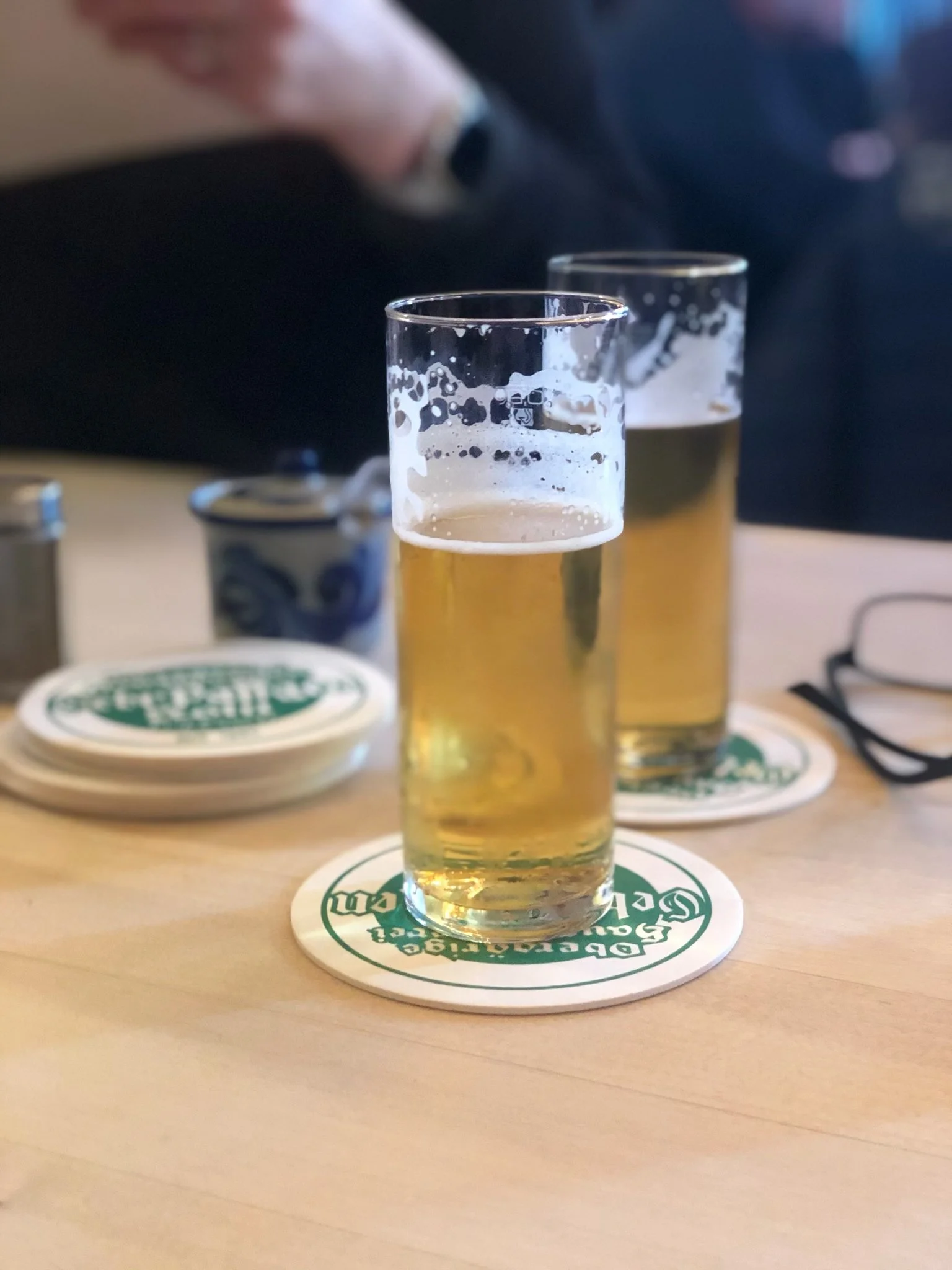
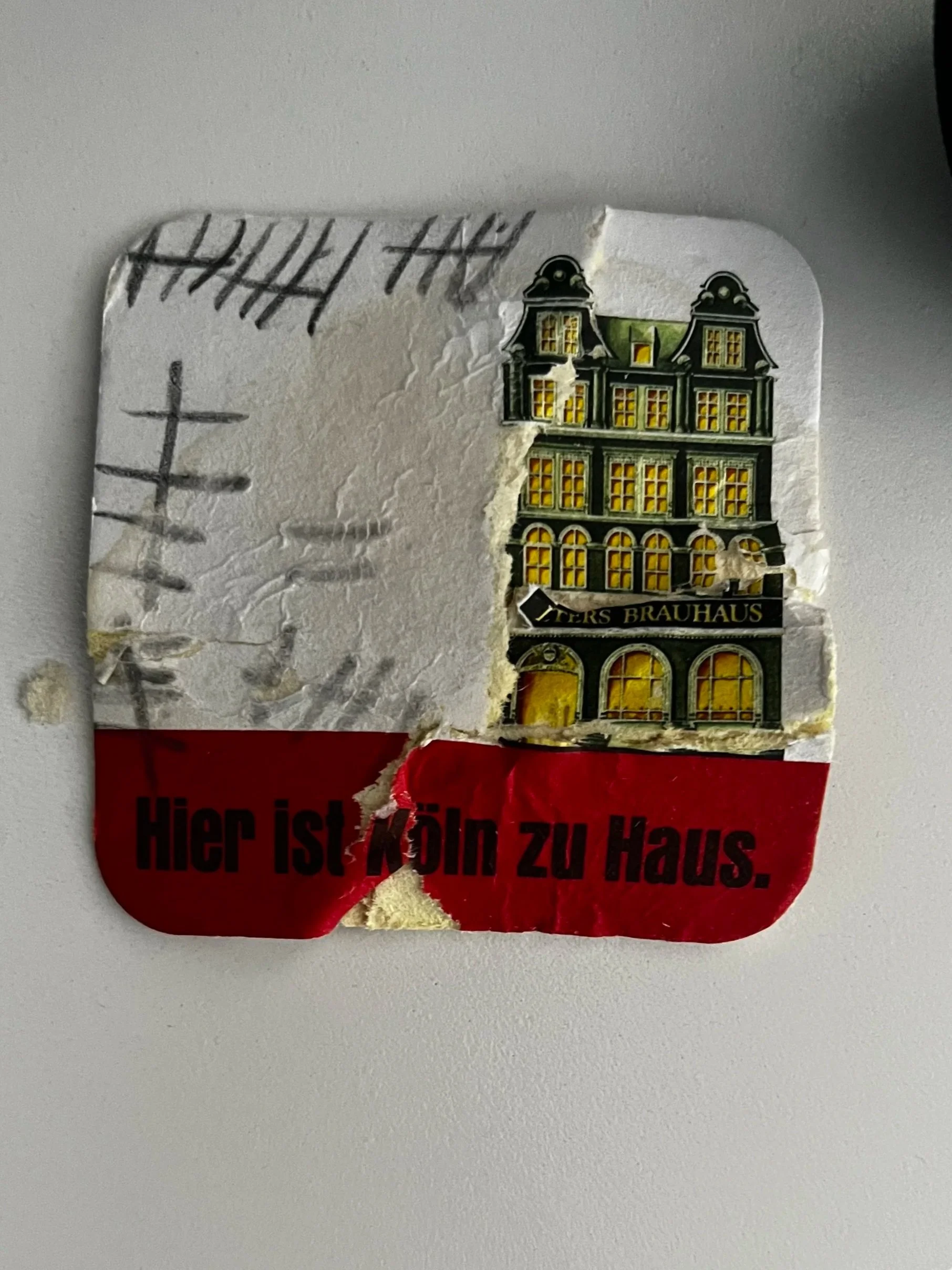
Kölsch is a pale beer originating in Cologne that is served in tall thin 0,2 cl glasses. Wait staff will continue to bring new beers on round trays, marking your bar tab on a coaster at the table. when you’re finished, simply place the coaster on top of your glass! On the right you’ll see our ‘receipt’ from a large group outing to Peters on a previous trip.
Best Things To Do In Cologne Germany
Cologne packs a lot into a small footprint, so you can stack several of these in a single day. These are the things to do in Cologne that I'd put on a first itinerary, roughly in an order that makes geographic sense.
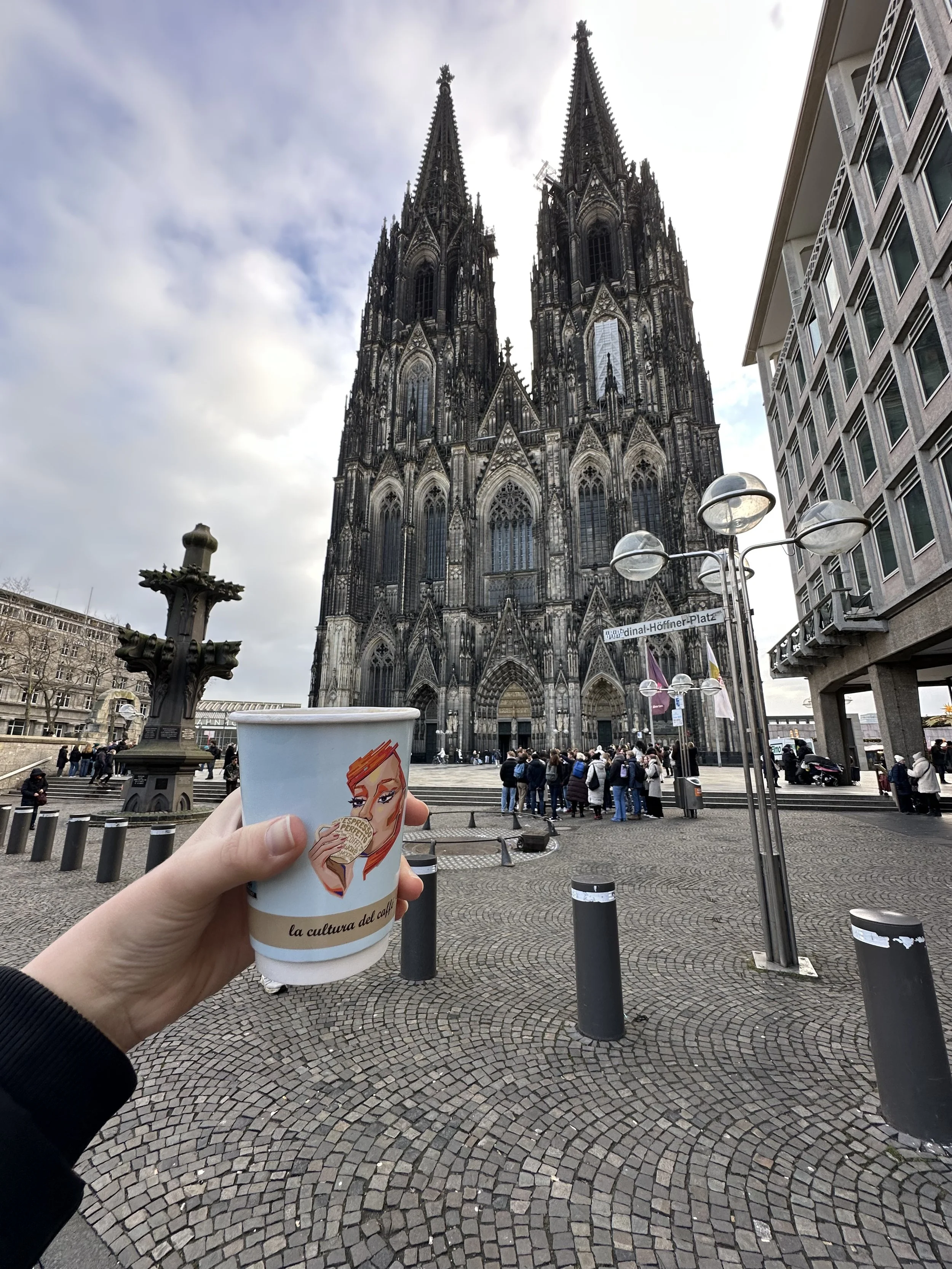
Cologne Cathedral (and Climbing the South Tower)
The cathedral is the reason most people come, and it earns the attention. Construction started in the 1200s and wasn't finished until the 1800s, and the building came through heavy World War II bombing still standing. Plan on about an hour inside, plus another 45 minutes if you're climbing the South Tower.
The climb is 533 steps up a tight spiral staircase, so skip it if enclosed spaces bother you. If you're up for it, the view of Cologne from the top is the best vantage point you'll get, with the Rhine bending away and the whole city laid out below. Go in the morning, when the light comes through the stained glass and the crowds are thinner.
My tip: do the tower first while your legs are fresh, then explore the interior afterward. On Sundays the cathedral opens to sightseers only in the afternoon, so plan around that.
Hohenzollern Bridge and the Love Locks
This is a working railway bridge with pedestrian walkways on both sides, and it's one of the most photographed spots in the city. A train crosses every few minutes, which adds to the rattle and hum. Give it 20 to 30 minutes, longer if you want to read the locks.
Sunset is the obvious time to go, and it's worth coming back after dark when the cathedral is lit up. Tip: weekday evenings are far calmer than weekends, when the walkways get packed. Walk toward the Deutz side, since the best views of the skyline are looking back at it.
The Old Town (Altstadt) and Alter Markt
The Altstadt is a tangle of narrow lanes, colorful gabled houses, small churches, and beer halls. Yes, much of it was rebuilt after the war, but it was done with care and the atmosphere is real. Alter Markt is the main square, and the Romanesque tower of Great St. Martin Church rises just beyond it.
Allow a good two hours to wander, and more if you stop for a beer. Late afternoon is ideal, when locals start filling the terraces. My advice is to drift into the side streets between the square and the river rather than staying on the main drag, which is where the best small cafes and quieter corners are.
The Historic City Hall
Cologne's Rathaus is among the oldest city halls in Germany, with a Renaissance loggia on the front and a tower that you can't miss. Roman governor's palace ruins sit underneath the area, which tells you how long people have been running this city from the same spot.
You don't need long here. Thirty minutes covers the exterior and the surrounding square. Mid-morning is a good time, before the lunch crowd. Tip: pair it with the Fragrance Museum, which is a two-minute walk away.
Rhine Promenade and a Rhine River Cruise
The promenade along the Altstadt side is a pleasant walk on its own, but the stretch on the Deutz bank has the better view back at the skyline. Set aside an hour for strolling.
For a cruise, the one-hour sightseeing boats leave from the landing stages near the old town and give you the city from the water. A clear afternoon in warm weather is best, though in winter the boats run festive Christmas market cruises. Tip: stick with the short cruise unless you're doing a proper Rhine Valley trip separately. The scenery through central Cologne is good, but the dramatic castle stretches are farther south.
Museum Ludwig
Right beside the cathedral, Museum Ludwig is one of the best modern art museums in Germany, with a big pop art collection and a deep set of Picasso works. Plan on two hours, which makes it a smart pick for a rainy afternoon.
If you only have time for one museum, this is the one I'd choose. Tip: many Cologne museums close on Mondays, so check the schedule before you build your day around it.
The Chocolate Museum (Schokoladenmuseum)
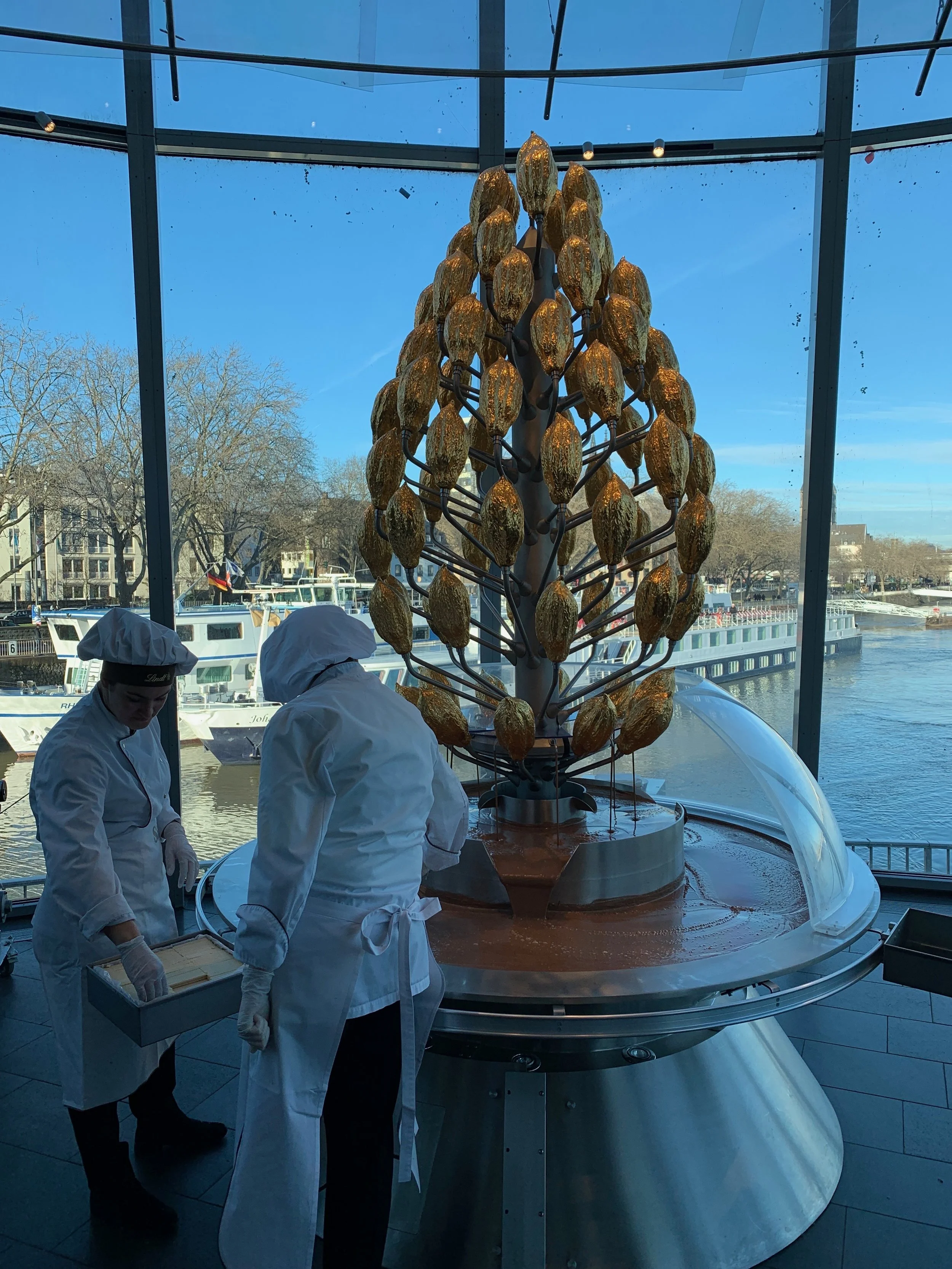
Sitting on a spit of land in the harbor, this museum walks you through the history of chocolate from the cacao plant to the finished bar. There's a working production line, a tropical greenhouse, and a chocolate fountain where you can sample what's flowing. Give it about two hours.
Weekday mornings are the calmest, and it fills up on rainy days. The walk from the Altstadt along the river takes 10 to 15 minutes, so I usually combine it with the Rheinauhafen stroll below.
Rheinauhafen and the Crane Houses
This former harbor has been turned into a modern riverside district, and its signature buildings are the Crane Houses, three striking structures shaped like the loading cranes that once worked the docks. It's a short but rewarding stop, about 45 minutes to an hour including a coffee.
Late afternoon into dusk is the best window, when the buildings reflect the water. Tip: this is one of the nicest places in the city to just sit with a drink and watch the river traffic.
KölnTriangle Viewing Platform
For the best view of the cathedral across the river, head up the KölnTriangle tower in Deutz. The observation deck gives you a full panorama over the Rhine, the bridge, and the cathedral spires. Allow 30 to 45 minutes.
Sunset is the prime slot, though a clear morning works nicely too. Tip: walk across the Hohenzollern Bridge to get there so the bridge and the viewing deck become one outing, and check current opening hours before you go.
The Fragrance Museum (Farina House)
Eau de Cologne was born here in the early 1700s, created by Johann Maria Farina and named in honor of his adopted hometown. The museum is set up as a guided visit that explains the history and lets you smell the original scent. Plan on about an hour.
Because visits run on a schedule, check times and book ahead in busy periods. Tip: a small bottle of the original makes a better souvenir than anything you'll find at a stall.
Kölsch Beer Halls (Brauhäuser)
Kölsch is a light, crisp beer that can only be called Kölsch if it's brewed in the Cologne area. It arrives in tall, skinny 0.2 liter glasses carried on round trays by waiters called Köbes, who are famously gruff and will keep replacing your empty glass until you lay a coaster on top of it. That's the signal that you're finished.
Order something to eat while you're there. Halve Hahn is a rye roll with aged cheese, and despite the name there's no chicken involved. Himmel un Ääd, a plate of blood sausage with apples and mashed potatoes, is the classic local dish. Plan on two hours in the evening, and expect to share a table with strangers. Tip: don't ask for a beer list. In a Kölsch hall, Kölsch is what you're getting.
The Belgian Quarter and Ehrenfeld
The Belgian Quarter is the neighborhood to go to for independent boutiques, cafes, and bars, all centered around Brüsseler Platz. Ehrenfeld sits farther out and feels more local, with street art covering entire walls, vintage shops, coffee roasters, and a creative crowd.
Either one deserves a half day, and the afternoon into evening works best for both. Tip: shop on Saturday, since stores are closed Sunday. Ehrenfeld is a short tram ride from the center, so it's easy to reach on public transport.
What's Closed Right Now
The Roman-Germanic Museum beside the cathedral is closed for a major renovation and isn't expected to fully reopen until around the end of the decade. A selection of highlights is on display in an interim exhibition at the Belgian House near Neumarkt, which is worth a look if Roman history appeals to you. Check the museum's website for current hours before you go.
Free Things To Do In Cologne
Some of the best free things to do in Cologne are the simplest. Cross the Hohenzollern Bridge, walk the Rhine promenade, and wander the Altstadt. The Christmas markets charge no entry in season, and the Stadtgarten park is a good place to rest your feet.
One update from older guides: the cathedral nave used to be free, but since July 2026 sightseeing inside requires a ticket. The north entrance, on the side facing the station, remains open for prayer and a quiet moment at no charge.
Things To Do In Cologne At Night
Cologne after dark is a pleasure. Start with a Kölsch hall for dinner, then walk over to see the cathedral lit up against the dark sky. Cross the bridge once more for the view of the lights on the water, then finish with a drink at one of the bars in the Belgian Quarter. In winter, the Christmas markets are at their best once the sun goes down.
Things To Do In Cologne With Kids
Families do well here. The Chocolate Museum is an easy win, and Cologne Zoo is one of the better city zoos in the country. A Rhine boat ride keeps younger kids entertained, and in warmer months there's a cable car that crosses the river near the zoo. In December, the ice rink at Heinzels Wintermärchen is a favorite.
What To Do In Cologne On A Sunday
Shops are closed, but the city isn't dead. Museums are open (minus any Monday closures), the cathedral welcomes sightseers in the afternoon, and the river is at its liveliest with locals out walking. Beer halls are open too. Check Sunday hours for any specific stop before you go.
The one experience I tell every client not to skip is an evening in a traditional beer hall. It costs very little and teaches you more about the city than any museum, and it's usually the story people bring home.
How Many Days Do You Need In Cologne Germany
If you're wondering how many days in Cologne are enough, it depends on what you want out of it. One day covers the cathedral, the Hohenzollern Bridge, and the old town. A weekend adds museums, a river cruise, and a neighborhood or two. Three days or more leaves room for a day trip to Bonn, Düsseldorf, or the Rhine Valley.
Things To Do In Cologne In One Day
Everything in this plan sits within walking distance. Start at the cathedral first thing in the morning, with your ticket already booked, and climb the tower. Afterward, pop into Museum Ludwig if you have time, then walk to the City Hall and the Fragrance Museum. Have lunch in the Altstadt, then spend the afternoon on Alter Markt and the Rhine promenade. Near sunset, cross the Hohenzollern Bridge for the view from the KölnTriangle, and finish with dinner in a beer hall.
Two Days In Cologne
Keep day one as above, but give it a slower pace. On day two, head south along the river to the Chocolate Museum and the Crane Houses, then take a Rhine cruise in the afternoon. In the evening, take a tram to the Belgian Quarter for dinner and a drink, or head out to Ehrenfeld if you're after something more local.
Three Days Or More
With a third day, take the train to Bonn, Beethoven's hometown, or to Düsseldorf for its modern art and riverside old town. Both are easy by regional train. If you'd like castles, Rhine Valley towns are a longer outing, so consider it a full day.
I usually book two nights for clients in Cologne, and three if they want a day trip. Two nights gives you one full day and two evenings, and one night always feels rushed because arrival and departure eat most of the time.
When Is The Best Time To Visit Cologne Germany
Cologne works year-round, but each season has a different personality.
Spring
Mild weather, flowering trees in the parks, and noticeably smaller crowds. Terraces start reopening, and the Rhine boats begin running regular schedules again. Rain is possible, so pack layers. Prices are generally friendlier outside the Easter weeks.
Summer
Long days, riverside beer gardens, and festivals make this a lively time, and it's also the busiest season. Expect higher hotel prices and the occasional hot spell. Summer events add energy, though they also fill rooms, so book early.
Fall
September and October are lovely, with comfortable temperatures and thinner crowds than summer. Carnival season officially kicks off on November 11 at 11:11 a.m., and you'll see costumed locals and live music around the old town that day. Trade fairs also bring business travelers throughout the autumn, which can push hotel rates up.
Winter
December means Christmas markets and a festive mood across the city. January is a different story, quiet and cheaper, with fewer visitors and shorter days. It's cold and often gray, but if you don't mind that, you'll have the city nearly to yourself.
Carnival In February
Carnival is the biggest street party of the year, peaking on Rose Monday with a huge parade. In 2027, Rose Monday falls on February 8, with the festivities building through the days before. The streets fill with costumed crowds, and many businesses close. If you love a party, go. If you prefer quiet sightseeing, avoid these dates.
Big events like Carnival, the Christmas markets, and trade fairs fill rooms fast and raise prices. I book Carnival at least six months ahead and market weekends three to four months out.
Cologne is also a lovely add-on for couples. If you're still choosing a route, our roundup of honeymoon destinations in Europe has more to compare.
For a first visit, my pick is December, but I’m of course biased to the Christmas markets!
Things To Do In Cologne Germany In December
Cologne has several Christmas markets, each with its own theme, and most sit within walking distance of one another. They open in mid-November and run until just before Christmas, with a couple staying open into early January. Dates shift slightly each year, so confirm them on the official Cologne tourism site. If you're reading this in early December, they're open right now.
Where is the Cologne Christmas market everyone photographs? It's at the foot of the cathedral, and the other christmas markets in Cologne are spread across the old town and nearby squares.
The Christmas Market at Cologne Cathedral
This is the biggest and most famous, set on the plaza right below the spires. The scale and the lights make it the one that most people picture when they think of the Cologne Christmas market. Go on a weekday morning for breathing room, or after dark when the lights are on and the cathedral looms over everything. Weekend evenings get very crowded.
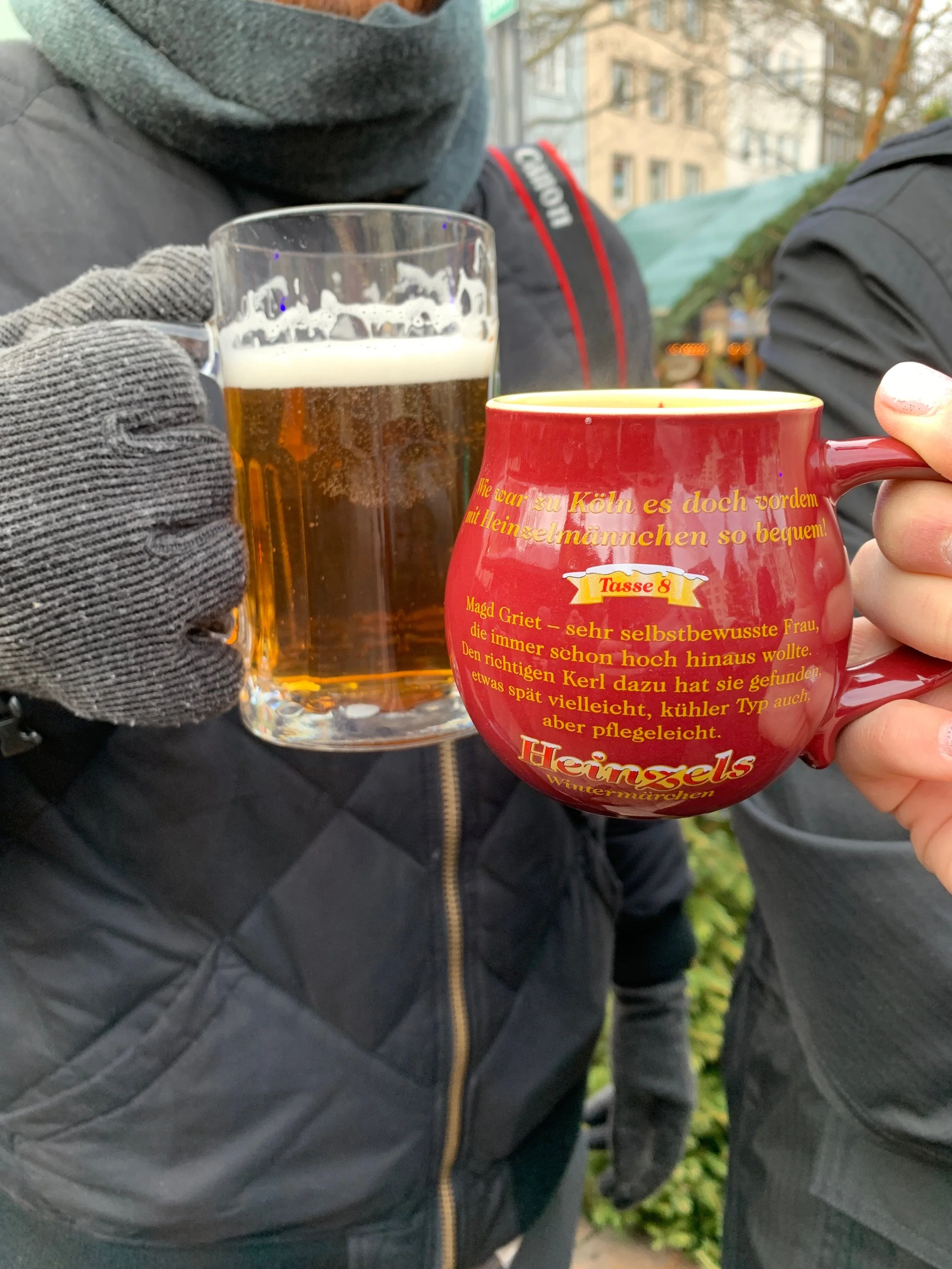
Heinzels Wintermärchen at Alter Markt and Heumarkt
Spread across two squares in the old town, this market is built around the legend of the Heinzelmännchen, little helpers who supposedly did the city's work at night. The Heumarkt section has an ice rink, which makes it a family favorite. Late afternoon into early evening is the sweet spot, and the Heumarkt side runs into January.
Markt der Engel (Angels' Market) at Neumarkt
Here, white tents are decorated with angels and stars, and the stalls lean toward handmade crafts and ornaments. It feels a little more refined than the cathedral market and it's easier to browse. Early evening is lovely, and it's right next to Cologne's main shopping street.
The Harbour Christmas Market
Next to the Chocolate Museum, this one has a maritime theme, with ship decorations and views of the river. It runs later than most of the others, into early January. Mid-afternoon is a good time, and it pairs easily with a museum visit.
Nikolausdorf (St. Nicholas Village) at Rudolfplatz
A cluster of wooden houses styled like a little village, with activities for kids and a Santa figure. It's the one I steer families toward. Weekday afternoons are the calmest.
The Stadtgarten Christmas Market
Smaller and more local, set in the park by the Belgian Quarter. It opens later in the day, so go in the evening on a weeknight, when you'll be standing next to people who live nearby.
Practical Tips for the Markets
Most Glühwein is served in a collectible mug, and you pay a small deposit called Pfand. Return the mug for a refund, or keep it as a souvenir, since each market has its own design. Foods to try include Reibekuchen, crispy potato pancakes served with applesauce, along with roasted chestnuts and Glühwein. Many stalls take cards now, but bring some cash for smaller stands. To avoid the biggest crowds, visit on weekday afternoons.
Other Things To Do In December
Beyond the markets, a Christmas market cruise on the Rhine is a fun way to see the lights from the water. The cathedral at night is worth a second visit too.
My favorite is the Heinzels market, which just happens to be in same square as my favorite antique store in the city.
How to Get Around Cologne
The old town is very walkable, and most top sights are a short stroll from Cologne Central Station, which sits right next to the cathedral. For everything else, public transport is easy to use.
Walking
It's free, and it's the best way to see the center. Most of the main sights are within 15 minutes of the cathedral. Bring comfortable shoes, because the cobblestones are tough on thin soles.
Trams and U-Bahn (KVB)
The KVB runs the city's trams and light rail. Tickets are sold at machines and in the KVB app, and individual rides are inexpensive. This is how you reach the Belgian Quarter, Ehrenfeld, and the zoo. Confirm current ticket options with KVB before you travel.
Day Tickets, the Deutschlandticket, and the KölnCard
A day ticket covers unlimited rides for a set period and is worth it if you plan on several trips. The Deutschlandticket is a monthly subscription for regional transport across Germany, handy for longer stays and day trips. The KölnCard bundles local transport with attraction discounts and suits travelers who plan to hit several museums. Compare the options against your itinerary and check current prices with KVB.
Bikes and E-Scooters
Cologne is flat, and rental bikes and e-scooters are easy to find. They suit confident riders who like to cover ground. Watch out for tram tracks, which can catch a wheel, and for pedestrians on the promenade.
Rhine Boats
Boats are more about sightseeing than commuting, but they're a relaxed way to see the river. They suit anyone who wants a break from walking. Costs vary by route and length.
Getting From Cologne Bonn Airport to the City Center
Trains run from the airport to the main station in roughly 15 to 20 minutes, so you can be at your hotel without much fuss. Taxis are available too, but the train is faster and cheaper.
Public transport also makes day trips simple. If you enjoy moving through Europe by rail, our Prague, Vienna, and Budapest itinerary shows how well that style of travel works.
Where To Stay In Cologne
Where you book should come down to location, travel style, budget, and how close you want to be to the sights. Where to stay in Cologne first time? Altstadt, without much debate.
Altstadt (Old Town)
This is the heart of the city, with cobbled lanes, beer halls, and the Rhine at your doorstep. It's best for first-time visitors and for the Christmas markets, and the cathedral is a 5 to 10 minute walk. Nights can be lively, so ask for a quiet room.
Near Cologne Central Station
Perfect for train travelers and anyone doing day trips. The cathedral is right outside the door, and you can be on a train in minutes. It's less charming than the old town, but it's practical.
Deutz
Across the river, Deutz is quieter and gives you a great view of Cologne from your window. It suits travelers who want calm in the evening. The cathedral is a pleasant 15 minute walk across the Hohenzollern Bridge.
The Belgian Quarter
For boutiques, cafes, and nightlife, this is the choice. It has a young, creative energy and suits travelers who care more about atmosphere than being in the center. The cathedral is a short tram ride or a 20 to 25 minute walk.
Rheinauhafen
Modern and polished, with the harbor on your doorstep. It suits travelers who like a contemporary feel and a quiet riverside walk. The cathedral is about a 15 to 20 minute walk.
Ehrenfeld
Creative, local, and a bit rough around the edges, in a good way. It suits repeat visitors and travelers who want to live like residents. The cathedral is a short tram ride away.
Hotels near the Christmas markets and during Carnival book up months ahead, so lock in your room early.
When I plan Cologne stays, I match the hotel to the trip. For first-timers, I look at boutique hotels in the Altstadt, where the setting does the work. For train-heavy itineraries, a polished property near the station saves time. For couples, I lean toward riverside hotels in Deutz or Rheinauhafen, where the window view of the cathedral is the draw. For clients who want something different, a design-forward hotel in the Belgian Quarter fits.
Organ music at Cologne cathedral
Build Cologne Into A Custom Europe Itinerary
Cologne is easy to build into a larger route, and that's where having a plan matters. Pair it with Amsterdam, Brussels, or the Rhine Valley, or run it into a longer loop through Germany. When you're ready to plan your trip to Germany, we'll sort out the order of cities, the trains, and the right hotels for each stop.
If you'd like to keep going south, Munich is a natural next stop. Our 3 day Munich itinerary shows how to spend your time there.